Shall We Suffer?

This entry is part of a series called “The Gospel in a Postmodern World.” Learn more about the series here.
Preached on November 27, 2022
Scriptures: Genesis 32:22-32, 1 Thess. 5:12-24

Hedonism has a pretty bad reputation.  Just hearing the word brings certain debaucherous ideas to mind.  Hedonism is eating the most expensive, decadent chocolate cake you can find.  It’s wild partying with every illicit substance imaginable.  It’s unbridled sensuality.  Hedonism is wild living without any thought of future consequence.  And that’s more or less what the word actually means anymore.  Someone that calls you a hedonist isn’t trying to give you a compliment.  But what did it mean?  Because it used to mean something more.  It used to be a legitimate school of philosophy, and its teachings are more compelling than you’d probably think.

Let’s look at what may be the most famous hedonist philosopher: an ancient Greek man by the name of Epicurus.  Judging from our modern associations, you’d think Epicurus was some kind of wild party boy.  His life must have had a lot of sex, drugs, and the ancient equivalent of rock-and-roll.  Not so, actually.  Epicurus was a really decent guy.  His life wasn’t customized by wild excess.  It was simple.  He loved good friends, rural living, basic cooking, and that was about it.  He was a simple man with a simple philosophy: life is hard because we’re all too busy being afraid of losing what we have.  The solution?  Enjoy the little things.  Spend your time doing what actually matters and avoid wild excess, because if you get used to fancy things, you’ll spend your whole life being afraid that you’ll lose them.  Avoid the fear of loss, seek the simple pleasures, and you’ll be happy.

You’ll notice that there’s not a lot of room for God in that equation.  If simple pleasures are the route to happiness, who needs God?  To be fair to Epicurus, he actually does include God in his writings.  He doesn’t say a lot about him, but he includes him.  You can see right here in your bulletin a quote I pulled from Epicirus’s writings:

 “First believe that God is a living being immortal and happy, according to the notion of a god indicated by the common sense of humankind; and so of him anything that is at agrees not with about him whatever may uphold both his happiness and his immortality.”

Epicurus, Letter to Menoeceus

What two words does he use to describe God?  Immortal and happy.  God is happy!  Don’t worry about him!  He’s up there, doing his thing.  At the end of the day, he’s a happy guy that wants you to be happy too.

Can you imagine if Epicirus was around today?  Think about a message like that: God wants YOU to be happy.  I think he’d sell quite a few books.  Maybe get an appearance on Oprah.  He’d be a big deal!  

But we have to ask ourselves, why didn’t his philosophy endure through the ages?  If the message resonates today, but most of us have never heard of this guy and his school of philosophy, what banished him to obscurity?  Well, Christianity.  Some of the people that denounced Epicirus’s teachings were Christian.  Augustine thrashed it in his writings.  Justin Martyr and Tatian did the same long before him.  Christians generally saw Epicureans as the worst available school of philosophy.  And why?

Because the happiness that Epicurus was selling wasn’t true happiness.

True happiness isn’t about managing to lower your expectations to the point that they’re no longer relevant.  It’s not about maximizing your pleasure.  It’s not about avoiding fear.  It’s not about the pursuit of dopamine.

Happiness, true happiness,the kind that lasts longer than an afternoon, isn’t about pleasure.  It’s about fulfillment.  Being what we’re supposed to be!  Doing what we’re supposed to do!  And that’s why life isn’t just one long pleasure trip.  There are other emotions besides pleasure-based happiness.  There’s sadness, fear, obsession and grief.  There’s panic, courage, annoyance and joy.  There are a million different emotions under the sun!  And all of them are on the table while we’re pursuing fulfillment.  And all of them are good.  All of them are important.  

Last week, we spoke of how our engagements with history have grown far too cynical.  The inclination to view the world through the lens of power has made the whole of history little more than wolves and sheep, tyrants and the oppressed.  That’s too shallow.  Christianity says that there’s more to the world around us than the selfish pursuit of power.  There’s love.  We Chirstians know that the world is driven by more than selfishness.  God himself is love, and he’s in this world at work.

If last week was about saying that the readings of the world around us have grown too shallow, this week is affirming that our readings of ourselves have suffered the same fate.  We have also become far too shallow in our own eyes.  Mind you, the readings of history focused on what was ugly, whereas the readings of our lives tend to focus on what’s good.  We focus on pleasure.  We’d like more money.  We’d like more stuff.  We’d like fewer jerks in the spaces around us and more friends.  When God gives us anything other than pleasure, it tends to be frustrating.  Why God?  What did I do to you?  We define success within our lives by the acquisition of pleasure.  We long for more dopamine.  Most of us have become functional hedonists.  But that does a great disservice to what life really is.  When we go through hard things, that’s when we tend to grow the most.  God isn’t trying to make us happy.  God is trying to make us holy.

Our first Scripture reading today, Genesis 32:22-32, is a famous one that points to this exactly: Jacob wrestling with God.  And what a weird story it is!  This is the Old Testament at its finest!  Let’s look at this a little:

That night Jacob got up and took his two wives, his two female servants and his eleven sons and crossed the ford of the Jabbok. After he had sent them across the stream, he sent over all his possessions.

First off, why is any of this happening?  Jacob is going to see his brother Essau.  When he was a kid, he stole Essau’s blessing and ran away.  All these years later, things aren’t going so well.  He has to go back to Esau for help, and he has no idea how Esau is going to respond.  Is he going to welcome him?  Begrudgingly allow him to stay?  Chase him off?  Kill him?  Here, he’s crossing a river.  This is the point of no return.  If Esau decides to attack Jacob and his people, they can’t just retreat if there’s a river at his back.  But God told Jacob to go to Esau.  So this is where he has to make that choice.  Does he really trust God?  This is the last stop.  There’s no turning back after the River Jabbok.  And he crosses it.

So Jacob was left alone, and a man wrestled with him till daybreak.

Notice that Jacob doesn’t start to wrestle with God.  He’s not out there picking a fight.  The Bible says that God picked a fight with Jacob.  What did God want from him?  Everything.  Jacob is a character that’s constantly scheming.  He’s manipulative.  He’s clever.  He usually plans on figuring things out for himself, rather than waiting around for God.  And how has that gone for him historically?  Not great.  He’s won a few, but he’s lost more.  This is a man that has to go back to the brother he cheated to beg for help, for crying out loud, he’s not in a good place.  His self-reliance has gotten him nowhere.  And now?  Now comes God.  And God wants the last shred of faithfulness that Jacob has been holding back on.

A really common reading of this passage is to say that this figure is a pre-incarnation of Jesus.  Some people say that anytime we see God in a human form, that’s Jesus.  I’m not a hundred percent on that one, but I think it’s really interesting at minimum.  How often have we wrestled with Jesus?  How often have we held out because we feel we can figure things out on our own?  Until Jesus hunts us down and wrestles that last bit of pride out of us.

When the man saw that he could not overpower him, he touched the socket of Jacob’s hip so that his hip was wrenched as he wrestled with the man. 

Things look pretty evenly matched there for a while.  Both men are struggling.  Jacob is doing well.  The mystery man is doing well (remember, we don’t know it’s God just yet).  Nobody can quite get the edge over the other.  And then?  Out of nowhere, boom!  God touches Jacob’s hip and changes everything.  The fight isn’t as even as it looked.  God was always in control.  With one little touch, he could have won at any point.  A good reminder that no matter how things look, God is in control.  It might look like he’s evenly matched, but it’s all just a show.  God wins.  God always wins.

Then the man said, “Let me go, for it is daybreak.”

At this point, it’s over.  Jacob can’t win with his wounded leg.  The man basically says, “Hey, move on.  It’s over.”  But Jacob doesn’t move on.  He may be defeated, but he’s not letting go.

But Jacob replied, “I will not let you go unless you bless me.”

The clever Jacob.  The man who always relied on his abilities.  His cleverness.  Has been humbled.  He’s held on for what?  God’s blessing.  He’s now someone that seeks only to be blessed by God.  This is a turning point for him.  He’s no longer good ‘ol crafty Jacob.  He’s someone new.

The man asked him, “What is your name?”

“Jacob,” he answered.

Then the man said, “Your name will no longer be Jacob, but Israel,[a] because you have struggled with God and with humans and have overcome.”

Jacob said, “Please tell me your name.”

But he replied, “Why do you ask my name?” Then he blessed him there.

So Jacob called the place Peniel, saying, “It is because I saw God face to face, and yet my life was spared.”

The sun rose above him as he passed Peniel, and he was limping because of his hip. Therefore to this day the Israelites do not eat the tendon attached to the socket of the hip, because the socket of Jacob’s hip was touched near the tendon.

Some people like to say this whole fight was metaphorical; just something representative of the inner drama that’s going on in Jacob’s mind during this challenging period.  I don’t think it is.  Because during the fight, God messes up Jacob’s leg.  And at the end of the fight, Jacob walks with a limp from then on.  It’s almost like a movie: there’s a really weird sequence where something absurd happens and after it ends, the main character looks back on it and thinks, “I must have been dreaming.  There’s no WAY that actually happened!”  But then they realize that they have a bruise or a scratch of something in their pocket from the time in question and they realize that maybe… maybe it wasn’t a dream.  Maybe something bizarre just happened.

Jacob wrestles God.  And he’s never the same after that.  Physically.  Mentally.  Spiritually.  It was a painful experience.  He bears the scars from that battle for the rest of his life.  But somehow, a Jacob that has experienced frustration, fear, desperation, and injury is better than the Jacob that we knew.  Through suffering, Jacob grows.  And hasn’t that happened to you?

Our second Scripture, 1 Thess. 5:12-24, is a little more direct.  Paul writes:

Now we ask you, brothers and sisters, to acknowledge those who work hard among you, who care for you in the Lord and who admonish you. Hold them in the highest regard in love because of their work. Live in peace with each other. 

Here, he’s talking about Church leadership.  Not just pastors, but others in your community that are leaders.  Leadership team members.  Choir directors.  Food pantry operators.  All kinds of leadership within the church.  And how does he describe them?  People that work hard.  People that care for others when times are hard.  People that scold others when the behavior within the community becomes inappropriate.  None of that is fun.  Who wants to work hard, deal with weird situations, and scold people that are out of line?  Nobody.  That’s the worst!  But Paul says, those people that are putting up with all that nonsense?  Give them extra respect.  They’re going through all that for you.  The true leader is a servant that suffers on the behalf of others.  THAT’S what makes them worthy of note.  Not because they have a fancy title or a nice degree or whatever other nonsense we come up with.

And now, Paul turns to everyone else and says:

And we urge you, brothers and sisters, warn those who are idle and disruptive, encourage the disheartened, help the weak, be patient with everyone. Make sure that nobody pays back wrong for wrong, but always strive to do what is good for each other and for everyone else.

In other words, be like your leadership is supposed to be!  Work hard.  Don’t turn a blind eye when someone is being disruptive.  Take care of people that need help.  The work that leadership does isn’t just for leaders.  They may be the one that takes on a greater share institutionally, but that’s EVERYONE’S responsibility.  Everyone has a responsibility to do the tough stuff!  And he ends with the worst part: Don’t pay back evil for evil.  When someone does wrong, it’s natural to want to get them back.  It’s not just natural, it’s fair!  It’s reasonable!  But we’re not supposed to do that.  Be better than fair.  Be merciful.  Take the high road.

Rejoice always, pray continually, give thanks in all circumstances; for this is God’s will for you in Christ Jesus.

GIVE THANKS IN ALL CIRCUMSTANCES.  It’s easy to give thanks on Thanksgiving.  Most of us have a nice meal in front of us.  A bunch of family around us.  Who couldn’t be thankful on a day like that?  But when our thanks is just driven by that, it’s just pleasure-based happiness.  It’s easy.  Anyone can get that.  It’s meaningless.  It’s here today and gone tomorrow.  We don’t just give thanks on turkey day.  We give thanks on EVERY day.  The good ones.  The bad ones.  The boring ones!  And we pray.  We pray continually in our hearts.  That’s a verse that’s so deep that I can’t even scratch the surface of it today, so I’ll just leave it at that and come back at some point in the future.  And we rejoice.  

It doesn’t say that you have to rejoice and give thanks for the bad things that happen.  That would be absurd, wouldn’t it?  “God, thank you for this broken leg.”  A broken leg is a bad thing.  We don’t have to thank God for the bad things.  But even in those moments defined by bad things, God is at work, making us better.  Making us shine brighter.  God’s will for us in Christ is to accept these moments, all the while praising God with joy and thanksgiving.  What a gift.  Now we move on to a passage with a theme very similar to last week:

Do not quench the Spirit. Do not treat prophecies with contempt but test them all; hold on to what is good, reject every kind of evil.

Again, not every religious idea is a good one.  Don’t hear something from your leadership and just assume it’s good because they’re good.  Don’t endure a tough situation and internalize some weird meaning because it feels like God wants that.  Just as with last week, we test the spirits.  We have to check to see that what we get actually lines up with what God has told us in Scripture.  Because we can develop wrong, even when we’re doing everything right.  We have to be discerning on this journey of growth.

May God himself, the God of peace, sanctify you through and through. May your whole spirit, soul and body be kept blameless at the coming of our Lord Jesus Christ. The one who calls you is faithful, and he will do it.

There’s our goal.  That’s true happiness right there.  Sanctification.  That’s God making us holy.  That’s fulfillment.  All of the pain we endure.  The hard work we get through  The insults we bear.  It’s God at work, sanctifying us.  God doesn’t want to make us happy.  He wants so much more than that.  He wants to make us holy.  That’s why any turn to epicureanism, popular though it may be, is ultimately a lost cause.  We’re more than dopamine centers.  We’re beings capable of a full range of emotions, even negative ones.  And enduring suffering isn’t pointless.  Epicurus was wrong.  The wholeness of our lives can’t be found in avoiding pain and collecting pleasures, because God has a way of helping us grow through suffering.  Who knew that a God who died on a cross might end up expecting his followers to suffer now and again?  So what will we do?  Will we rely on ourselves?  Will we back away from the Jabboks of our lives, avoiding any painful wrestling in the process?  Or will we cling and beg for a blessing?
The History of Mary Veneration: A Protestant Perspective

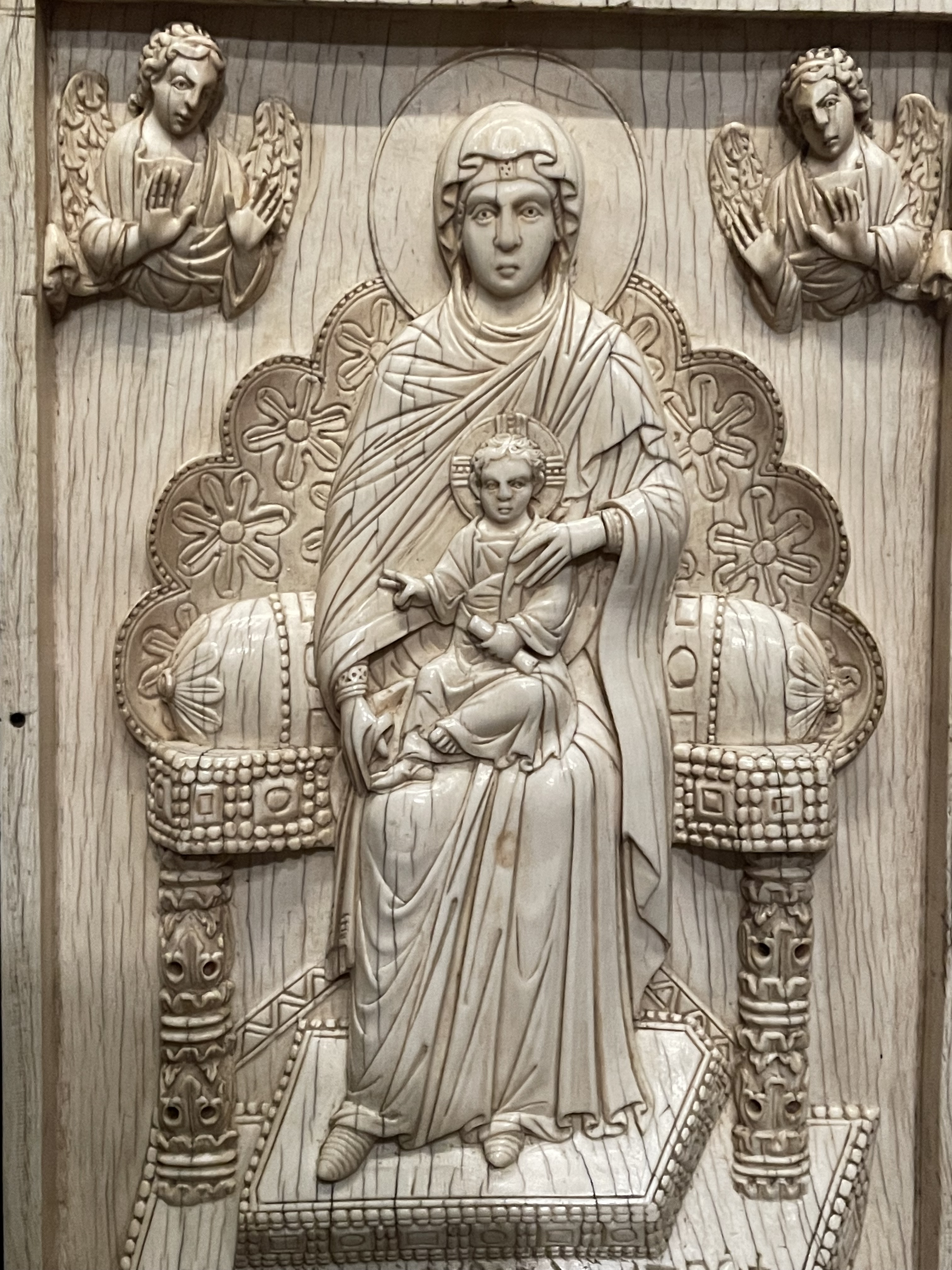
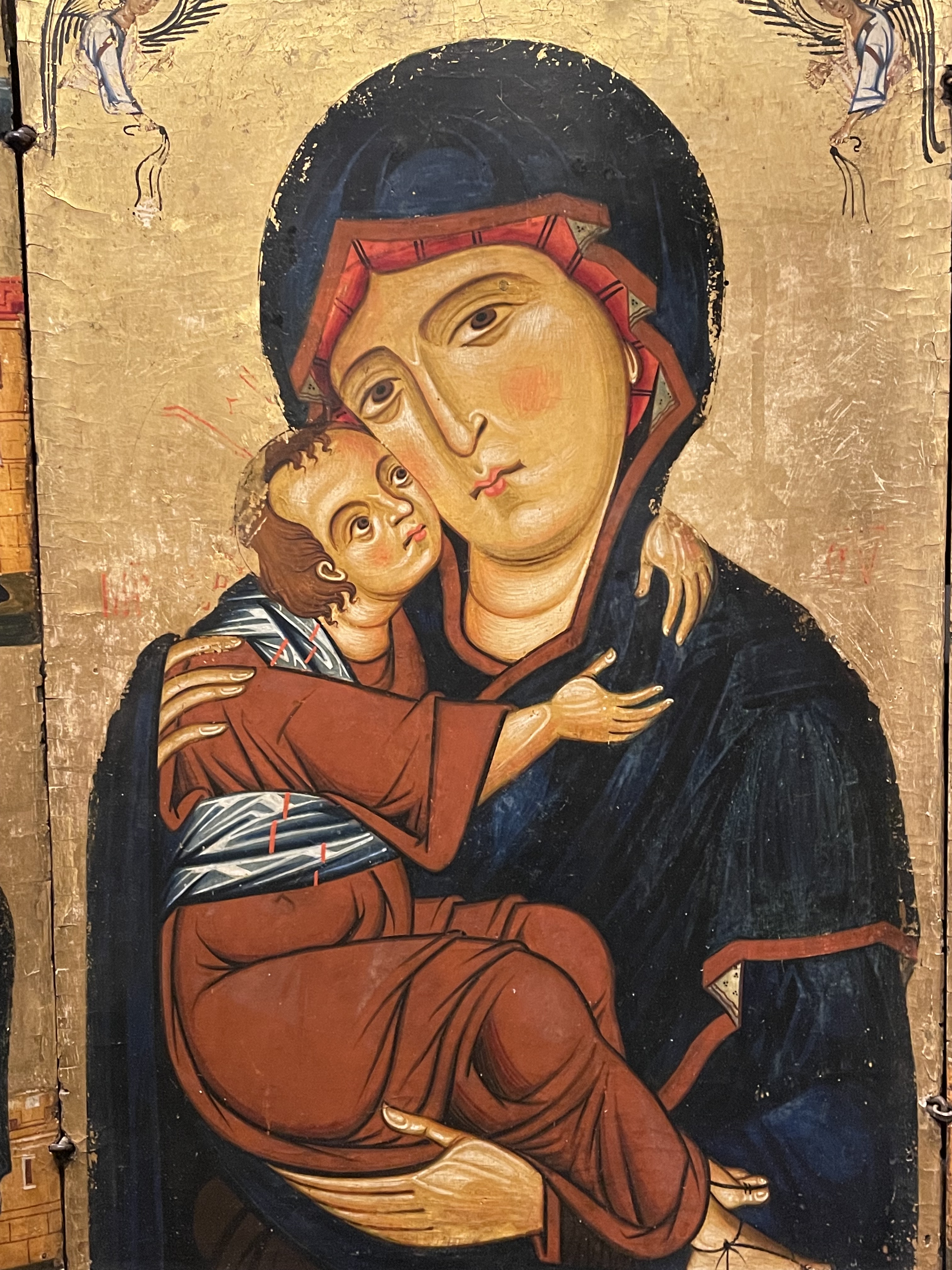
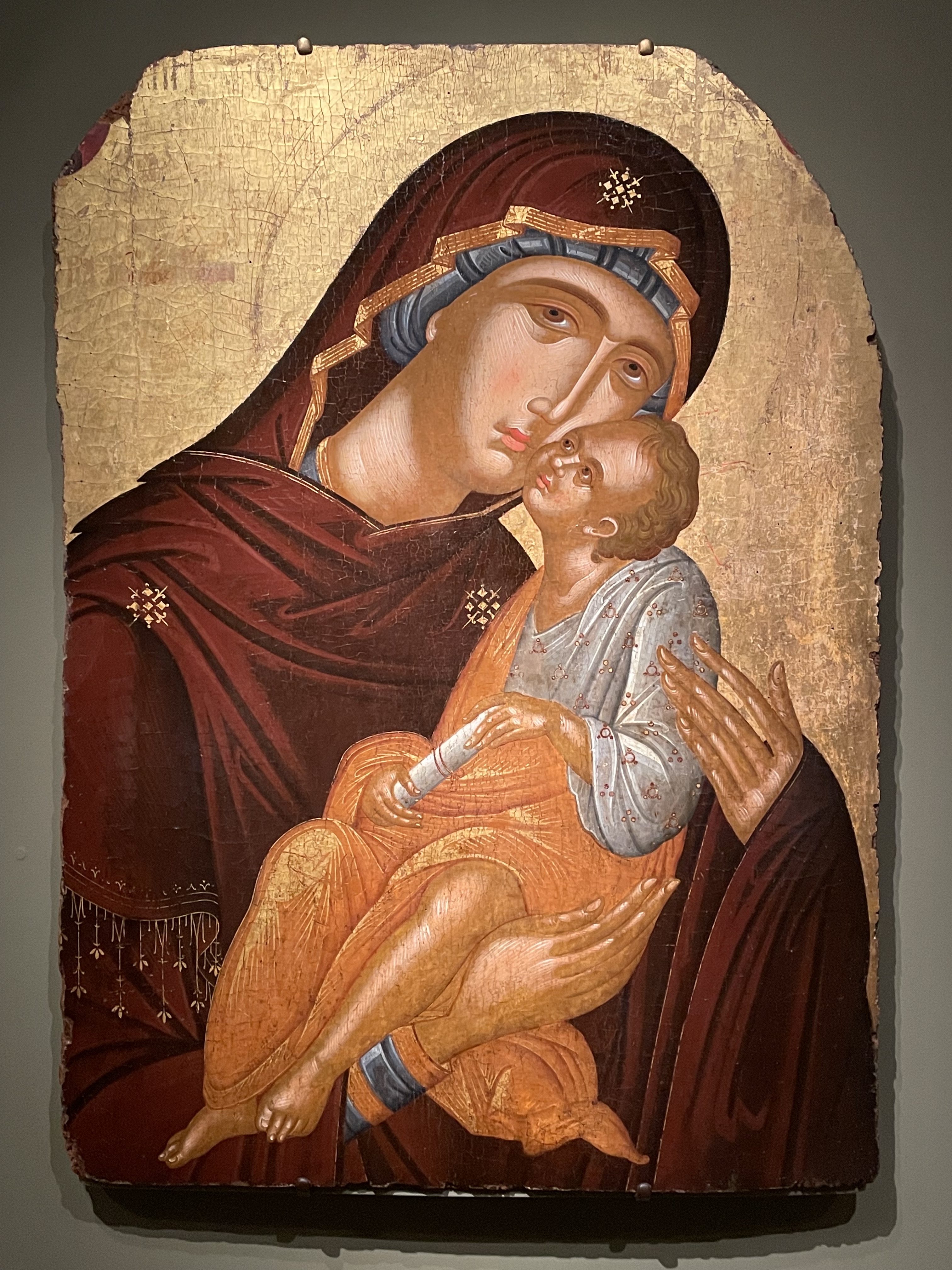
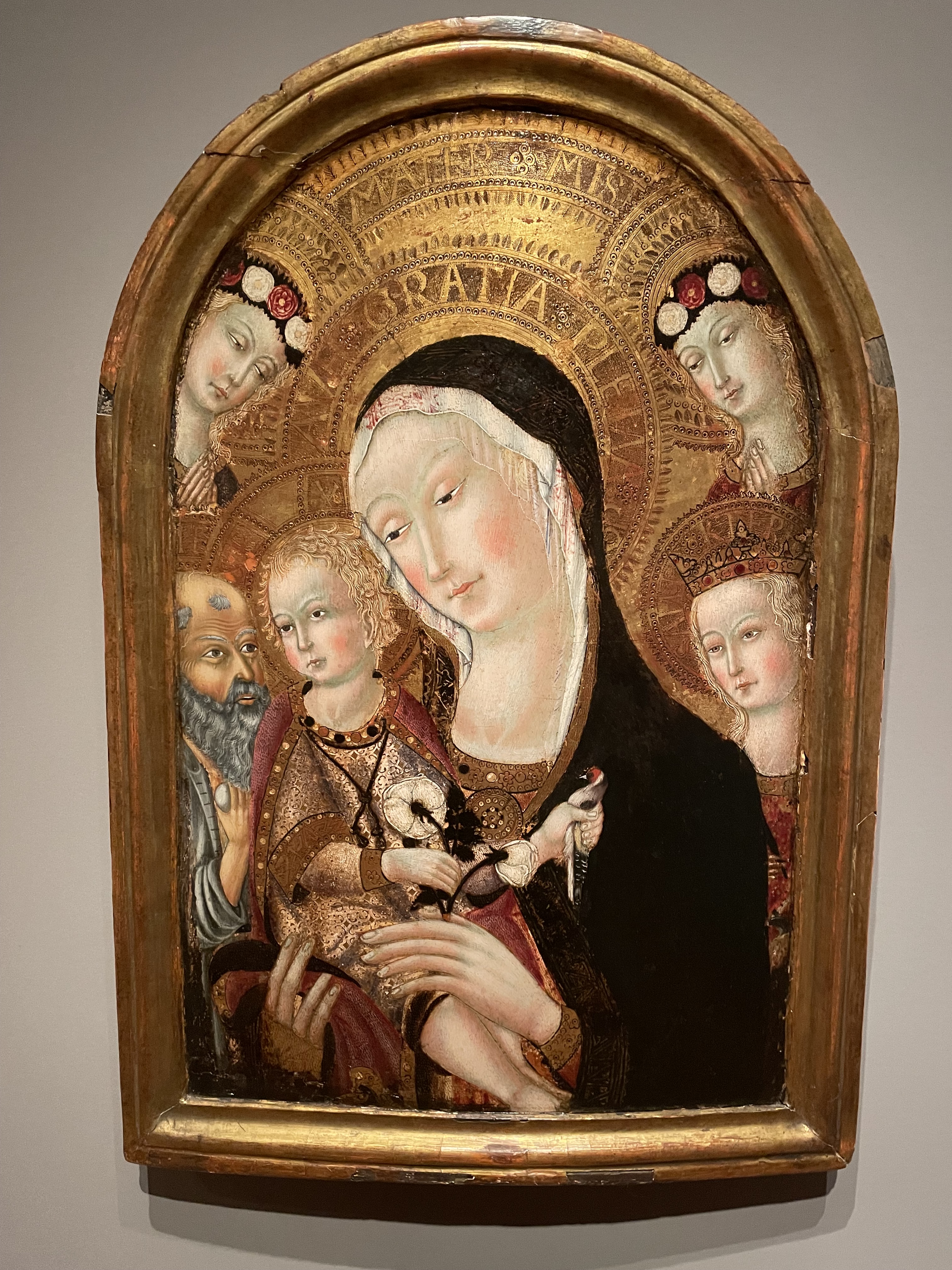
My wife and I went to the Cleveland Museum of Art a few weeks ago. As a theology nerd, I went straight to the Christian art section hoping to have a little bit of a mini-retreat there in the gallery. Unfortunately for me, a MASSIVE portion of the art focused on Mary:

And this one that really took the cake…

Mary’s coronation as the Queen of Heaven.

It was hard to have a spiritual response when everything was so Mary-centric! When I looked up, Mary’s gaze was the first thing I encountered. Jesus wasn’t even looking at me most of the time! If he wasn’t looking off in the distance, he was looking up at Mary, drawing even more attention to her. Naturally, that led to the question, “when did Christians start venerating Mary and why did Protestants stop doing it?” Some Protestants might agree that Mary is uniquely worthy of admiration, but even the most intense Protestant admiration is a far cry from the veneration that she enjoys in Catholicism or Eastern Orthodoxy. So what happened? Did we ditch something that was passed down from the beginning, or did we actually manage to strip away a medieval innovation that had little to do with the Christianity of the apostles?

The uncomfortable truth about Mary veneration is that the historical evidence is a lot less black or white than most parties would like it to be. The veneration of Mary started waaaaay earlier than your average Protestant would hope, but it also happened waaaay later than your average Catholic assumes. First and second century Christians would have found any prayers to Mary a totally alien practice, but in the midst of the raging battles against heresy in the 3rd, 4th, and 5th centuries, it started to develop as a way of preserving the same orthodoxy that Protestants and Catholics share today. In the centuries that followed, it continued to grow and intensify, leading to eventual skepticism from Protestants that wanted to go back to the basics. Even though our tradition ceased the practice of Marian veneration (and had a reasonable claim on recovering early orthodoxy in doing so), a study of how the practice came to be can help us appreciate how that veneration helped our theological ancestors cling to orthodoxy at a time when the nature of Jesus was under fire.

Let’s start our journey with the first century. Easy enough, since there’s no evidence for Marian veneration in this era at all. If we take the Scriptures as the clearest evidence of first-century Christian thought and practice, there’s just not much there. The gospels bring up Mary sparingly, usually during the birth narrative, and the epistles only reference her a handful of times, usually indirectly (for example, Galatians 4:4  reads “God sent forth his Son born of a woman“). If you’re going Sola Scriptura, Mary is a relatively minor Bible character that exists within the narrative as Jesus’s mom. You can definitely find some commentaries out there that try to push the mystical importance of certain passages. For example, some Catholic commentators make much about John 19:26-27: “When Jesus saw his mother there, and the disciple whom he loved standing nearby, he said to her, ‘Woman, here is your son,’ and to the disciple, ‘Here is your mother.’ You can read that to mean that Jesus is mystically speaking to every disciple today, encouraging them to accept Jesus as their own mother… or you can conclude that Jesus was worried about his mom and sent her off with John. The latter seems a great deal more likely than the former. Emphasizing the small passages that Mary does appear in doesn’t solve the big problem: nobody in the Scriptures is venerating Mary or explicitly telling others to do it.

There aren’t a ton of indisputably first-Century Christian documents readily available outside of the Scriptures. We could look at documents like the Didiche (also known as The Teachings of the Apostles) and the Epistle of Barnabas (both of which tend to be considered first-century) and note that neither of them mention Mary at all. First-century Christians just don’t seem particularly concerned with the place of Mary within the order of Christianity. She was Jesus’ mom and that’s about it.

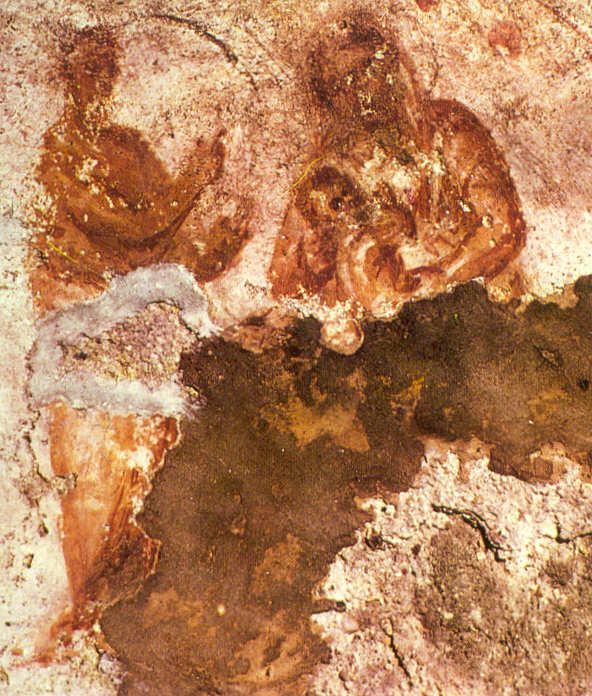
So, onwards to the second century… in which evidence is still pretty scant, all things considered. The Catacomb of Priscilla has the first recorded painting of Mary and Jesus:

There’s a few other paintings from the second century as well, all of which depict Mary as the mother of Jesus. Nothing really new here, but they do speak to the broader concern regarding Mary in this era: was Mary actually Jesus’ mom? The big heresy in the second century was docetism; the belief that Jesus wasn’t really human, so much as he was a spiritual being that looked human. Was he born? Not really. Spiritual beings can’t be born. There wasn’t a consensus among the docetists as to where Jesus did come from. Some claimed that Jesus only appeared to live among us while others suggested that Jesus was just an average man that was born by Mary and the spirit of the Christ descended upon him at his baptism. One famous heretic by the name of Marcion went so far as to totally remove all birth stories from the Scriptures, solving the problem of Jesus’ birth by just having him show up on the scene as a fully-grown man. Regardless of the specifics, the basic message of docetism was the same: Jesus Christ wasn’t really a man, but he was really God. Mary starts to garner more interest from orthodox Christians because she establishes both the human-ness and the divinity of Jesus.

The big theologians in this era reference Mary while they’re making arguments against the docetists. For example, take this passage from Tertullian’s On the Flesh of Christ:

Why is Christ man and the Son of man, if he has nothing of man, and nothing from man? Unless it be either that man is anything else than flesh, or man’s flesh comes from any other source than man, or Mary is anything else than a human being?

Ch. 5

One popular technique used to emphasize the crucial role of Mary is recapitulation (retelling the story of humanity but with all of the bad things from the fall being fixed by similar events during salvation). For example, here’s Tertullian again: “As Eve had believed the serpent, so Mary believed the angel,” (On the Flesh of Christ, Ch.17). And here’s a longer example from the famous second-century apologist, Justin Martyr::

[Jesus] became man by the Virgin, in order that the disobedience which proceeded from the serpent might receive its destruction in the same manner in which it derived its origin. For Eve, who was a virgin and undefiled, having conceived the word of the serpent, brought forth disobedience and death. But the Virgin Mary received faith and joy, when the angel Gabriel announced the good tidings to her that the Spirit of the Lord would come upon her, and the power of the Highest would overshadow her: wherefore also the Holy Thing begotten of her is the Son of God; and she replied, ‘Be it unto me according to your word,’ (Luke 1:38).

Justin Martyr, Dialogue with Trypho, Ch 100

Recapitulation holds to that same anti-docetist thought pattern: if Eve sinned and humanity was doomed through the error a woman, how can humanity saved without the faithfulness of a woman? We need a Mary that genuinely participated in the story of salvation to reverse the damage that was done during the fall. Similar ideas float around in the works of other theologians in this era (Irenaeus, for example) and even start to pop up in some of the apocryphal writings. The Gospel of James, for example, is a retelling of the story of Christ’s birth which explicitly includes a (really uncomfortable) section in which a midwife inspects Mary’s hymen after the birth to make sure that she was genuinely a virgin. Jesus isn’t just a regular baby; he’s a miracle baby! He’s a man that’s also God! She’s genuinely his mother, but the birth is miraculous and mysterious.

Onward to the third century! Mary continues to increase in stature. The teacher of teachers, Origen of Alexandria is supposedly the very first person to write the word “theotokos” (mother of God) down as a title for Mary. Not only would this be remarkable because of the level of authority a title like that naturally bestows upon the listener (it’s a fair bit more impressive sounding than “disciple” or “deacon”), but because this is the exact title that will start to normalize Mary veneration in the 5th century. Tying this title to such an ancient and dignified teacher would lend an incredible amount of legitimacy to the practice! But in all of his recorded writings, Origen never used the word “theotokos.” Not even once. A 5th century author, Socrates of Constantinople, made that claim while he was attempting to dismiss the objections of someone named “Nestorius”:

Origen also, in the third volume of his Commentaries on the Apostolic Epistle to the Romans, gives an ample exposition of the sense in which the term Theotokos is used. It is therefore obvious that Nestorius had very little acquaintance with the old theologians[.]

Ecclesiastical History 7.32.17

Unfortunately for Socrates of Constantinople, we have a copy of Origen’s commentary on Romans and can clearly see that no such passage exists. Not only does it not exist, but Origen never uses the same language of high veneration that later authors will use. Despite some poor claims that continue forward into modernity, Origen’s writings don’t have any real jumping off point that naturally leads to the veneration of Mary.

I bring up this false claim because it indicates that things are really starting to get moving. The water is starting to get muddied. Even though the claims don’t have much legitimacy, the fact that someone made such a claim specifically targeting this era reflects that Mary’s status within the faith is growing. Origen may not use that particular power-phrase, but he does focus on Mary even more than most previous theologians. We start to see Mary stuff start to pop up more and more in the late 3rd and early 4th centuries. Somewhere in this timeframe (depending on which person is doing the dating), we even see see the Sub tuum praesidium hymn pop up for the first time:

Beneath your compassion,We take refuge, O Theotokos [God-bearer]:do not despise our petitions in time of trouble:but rescue us from dangers, only pure, only blessed one.

Sub tuum praes., earliest manuscript of which is from a Coptic fragment known as John Rylands papyrus 470

We still regularly see theologians say that Mary was sinful and there are very few clear recommendations of praying to her from leading Christian figures, but language about perpetual virginity that started popping up in the second century is carrying forward. She is not only a mother, but she is a mother that remained ever-virgin. And again, we have the odd scraps of evidence (like the Sub tuum papyrus) that seem to suggest that some communities are starting to pray to Mary and hold her in particularly high esteem. As we get more thoroughly into the fourth century, big-name theologians like Athanasius and Gregory of Nazianzus start using the phrase “theotokos.” The mother of God has officially arrived.

We could spend ages looking at the slow evolution of the practice of Marian veneration, but I think I’ve already established the trend— Marian veneration slowly developed as a way of battling heresies that claimed that Jesus was not both all-man and all-God. She established both realities; her miraculous birth established Christ’s divinity, while her humanity established Christ’s humanity. But the fifth century offers one more large leap in the history of Mary veneration: the Council of Ephesus and their official endorsement of the title “theotokos.”

A fifth-century archbishop by the name of Nestorius didn’t approve of the title “theotokos” that some Christians had started using (yes, this is the same Nestorius that Socrates of Constantinople made up a fake quote to argue against). Mary couldn’t have given birth to God. God is eternal! God has neither beginning nor end! So he recommended the title “Christotokos” (mother of Christ) as a more accurate title for Mary. She gave birth to the human aspect of Jesus, but was not truly the mother of the divine trinity. The ancestors of orthodox Christianity noted that this effectively split Jesus into two parts: the human and the divine. The human part was born, but the divine part wasn’t. Mary was the mother of half of Jesus, but the other half descended after the fact. If Jesus’ divinity and humanity could be isolated and held responsible for different events, did Jesus work miracles, or was that just his divine half? Did Jesus die on the cross, or was that just his human half? A split Christ was no Christ at all. They insisted that Jesus had to be both God and man, not two separate aspects that could be split for the sake of certain events. Cyril of Alexandria, acting in accordance with both the Pope and a synod of Egyptian bishops, wrote the famous Twelve Anathemas Against Nestorius, the first of which openly affirmed the language of the theotokos:

If anyone will not confess that the Emmanuel is very God, and that therefore the Holy Virgin is the Mother of God, inasmuch as in the flesh she bore the Word of God made flesh [as it is written, The Word was made flesh] let him be anathema.

The First of Cyril’s Twelve Anathemas Against Nestorius

When Nestorius didn’t relent, the Council of Ephesus officially followed through on Cyril’s anathemas. There’s a lot of politics and lofty theological argumentation behind all of that, but note the true focus of the argument: the nature of Christ. While Mary’s title is the most obvious sticking point, in all of the official documentation surrounding this controversy, almost all of it is primarily concerned with the nature of Christ. Only the first of the twelve anathemas mentions Mary, and none of the canon judgements of the Council of Ephesus mention her at all. What we’re seeing here is that same tendency to use Mary to establish Christ’s divine and human nature, but elevated to the highest point thus far. Now Mary has been given an obligatory title, and one that carries a fair amount of prestige at that.

Now, you might say, “Wait, that just establishes that it’s legitimate to call Mary the mother of God. What about the veneration? That’s what we’re here for!” It continues to ramp up over time after this decision. We’re still a long way off from our Salve Reginas, Hail Marys, and the title “the Queen of Heaven,” all of which start popping up between the 11th and 13th century, but the Council of Ephesus really does kick off a period of renewed emphasis on Mary and the first really decisive evidence of large-scale veneration. After this event, churches started being named in honor of Mary and influential theologians like Augustine of Hippo started focusing even more time and attention on doctrines elevating the position of Mary. What was born out of a conflict regarding establishing Christ’s nature resulted in new titles, new theological lines in the sand, and new heresies defined around Mary. In the following centuries, the veneration of Mary would continue to increase. Devotional practices would be oriented towards Mary. Theologians would continue to make even bolder claims about Mary’s importance. Monasteries especially would introduce worship practices to appeal to Mary. What we’ve observed here in the fifth century is the first bud that would eventually bloom into full high Marian veneration during the Middle Ages.

Now onto the big question: why did Protestants reject Mary veneration? If it was built up over centuries specifically to avoid certain heresies, why get rid of it? Perhaps the simplest reason is that they were trying to reform the faith in the pattern of early Christianity. They thought the medieval church had strayed too far from the pattern set out by early Christianity, and so they turned to the Scriptures and tried to get back to the basics, but now they weren’t asking the same questions they were 500 years before. There was no doubt that Jesus was both God and man. Nobody wondered if he was some kind of purely spiritual being or a really nice guy who was acting in cooperation with a divine spirit. Conversations about Mary were no longer necessary to battle active heresies about Christ’s nature, and with the new radical emphasis on Scripture, a suspicion of tradition, and an emphasis on the priesthood of all believers, many of the core tenants of Mariology were completely removed. Why should anyone pray to Mary? It’s not modeled in the Scriptures or in the writings of the early church fathers. Besides that, what would make her more important than anyone else? In Luther’s words:

Your prayers, O Christian, are as dear to me as hers. And why? Because if you believe that Christ lives in you as much as in her, then you can help me as much as she.

Luther’s 1522 sermon on the Feast of our Lady’s Nativity;
Unfortunately, there’s no good English translation readily available, but excellent details are available through Grisar’s work on Luther: “Werke,” Weim. ed., 10, 3, p. 321 f. 499. as Cited in Hartmann Grisar, Luther, trans. E. M. Lamond (Project Gutenberg, 2015) p. 503.

There was a radical equality being emphasized in Protestantism, and the elevation of Mary did not fit. The hundreds of years of debate that crafted this practice seemed more like years of embedded pagan influence and error than compelling doctrinal formulation.

As I poured over articles to gather all of this info, I found more than a few cries from within Protestantism that Mary needs to be returned to a prominent role (if not her rightful historic role) within our theology. Perhaps… and perhaps not. There can be little doubt that there’s no harm in emphasizing the role of Jesus’ mom within the Scriptures. It is doubtless that she was a person of outstanding faith and moral character on top of being a person intimately involved in God’s work of salvation. At the same time, I don’t know that I’m eager to return to praying special prayers to the “high queen of heaven.” The major Protestant creeds all keep Christ enshrined as both 100% God and 100% man. While I readily concede that there are plenty of self-proclaimed Christians today that disagree with that basic point of orthodoxy, they’re certainly not uniquely Protestant. The early Protestants set out to turn away from medieval innovations and return to the basics Christianity while preserving Christian orthodoxy, and I think they did a reasonably good job of it in the case of Mary veneration. I think it’s lovely that the first few centuries of Christians share our view of Mary and could pray alongside us without any qualms. At the same time, I like to think we can appreciate where some of the emphasis on Mary came from in the case of our Catholic and Eastern Orthodox siblings. Their practices were born out of a defense of the same orthodoxy that we hold dear. Even if we don’t agree with their specific expression of piety, I think we can at least appreciate where those practices came from and how they’re trying to preserve orthodox Christianity in their own way.

Mind you, I’m still probably not about to have a spiritual experience at the Cleveland Art Museum.