That OLD Church Music: Psalms

The split between contemporary and traditional worship is one of the great dividers of Protestant churches in our time.  If we’re being honest, a great deal of that split comes down to music.  Do you prefer singing soft rock from Christian radio stations?  Or do you prefer classical hymns from around the year 1700 until around 1970?  For a lot of people, the answer to that question determines what kind of service they’re going to be looking for.  But what is there for people that like the oldies?  I’m talking about traditional traditional music.  No, not that newfangled Gregorian chant.  I mean that really old stuff.  I’m talking about the psalms.

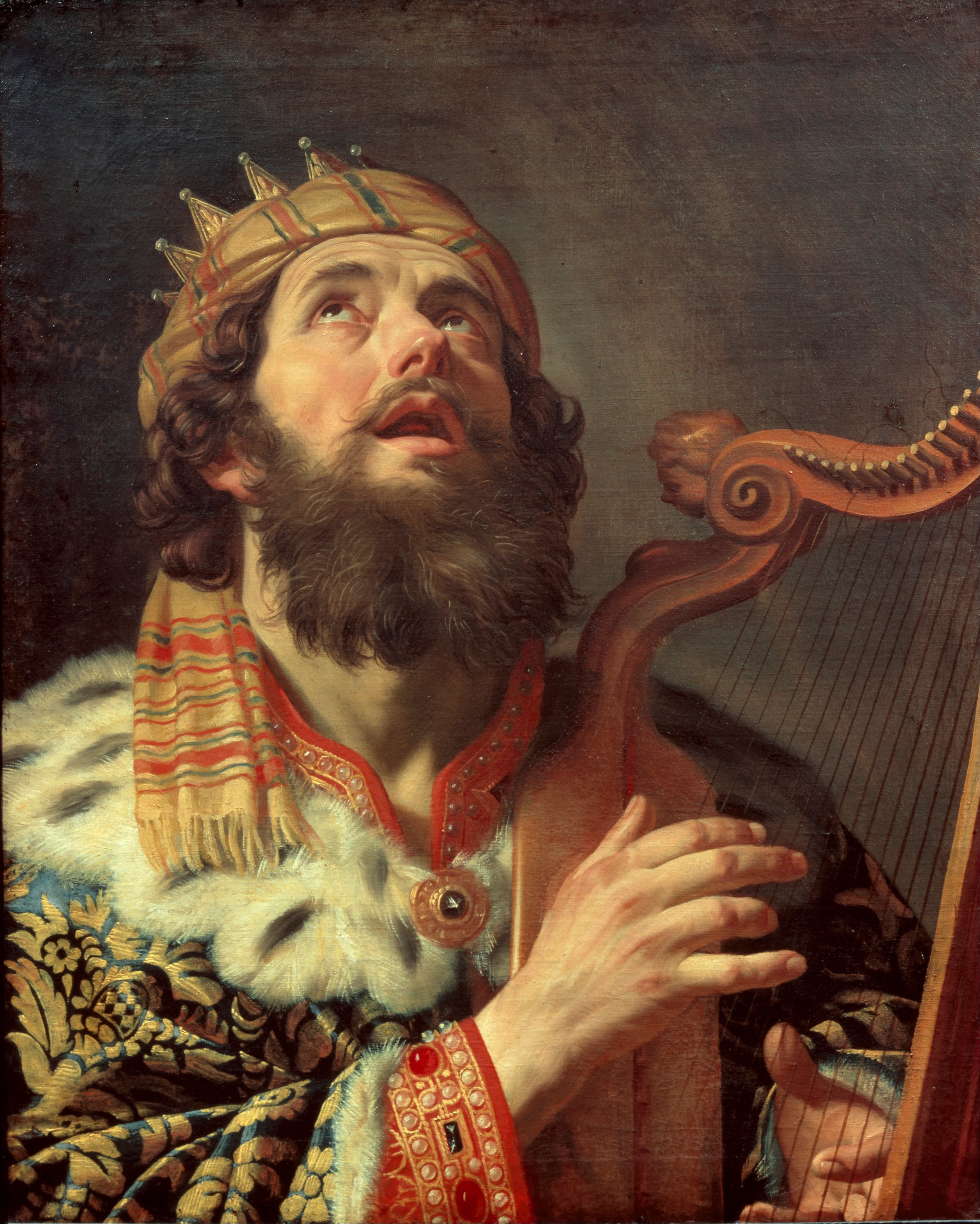
The English word “psalm” comes from the Greek word psalmos which was a type of sacred song that was sung to a harp.  In Hebrew, the book of Psalms is called tehallim.  It comes from the same root as the word “Hallelujah” (hll are the three letters both words are built around), and it means “praises.”  These aren’t poems.  They’re songs.  They’re meant to be sung during worship, usually by chant (which was the easiest way to get large groups to sing a song together before sheet music was widely available).  Not only were the psalms sung in Jewish worship (including during the time of Jesus), but they were so important to early Christians that a fair few councils in the first thousand years of Christianity went out of their way to encourage people not to sing anything other than the psalms of the Bible.  For example, canon 59 of the Council of Laodicea (held in 363 AD) reads, “No psalms composed by private individuals nor any uncanonical books may be read in the church,” (trans. Schaff).  That’s not to say you can’t find any hymns from these eras.  You certainly can, but mature Christians leaders were constantly calling Christians back to the basics.  Sing the psalms.  Before you start singing anything else, sing the psalms.

The particulars of congregational worship became less of a concern of the average person in the Middle Ages.  Every song (be it psalm or hymn) was sung in Latin, which the average person didn’t speak.  They couldn’t join in because they didn’t even know what was being sung.  Choir monks handled the singing duties on their behalf.  For the early Protestants, the Reformation wasn’t just about taking back the Bible; it was about taking back worship for the average person.  While some groups favored the use of hymns (Lutherans), Reformed and Anglican Christians stuck to the Book of Psalms.  It wasn’t until the 18th century that writers like Isaac Watts popularized and spread what we think of today as hymns in English-speaking countries.

That sense that we ought to be singing the psalms is pretty rare today.  While some of us favor guitars and some favor organs, there aren’t many that are particularly interested in singing psalms.  Which is a real shame!  For thousands of years, the psalms were the mainstays of Christian worship.  And why?  Did our ancestors lack the lyrical creativity that we have?  Were they too dull to come up with any real hit songs?  No!  They sang the Psalms because they didn’t think you could do any better than Scripture.  As great as hymns like A Mighty Fortress is My God (that one happens to be my favorite) might be , they’re not Scripture.  If there’s one little piece of worship music that sticks in a person’s head in a given week, why not have it be one of the songs that Jesus sang?  Why not have it be a psalm?

But what about our hymns?!?  What about trendy, newfangled pieces like “Rock of Ages” and even trendier pieces like “In Christ Alone”?  Is it time to get rid of them?  Of course not.  And if we’re being honest, I don’t think that’s a realistic fear at this point.  These are the songs we know.  We love them, and they’re quite good.  We don’t have to abandon them.  We could, however, afford to add the older oldies to our mix.  Take a minute today and find an arrangement of a psalm that you like.  Youtube is full of them.  There are orchestral arrangements, contemporary pieces, and even chants.  You’ll find something that you can enjoy.  Not that you’ll enjoy it all, of course, but you probably don’t like everything on the radio or in the hymnal either.  Even if it takes a few minutes, take the time to do it.  The psalms are your spiritual heritage, and they were made to be sung.  Give them a try!

The Prosperity Gospel

In worship, I’ve been preaching through John 6. In overview, Jesus makes bread for hungry people, the people get excited, the people chase Jesus down for more miracle bread, Jesus says he’s the bread of life and all they really need, and finally people get disappointed and leave. Here’s a crowd of people that legitimately witness a miracle, but instead of bowing down before Jesus, they want to put him to work. They don’t really want the bread of life; they want a life of bread.

Naturally, I started thinking about people that have that sense of religiosity today. There are plenty of popular speakers who claim that God wants to lead you to a life of bread. The prosperity gospel preachers are the most obvious example. I didn’t want to misrepresent them when talking about them, so I started digging through some of the their writings to get a sense for the kinds of things they say and believe. Let me tell you, it was a wild ride. Not only was it broadly ickier than I expected (you’ll see), but there were a lot of little dots I got the chance to connect.

Prosperity gospel preachers are overwhelmingly nondenominational. They’re also well represented by people of every race. Neither of these first two items surprised me. I can’t imagine most of these pastors being open to denominational oversight, and no race is immune from the temptation of money. What did catch me off guard was the religious background that most of these preachers had. There’s a surprisingly strong tie between prosperity gospel preaching and the Charismatic/Pentecostal tradition. Not every prosperity gospel preacher has a Pentecostal background, but the modern American prosperity gospel did get its start there (Oral Roberts tends to be the usual starting place for religious historians), and it still has really, really strong ties to it today. As a non-Pentecostal/Charismatic looking at their tradition from the outside, the connection seems pretty logical when I think about it. Charismatics often put a really high premium on miracles in a Christian’s life today. It’s not wild to assume that you can get to, “God wants to give me money if I have enough faith,” pretty quickly from there if you go off the rails. Pentecostalism also lacks the clear denominational structures that can prevent obvious false teachings from reaching the pulpit, and it tends to have a really low emphasis on (and even active skepticism about) education. I didn’t expect the connection between those two entities, but it makes good sense.

History aside, I was shocked at how shameless prosperity gospel preachers can be. Legitimately, wholeheartedly, shameless. Here are some quotes that just broke my heart:

  • “Sow a seed on your MasterCard, your Visa or your American Express, and then when you do, expect God to open the windows of heaven and pour you out a blessing.” -Oral Roberts (“Success in Life” broadcast on the Trinity Broadcasting Network September 21, 1990)
  • “The best thing you can do for the poor is not become one of them.” -Rev. Ike (“The Gospel According to Rev. Ike,” Ebony Magazine, Dec. 1976)
  • “Don’t wait for the pie in the sky by-and-by when you die. Get yours now with ice cream and a cherry on top!” -Rev. Ike (“The Gospel According to Rev. Ike,” Ebony Magazine, Dec. 1976)
  • “If you’ve got one-dollar faith and you ask for a ten-thousand dollar item, it ain’t going to work.  It won’t work!  Jesus said, ‘according to your [faith,]’ not according to God’s will for you, in His own good time, if it’s according to His will, if He can work it into his busy schedule.  He said, ‘According to your faith, be it unto you.’  Now, I may want a Rolls Royce, and don’t have but bicycle faith.  Guess what I’m going to get?  A bicycle.” -Rev. Frederick Price (Fredrick K. C. Price. “Praise The Lord” broadcast on TBN. 21 Sept. 1990)
  • “God works by faith. You must believe first, and then you’ll receive” -Joel Osteen (Your Best Life Now, p. 33)
  • “You will often receive preferential treatment simply because your Father is the King of kings, and His glory and honor spill over onto you” -Joel Osteen (Your Best Life Now, p.40)
  • “Remember, only what you give can God multiply back. If you give nothing, and even if God were to multiply it, it would still be nothing!” -Oral Roberts (The Miracle of Seed-Faith, p.27)

And my personal favorite, when Oral Roberts told all of his followers that he was going to die unless they sent him eight million dollars. There are a million newspaper articles about it, but that wasn’t enough for me. I wanted something more incriminating. I wanted to read about the incident in his own words. I didn’t have to look far. He literally wrote about it in his own autobiography:

  • “The Lord spoke to me near the end of 1986 and said, ‘I told you to raise $8 million to carry on My medical work. You have from January 1 to March 31 to get it done. If you don’t then your work is finished, and I am going to call you home.'” -Oral Roberts (Expect a Miracle: My Life and Ministry, p.289)

Yikes.

You read quotes like this and can’t help but feel angry. When the anger subsides, you worry about the people that they’re taking advantage of. Sure, some of them might be able to afford a donation here and there to support a charismatic speaker, but what about the people who are desperate? What about the woman who has cancer, trying to juggle her medical bills, sending “Rolls Royce faith” checks in the hope that thing will turn around? What about the poor man with brain damage who sends in any little bit of cash that he can in the hopes that God will miraculously restore him? I believe in miracles and tithing as much as the next pastor, but I’ve known people in these circumstances, and I’ve seen the damage that prosperity gospel preachers can cause. Here is a pack of wolves on the prowl for desperate, down-on-their-luck people. Not everyone has the gift of discernment, and they’re counting on that. It reminded me of another certain historical preacher that assured people that God would give them blessings if they forked over some cash:

You should know that all who confess and in penance put alms into the coffer according to the counsel of the confessor, will obtain complete remission of all their sins…. Why are you then standing there? Run for the salvation of your souls! Be as careful and concerned for the salvation of your souls as you are for your temporal goods, which you seek both day and night…

Don’t you hear the voices of your wailing dead parents and others who say, ‘Have mercy upon me, have mercy upon me, because we are in severe punishment and pain. From this you could redeem us with a small alms and yet you do not want to do so.’ Open your ears as the father says to the son and the mother to the daughter, ‘We have created you, fed you, cared for you, and left you our temporal goods. Why then are you so cruel and harsh that you do not want to save us, though it only takes a little?

-Johann Tetzel , Sermon on Indulgences

Where’s a Martin Luther when you need him?

Insights from Old Sermons

Deciding to post the entirety of a sermon series (The Gospel in a Postmodern World) was a task that took a lot more work than I expected. When I set out to do it, I thought, “All the work is already done! Since I’m moving to a new church, this will be an easy way to post stuff while I get accommodated to my new job.” WRONG! It took me AGES to get all of these sermons edited, transcribed, and posted. There was a lot of unexpected work that went into it, but I’m glad I did it. It was great to go back and look at some old sermons to let them sink in. Not only was it great to look at the material again (which I learned a lot from the second time through), but it was uniquely helpful to wrestle with them for such an extended period of time. Here were some insights I gained throughout the process that I thought were worth sharing.

1. Sermons are a lot of work.

Seriously, pastors are basically up there writing a book chapter by chapter each week. We might have different styles; some of us are writing a verse-by-verse commentary while others are working on a devotional and still others are doing totally different things, but regardless of which style someone uses, it’s a ton of work. We should remember that! As a pastor, I can verify that I feel guilty when I spend too much time on a sermon. Writing good sermons feels like the baseline for the job. The more you do on top of that, the successful you feel.

These seven sermons alone (35,000 words) measured up to a little under half the length of an average novel (75,000ish words) and was on-target for the length of a self-help book (30,000-60,000) or a shorter non-fiction book (40,000-70,000 words). That’s a lot of words! And this only represents seven sermons! Now, I preach for about 30 minutes each Sunday, which puts my sermon length above the average mainline protestant pastor (25 minutes) and below the average evangelical preacher (39 minutes), so my results are a little different than some others might be. Regardless of length or style, sermons are a ton of work, and it’s worth remembering that.

2. Sermons are their own medium

I know I just finished saying how sermons are like books, but they’re also not like books at all. Editing these suckers down to get them posted took a surprising amount of effort. A couple of them were already written, so I just had to do some light editing before I posted them, but the ones that weren’t written were put together using a transcription of the worship service from YouTube, and those ones were brutal to edit. Spoken words tend to be pretty informal. “Hey, how’s it goin’? You feeling tired today?” That sort of thing. There are also a lot of rules you can break while you’re speaking that are much harder to break when you’re writing. For example, writing in incomplete sentences are a no-no. They’re hard to read and look sloppy. On the other hand, when you’re speaking, you can throw around incomplete sentences all you want. If you’re taking a spoken piece and trying to transcribe it, you can try to really mash those incomplete sentences together with enough semicolons and colons, but it’s going to really hinder its readability. The spoken word just isn’t the same as the written word, and it takes some energy and creativity to translate one to the other.

3. Old Sermons Deserve More Attention

Sermons are one of the most disposable forms of media that I can think of. Books get read time and time again. Plays get performed over the course of a few weekends before the actors call it quits. Lectures from teachers and professors get used annually as long as they continue teaching the class. Even YouTube videos get watched multiple times if they’re good! But most sermons get exactly one day in the sun before they vanish forever. Sure, they’re often recorded somewhere, but very rarely does anyone go back and watch old sermons. Which is a shame! I found some really good stuff in here! And I’m sure there is a lot of really good stuff in all the old sermons out there that goes unnoticed just because their day in the sun has ended.

By no means am I saying that every sermon deserves to be played on repeat, but I am saying that I took a preaching class where I never read, listened to, or watched a single sermon that wasn’t given by myself or a classmate. I have a Master of Divinity degree and my coursework rarely had me looking at old sermons (with the singular exception of the required class on John Wesley to fulfill Methodist ordination requirements). By no means am I blaming any professors or the program I participated in. They had so much to teach already. I don’t blame them for not adding one more thing to the pile. There are a million things that deserve our attention in a given lifetime. We grab what we can and the rest slips by. I’m just saying that I hope to pay more attention to old sermons. There’s more there than most of us recognize.

The Empty Tomb and Charlton Heston

“Are you a master builder or a master butcher?”

I love watching The Ten Commandments around this time of the year. You know, the one with Charleton Heston in it?  They had that movie on TV every year during Easter weekend when I was growing up, so we’d munch down on some jellybeans and enjoy.  Not all of it, of course.  That would have been absurd.  The movie is well over three hours long (not counting the commercials) and I was a kid.  If I was lucky, I managed to get as far as the Nile turning to blood before I got distracted by something else.  Mind you, there were a few marathons of endurance when I managed to make it through the entire thing (usually, by recording it and playing it back over the next few days), but usually I only got bits and pieces every year.  Needless to say, the Passover story just feels right for me to think about whenever Easter comes around.  Which is pretty weird since I’m not Jewish.

I’m not the first Christian to associate leaving Egypt with Easter.  Cyril of Jerusalem, a bishop in the 4th century, thought in those same terms.  I’ve been reading through some of his stuff lately because I’m leading a confirmation class, and Cyril’s catechetical lectures are some of the most famous confirmation materials in history.  In them, he covers the basics of Christianity for people who were hoping to be baptized, so there’s a lot about the Church, the sacraments, and why we need Jesus so much.  And in 4th century Jerusalem, you got baptized on Easter, so every class led up to that big day.  Afterwards, there were a few more bonus classes where Cyril taught the newly-baptized Christians from the mouth of the very tomb where Jesus was buried.  Can you imagine being present for that?  Even reading about it all these years later is exciting!

The first sermon that Cyril gave from the mouth of the tomb, was about… the exodus from Egypt!  Well, and baptism.  And Jesus.  All of that rolled into one.  Here it is in some of his words:

Let’s turn from the old to the new, from the figure to the reality.  There, we have Moses sent by God to Egypt; here, Christ was sent by his Father into the world.  There, Moses came to lead oppressed people out of Egypt; here, Jesus came to rescue people oppressed in the world by sin.  There, the blood of a lamb warded off the destroyer; here, the blood of the Lamb without blemish, Jesus Christ, wards off every demon.  There, a tyrant pursued the Isarelites all the way to the sea; here, the author of evil followed you even to the streams of salvation.  The tyrant of old was drowned in the sea, and the one today vanishes in the waters of salvation.

-Cyril of Jerusalem, First Lecture on the Mysteries (trans. Gifford 1894, paraphrased by me)

To Cyril, the Bible wasn’t this chaotic mess of stories all jumbling around.  Everything was deeply connected, and it was all intended to help us.  So when we read the Passover story, we should take note of details.  We should notice who the people are and what they’re up against.  We should notice where their salvation is from and how they are saved!  We should take note of every little detail.  Why?  Because it’s not just about a group of people thousands of years ago.  It’s about you and me, it’s about God, and it’s about how he saved us.  He acted in the past in certain ways to prepare us for what was coming in Jesus: the fullness of salvation for all people.

I have no idea what you’ve got in store this Easter season.  Whether you’re sitting through the full three hour and forty-five minute epic that is The Ten Commandments, or something way less exciting, just remember that it’s not a bad time of the year to think about the exodus of the Israelites from Egypt.  That story, with all of its drama and excitement, isn’t so far from our situation.  Just as the Israelites were saved by the blood of a lamb all those years ago, we are saved by the blood of the perfect lamb today.

Shall We Suffer?

This entry is part of a series called “The Gospel in a Postmodern World.” Learn more about the series here.
Preached on November 27, 2022
Scriptures: Genesis 32:22-32, 1 Thess. 5:12-24

Hedonism has a pretty bad reputation.  Just hearing the word brings certain debaucherous ideas to mind.  Hedonism is eating the most expensive, decadent chocolate cake you can find.  It’s wild partying with every illicit substance imaginable.  It’s unbridled sensuality.  Hedonism is wild living without any thought of future consequence.  And that’s more or less what the word actually means anymore.  Someone that calls you a hedonist isn’t trying to give you a compliment.  But what did it mean?  Because it used to mean something more.  It used to be a legitimate school of philosophy, and its teachings are more compelling than you’d probably think.

Let’s look at what may be the most famous hedonist philosopher: an ancient Greek man by the name of Epicurus.  Judging from our modern associations, you’d think Epicurus was some kind of wild party boy.  His life must have had a lot of sex, drugs, and the ancient equivalent of rock-and-roll.  Not so, actually.  Epicurus was a really decent guy.  His life wasn’t customized by wild excess.  It was simple.  He loved good friends, rural living, basic cooking, and that was about it.  He was a simple man with a simple philosophy: life is hard because we’re all too busy being afraid of losing what we have.  The solution?  Enjoy the little things.  Spend your time doing what actually matters and avoid wild excess, because if you get used to fancy things, you’ll spend your whole life being afraid that you’ll lose them.  Avoid the fear of loss, seek the simple pleasures, and you’ll be happy.

You’ll notice that there’s not a lot of room for God in that equation.  If simple pleasures are the route to happiness, who needs God?  To be fair to Epicurus, he actually does include God in his writings.  He doesn’t say a lot about him, but he includes him.  You can see right here in your bulletin a quote I pulled from Epicirus’s writings:

 “First believe that God is a living being immortal and happy, according to the notion of a god indicated by the common sense of humankind; and so of him anything that is at agrees not with about him whatever may uphold both his happiness and his immortality.”

Epicurus, Letter to Menoeceus

What two words does he use to describe God?  Immortal and happy.  God is happy!  Don’t worry about him!  He’s up there, doing his thing.  At the end of the day, he’s a happy guy that wants you to be happy too.

Can you imagine if Epicirus was around today?  Think about a message like that: God wants YOU to be happy.  I think he’d sell quite a few books.  Maybe get an appearance on Oprah.  He’d be a big deal!  

But we have to ask ourselves, why didn’t his philosophy endure through the ages?  If the message resonates today, but most of us have never heard of this guy and his school of philosophy, what banished him to obscurity?  Well, Christianity.  Some of the people that denounced Epicirus’s teachings were Christian.  Augustine thrashed it in his writings.  Justin Martyr and Tatian did the same long before him.  Christians generally saw Epicureans as the worst available school of philosophy.  And why?

Because the happiness that Epicurus was selling wasn’t true happiness.

True happiness isn’t about managing to lower your expectations to the point that they’re no longer relevant.  It’s not about maximizing your pleasure.  It’s not about avoiding fear.  It’s not about the pursuit of dopamine.

Happiness, true happiness,the kind that lasts longer than an afternoon, isn’t about pleasure.  It’s about fulfillment.  Being what we’re supposed to be!  Doing what we’re supposed to do!  And that’s why life isn’t just one long pleasure trip.  There are other emotions besides pleasure-based happiness.  There’s sadness, fear, obsession and grief.  There’s panic, courage, annoyance and joy.  There are a million different emotions under the sun!  And all of them are on the table while we’re pursuing fulfillment.  And all of them are good.  All of them are important.  

Last week, we spoke of how our engagements with history have grown far too cynical.  The inclination to view the world through the lens of power has made the whole of history little more than wolves and sheep, tyrants and the oppressed.  That’s too shallow.  Christianity says that there’s more to the world around us than the selfish pursuit of power.  There’s love.  We Chirstians know that the world is driven by more than selfishness.  God himself is love, and he’s in this world at work.

If last week was about saying that the readings of the world around us have grown too shallow, this week is affirming that our readings of ourselves have suffered the same fate.  We have also become far too shallow in our own eyes.  Mind you, the readings of history focused on what was ugly, whereas the readings of our lives tend to focus on what’s good.  We focus on pleasure.  We’d like more money.  We’d like more stuff.  We’d like fewer jerks in the spaces around us and more friends.  When God gives us anything other than pleasure, it tends to be frustrating.  Why God?  What did I do to you?  We define success within our lives by the acquisition of pleasure.  We long for more dopamine.  Most of us have become functional hedonists.  But that does a great disservice to what life really is.  When we go through hard things, that’s when we tend to grow the most.  God isn’t trying to make us happy.  God is trying to make us holy.

Our first Scripture reading today, Genesis 32:22-32, is a famous one that points to this exactly: Jacob wrestling with God.  And what a weird story it is!  This is the Old Testament at its finest!  Let’s look at this a little:

That night Jacob got up and took his two wives, his two female servants and his eleven sons and crossed the ford of the Jabbok. After he had sent them across the stream, he sent over all his possessions.

First off, why is any of this happening?  Jacob is going to see his brother Essau.  When he was a kid, he stole Essau’s blessing and ran away.  All these years later, things aren’t going so well.  He has to go back to Esau for help, and he has no idea how Esau is going to respond.  Is he going to welcome him?  Begrudgingly allow him to stay?  Chase him off?  Kill him?  Here, he’s crossing a river.  This is the point of no return.  If Esau decides to attack Jacob and his people, they can’t just retreat if there’s a river at his back.  But God told Jacob to go to Esau.  So this is where he has to make that choice.  Does he really trust God?  This is the last stop.  There’s no turning back after the River Jabbok.  And he crosses it.

So Jacob was left alone, and a man wrestled with him till daybreak.

Notice that Jacob doesn’t start to wrestle with God.  He’s not out there picking a fight.  The Bible says that God picked a fight with Jacob.  What did God want from him?  Everything.  Jacob is a character that’s constantly scheming.  He’s manipulative.  He’s clever.  He usually plans on figuring things out for himself, rather than waiting around for God.  And how has that gone for him historically?  Not great.  He’s won a few, but he’s lost more.  This is a man that has to go back to the brother he cheated to beg for help, for crying out loud, he’s not in a good place.  His self-reliance has gotten him nowhere.  And now?  Now comes God.  And God wants the last shred of faithfulness that Jacob has been holding back on.

A really common reading of this passage is to say that this figure is a pre-incarnation of Jesus.  Some people say that anytime we see God in a human form, that’s Jesus.  I’m not a hundred percent on that one, but I think it’s really interesting at minimum.  How often have we wrestled with Jesus?  How often have we held out because we feel we can figure things out on our own?  Until Jesus hunts us down and wrestles that last bit of pride out of us.

When the man saw that he could not overpower him, he touched the socket of Jacob’s hip so that his hip was wrenched as he wrestled with the man. 

Things look pretty evenly matched there for a while.  Both men are struggling.  Jacob is doing well.  The mystery man is doing well (remember, we don’t know it’s God just yet).  Nobody can quite get the edge over the other.  And then?  Out of nowhere, boom!  God touches Jacob’s hip and changes everything.  The fight isn’t as even as it looked.  God was always in control.  With one little touch, he could have won at any point.  A good reminder that no matter how things look, God is in control.  It might look like he’s evenly matched, but it’s all just a show.  God wins.  God always wins.

Then the man said, “Let me go, for it is daybreak.”

At this point, it’s over.  Jacob can’t win with his wounded leg.  The man basically says, “Hey, move on.  It’s over.”  But Jacob doesn’t move on.  He may be defeated, but he’s not letting go.

But Jacob replied, “I will not let you go unless you bless me.”

The clever Jacob.  The man who always relied on his abilities.  His cleverness.  Has been humbled.  He’s held on for what?  God’s blessing.  He’s now someone that seeks only to be blessed by God.  This is a turning point for him.  He’s no longer good ‘ol crafty Jacob.  He’s someone new.

The man asked him, “What is your name?”

“Jacob,” he answered.

Then the man said, “Your name will no longer be Jacob, but Israel,[a] because you have struggled with God and with humans and have overcome.”

Jacob said, “Please tell me your name.”

But he replied, “Why do you ask my name?” Then he blessed him there.

So Jacob called the place Peniel, saying, “It is because I saw God face to face, and yet my life was spared.”

The sun rose above him as he passed Peniel, and he was limping because of his hip. Therefore to this day the Israelites do not eat the tendon attached to the socket of the hip, because the socket of Jacob’s hip was touched near the tendon.

Some people like to say this whole fight was metaphorical; just something representative of the inner drama that’s going on in Jacob’s mind during this challenging period.  I don’t think it is.  Because during the fight, God messes up Jacob’s leg.  And at the end of the fight, Jacob walks with a limp from then on.  It’s almost like a movie: there’s a really weird sequence where something absurd happens and after it ends, the main character looks back on it and thinks, “I must have been dreaming.  There’s no WAY that actually happened!”  But then they realize that they have a bruise or a scratch of something in their pocket from the time in question and they realize that maybe… maybe it wasn’t a dream.  Maybe something bizarre just happened.

Jacob wrestles God.  And he’s never the same after that.  Physically.  Mentally.  Spiritually.  It was a painful experience.  He bears the scars from that battle for the rest of his life.  But somehow, a Jacob that has experienced frustration, fear, desperation, and injury is better than the Jacob that we knew.  Through suffering, Jacob grows.  And hasn’t that happened to you?

Our second Scripture, 1 Thess. 5:12-24, is a little more direct.  Paul writes:

Now we ask you, brothers and sisters, to acknowledge those who work hard among you, who care for you in the Lord and who admonish you. Hold them in the highest regard in love because of their work. Live in peace with each other. 

Here, he’s talking about Church leadership.  Not just pastors, but others in your community that are leaders.  Leadership team members.  Choir directors.  Food pantry operators.  All kinds of leadership within the church.  And how does he describe them?  People that work hard.  People that care for others when times are hard.  People that scold others when the behavior within the community becomes inappropriate.  None of that is fun.  Who wants to work hard, deal with weird situations, and scold people that are out of line?  Nobody.  That’s the worst!  But Paul says, those people that are putting up with all that nonsense?  Give them extra respect.  They’re going through all that for you.  The true leader is a servant that suffers on the behalf of others.  THAT’S what makes them worthy of note.  Not because they have a fancy title or a nice degree or whatever other nonsense we come up with.

And now, Paul turns to everyone else and says:

And we urge you, brothers and sisters, warn those who are idle and disruptive, encourage the disheartened, help the weak, be patient with everyone. Make sure that nobody pays back wrong for wrong, but always strive to do what is good for each other and for everyone else.

In other words, be like your leadership is supposed to be!  Work hard.  Don’t turn a blind eye when someone is being disruptive.  Take care of people that need help.  The work that leadership does isn’t just for leaders.  They may be the one that takes on a greater share institutionally, but that’s EVERYONE’S responsibility.  Everyone has a responsibility to do the tough stuff!  And he ends with the worst part: Don’t pay back evil for evil.  When someone does wrong, it’s natural to want to get them back.  It’s not just natural, it’s fair!  It’s reasonable!  But we’re not supposed to do that.  Be better than fair.  Be merciful.  Take the high road.

Rejoice always, pray continually, give thanks in all circumstances; for this is God’s will for you in Christ Jesus.

GIVE THANKS IN ALL CIRCUMSTANCES.  It’s easy to give thanks on Thanksgiving.  Most of us have a nice meal in front of us.  A bunch of family around us.  Who couldn’t be thankful on a day like that?  But when our thanks is just driven by that, it’s just pleasure-based happiness.  It’s easy.  Anyone can get that.  It’s meaningless.  It’s here today and gone tomorrow.  We don’t just give thanks on turkey day.  We give thanks on EVERY day.  The good ones.  The bad ones.  The boring ones!  And we pray.  We pray continually in our hearts.  That’s a verse that’s so deep that I can’t even scratch the surface of it today, so I’ll just leave it at that and come back at some point in the future.  And we rejoice.  

It doesn’t say that you have to rejoice and give thanks for the bad things that happen.  That would be absurd, wouldn’t it?  “God, thank you for this broken leg.”  A broken leg is a bad thing.  We don’t have to thank God for the bad things.  But even in those moments defined by bad things, God is at work, making us better.  Making us shine brighter.  God’s will for us in Christ is to accept these moments, all the while praising God with joy and thanksgiving.  What a gift.  Now we move on to a passage with a theme very similar to last week:

Do not quench the Spirit. Do not treat prophecies with contempt but test them all; hold on to what is good, reject every kind of evil.

Again, not every religious idea is a good one.  Don’t hear something from your leadership and just assume it’s good because they’re good.  Don’t endure a tough situation and internalize some weird meaning because it feels like God wants that.  Just as with last week, we test the spirits.  We have to check to see that what we get actually lines up with what God has told us in Scripture.  Because we can develop wrong, even when we’re doing everything right.  We have to be discerning on this journey of growth.

May God himself, the God of peace, sanctify you through and through. May your whole spirit, soul and body be kept blameless at the coming of our Lord Jesus Christ. The one who calls you is faithful, and he will do it.

There’s our goal.  That’s true happiness right there.  Sanctification.  That’s God making us holy.  That’s fulfillment.  All of the pain we endure.  The hard work we get through  The insults we bear.  It’s God at work, sanctifying us.  God doesn’t want to make us happy.  He wants so much more than that.  He wants to make us holy.  That’s why any turn to epicureanism, popular though it may be, is ultimately a lost cause.  We’re more than dopamine centers.  We’re beings capable of a full range of emotions, even negative ones.  And enduring suffering isn’t pointless.  Epicurus was wrong.  The wholeness of our lives can’t be found in avoiding pain and collecting pleasures, because God has a way of helping us grow through suffering.  Who knew that a God who died on a cross might end up expecting his followers to suffer now and again?  So what will we do?  Will we rely on ourselves?  Will we back away from the Jabboks of our lives, avoiding any painful wrestling in the process?  Or will we cling and beg for a blessing?

The History of Power

This entry is part of a series called “The Gospel in a Postmodern World.” Learn more about the series here.
Preached on November 20, 2022
Scriptures: 1 Samuel 26:1-12, 1 John 4

I want to read to you the dust jacket of a book I read long ago. The name of the book is King David: A Biography.  It’s written by Stephen McKenzey, a professor of Old Testament over at Rhodes College.

“Through a close and critical reading of biblical texts, ancient history, and recent archeological discoveries, Steven L. McKenzie concludes that David was indeed a real person. This David was not the humble shepherd who slew Goliath and became king, however, but was a usurper, adulterer, and murderer–a Middle Eastern despot of a familiar type. McKenzie shows that the story of humble beginnings is utterly misleading: “shepherd” is a metaphor for “king,” and David came from a wealthy, upper-class background. Similarly, McKenzie reveals how David’s ascent to power, traditionally attributed to popularity and divine blessing, in fact resulted from a campaign of terror and assassination. While instituting a full-blown Middle Eastern monarchy, David was an aggressive leader, a devious politician, and a ruthless war chief. Throughout his scandalous reign, important figures who stood in his way died at convenient times, under questionable circumstances. Even his own sons were not spared. David’s story, writes McKenzie, ‘reads like a modern soap opera, with plenty of sex, violence, and struggles for power.'”

That is a very different story than what is contained in Scripture!  In the Bible, we see King David as someone who is kind, gentle, and devout.  That doesn’t mean he always gets it right. There are some pretty bad stories in there about him too, but the overall vision of David is very different, especially in his ascent to power.  We see a young kind musician that is able to drive away the anger of someone as brutal as King Saul.  McKenzey imagines the opposite.  David is someone who is not at all kind.  He’s horrible!  He’s cruel, he’s vicious, he’s conniving.

How does McKenzey find a David that is the opposite of what the Bible says?  Well, a lot of this particular project comes from taking modern historical trends towards ancient documents and applying them to the Bible.  His first question: cui bono?  Who benefits from what happened in the story of David’s ascent to power?  Well, David did.  His second question: what biases might the author have?  The Biblical account was written by the royal scribes of Israel who worked for David.  The third question he asks is, “Where are they a little too insistent that something is true?”  Because if they had to keep telling people repeatedly that something was the case, maybe it wasn’t.  Maybe it was a lie, and they had to sell that lie with propaganda.  And that’s how McKenzey sees large portions of the Biblical narrative: royal propaganda to make the population think that David’s rise to power wasn’t as violent and brutal as it really was.

For example, in Samuel 24, King Saul is worried that David is more popular than he is and he could usurp the throne if he really wanted to, so Saul tries to kill him and David goes into hiding.  He’s hiding in a cave at one point, and Saul and his men are just outside, searching for him.  And the text says that Saul, “had to cover his feet,” which is a euphemism.  In our time, it might say something like, “Saul had to relieve himself.”  So Saul goes into the cave to relieve himself, and David is hiding right near him in this very vulnerable state, but David is not the kind of person that would murder the king that God put over Israel, so instead, he cuts off a piece of his robe.  When Saul gets back to his army, David comes out and shows him the fragment, essentially saying, “I could have killed you, but I didn’t.  I am not your enemy.”  So Saul gives up and goes home.  But then, Saul gets jealous again almost immediately.  He tries to kill David again, and again David has to go into hiding, and we end up with another story about how David could have killed Saul if he wanted to, but didn’t.  In Samuel 26, Saul and his men set up camp right by David’s new hiding spot.  So David sneaks into Saul’s camp in the dead of night, and, lo and behold, there’s Saul sleeping, his spear right next to his head.  One of David’s men whispers that David could kill him if he wanted to, but again, David is not that kind of man.  He will not kill God’s anointed.  So again, he doesn’t kill Saul.  Two instances where David has a very clear opportunity to take out his enemy; two times where he decided that he wouldn’t do that.  Mackenzie would look at that with suspicion.  Isn’t it convenient that David repeatedly had the opportunity to kill the man that he took the throne from but was just too good to do it?  Don’t trust the propaganda of Israel.  Look for the real story by sifting through their lies.

There’s nothing particularly unique about what McKenzie has done here, and I don’t say that to be dismissive.  By no means.  I only mean to suggest that this sort of reading technique is exceptionally common among modern historians.  It’s not surprising that he applied it to the Bible.  He wasn’t the first, and he won’t be the last.  It’s not any new methodology that makes me hesitate.  It’s the cynicism of that modern methodology.  How cynical is it to imagine that people are so incapable of good that the whole of a story is really just about power?  It’s not about God!  It’s not about being devout!  It’s not about being kind!  That is all nonsense.  No one is really like that.  No, people want to gain power.  That’s what David was really like.  

The last sentence on the dust jacket is particularly telling: “David’s story reads like a modern soap opera with plenty of sex violence and struggles for power.”  I just met with someone last week that was complaining about how hard it is to find a good show on tv today.  Every time a new show comes out, it’s darker and grittier than the last one.  More sex!  More violence!  The popular stories in our world, the stories that we see on tv and read in cheap paperback novels, are the ones we find to be the most comprehensible.  We can imagine people doing things to gain power, sex, and money.  Of course!  That’s what people do.  Stories about people doing things for God?  That’s a little hokey, don’t you think?  It’s unbelievable.  That cynicism bleeds into the stories from the past.  If stories aren’t about power, it’s because someone must have lied to cover up the real story.

This way of reading history isn’t uncommon. It’s not just for authors.  I’m sure you’ve run across it in random places.  I certainly have.  I remember being at a pub once with a friend of a friend.  He asked me if I was Christian.  I said yes.  He then asked whether or not I was Anglican.  I told him no.  He responded, “Good.  That one is so fake it’s ridiculous.  Everyone knows the Anglican Church was made when King Henry VIII wanted a divorce and the Pope wouldn’t give it to him, so he created his own religion to make it ok and now millions of people today believe in it.  Why?  Because they don’t know history.  If they knew their history, they would know how fake all of it is.”  To give some credit to the gentleman, King Henry VIII was the one who started the Anglican church and his interest in getting a divorce was the deciding factor in many ways, but at the same time, the actual historical narrative is a little more complicated than that. When we reduce such a massive story to something so small, we miss a lot of it. 

It was common practice for the Pope to grant divorces to rulers who were looking for an heir and had a spouse that wasn’t able to provide one. Kings need an heir, and if they don’t have one, things get messy.  Mind you, the king was expected to ask the Pope with all due respect to show that he respected the faith and wasn’t being frivolous, but a divorce under those circumstances was considered a reasonable ask.  When King Henry VIII wanted a divorce, his wife was Catherine of Aragon.  She was older than him and had already shown that she had some significant issues when it came to bearing children, so the divorce didn’t seem all that wild… but the Pope said no.  A lot of the Pope’s good friends and supporters were her relatives.  If the divorce was approved, they would feel that she had been humiliated.  He would lose a lot of support.  Naturally, he chose to make sure that his allies were happy at the cost of Henry VIII and did not approve the divorce.  So  beyond lust, you already have some more motivations.  You have a king who wants to hand over his kingdom peacefully.  You have a church leader that needs to win points with powerful friends.  You have relatives protecting someone they love.  Now consider church tradition.  For all we know, the Pope really was sincere.  Maybe he was genuinely concerned about the institution of marriage and wasn’t willing to approve of sin just because the world found it convenient.  I mean, I can relate to that.  I’m not going to approve of any of your divorces, even if you do woo me a bit first!  So now we have tradition and faith added to the mix.  But beyond that, we have to remember that Protestants didn’t just pop into existence in England because the King was interested in talking to them.  They were already there!  They were already evangelizing!  It was hard to be a Protestant in England.  You risked martyrdom daily, but a lot of people risked a lot to tell the English that their church was leading them away from what God wanted and the Bible could steer them right again.  There were people who had lived and died hoping to see England embrace Protestantism like this.  When someone suggests that one man wanted a divorce so he made up a religion, it implies the whole thing was about lust and power, but really, it was about so much more.  There was fear of a succession war!  There were the obligations of leadership!  There was the love of family!  There was the weight of the Scriptures and hundreds of years of church tradition!  There was the rugged witness of the martyrs!  There was a lot that went into the creation of the Anglican Church.  It wasn’t  just a story about sex and power.

And we could get even closer to everyday life.  How many people say that churches are a scam?  I can remember a friend saying, “You know it’s a scam because they ask you for money every time you show up.  If it was really true, they wouldn’t want any money for it.”  Not an unpopular opinion, but a lazy one.  Most churches have pretty open finances.  If you want to learn more about them, you can ask and someone would be delighted to talk about where the money is spent, but that takes effort.  It’s much easier to just say it’s all about power and people are lying to get your money.

When people look at the world today, there’s this clear, repeated tendency to be cynical about motivations.  History looks like this long series of stories about people trying to get a leg up on one another.  This particular way of reading the world and its history really has its root at the beginning of the 19th century.  Last week, we talked a little about the shift from the pre-modern world to the modern.  How we went from seeing the author as the one with authority, to seeing the work as having its own authority, to seeing ourselves as the only authority.  That shift changed the way people told history, because there were no distinct inarguable causes that people needed to rally around sincerely.  There wasn’t even an objective framework to say what was good anymore.  If someone did something for love or beauty or God, that was just their opinion.  Their take.  Their way of obscuring their real motivation: they were promoting their personal thoughts and trying to twist the world to benefit themselves and those like them.

Things get a lot more cynical right around here.  There’s a quote from one of the most famous tellers of history in the modern era, Karl Marx, that comes to mind.  And if you’re wondering why your pastor is sneaking communism into the sermon this morning, stick with me.  Marx is such a good example of a cynical historian.  Right from the beginning of his most famous work, The Communist Manifesto, he attempts to explain the history of everything, and he starts like this:

The history of all hitherto existing society is the history of class struggles.  Freeman and slave, patrician and plebeian, lord and serf, guild-master and journeyman, in a word, oppressor and oppressed, stood in constant opposition to one another, carried on an uninterrupted, now hidden, now open fight, a fight that each time ended, either in a revolutionary reconstitution of society at large, or in the common ruin of the contending classes.

In other words, he’s claiming to summarize every history book ever written right here.  There are people in power and they want to stay in power, and there are people who aren’t and they need help.  His big pitch is that we need to overthrow the people at the top so we can create a new society without these wealthy oppressors.  He may not have pulled off his utopia, but that big idea was very influential: history is about power.  There are wolves, and there are sheep.  There are oppressors, and there are oppressed. There are people who will hurt others to get what they want, and people who are too weak and disenfranchised to seek power.  It’s all very disenchanted; hopeless even.  

As we’ve been exploring the postmodern world, we’ve noted not only the challenges that we have in expressing Christianity to the world around us, but the advantages that we have.  Even if they don’t always understand us, we possess things that the world craves.  Last week, it was the simple fact that we know that there’s a point to all this.  There’s a real, actual point to life!  So many people in this world don’t know why they bother to wake up every morning.  They get up and ask, “What am I doing?”  They have to invent reasons to exist because they have no objective framework!  Nothing to wake up for!  We know that there’s a point.  There is something bigger than ourselves worth existing for: there’s God.  This week, it’s clear that we can offer a better reading of history.  The world is not just mired in selfishness and greed.  There’s more in this world than that.  People do things for so many reasons: hope, fear, courage, strength, weakness, and love.  There is so much more to the human heart and all of history than just a cynical drive to accumulate for ourselves.

This passage we’re looking at, 1 John 4, is one of the most famous passages of Scripture of all time.  It’s known for its beauty and quoted time and time again, but you’ll notice I grabbed a little more than normal.  People often start quoting from verse seven forward, when the language about love kicks in, but there’s an advantage to going back to the beginning of the chapter.  If you don’t have the context, it’s easy for a modern person to interpret this passage in a way that ironically doubles back on self-centeredness.  You’ll see what I mean.  Let’s begin at verse one.  

Dear friends, do not believe every spirit, but test the spirits to see whether they are from God, because many false prophets have gone out into the world. This is how you can recognize the Spirit of God: Every spirit that acknowledges that Jesus Christ has come in the flesh is from God, but every spirit that does not acknowledge Jesus is not from God. This is the spirit of the antichrist, which you have heard is coming and even now is already in the world.

That’s odd, right?  This is right before the “God is Love” bit that we all know and love!  You go up just a few lines and BOOM!  We’re talking about the Antichrist.  Nice, normal people may not talk about the Antichrist, but the Bible sure does, so we’ve got to look at it.  What is he really trying to get at here?  John is trying to address the fact that not all ideas religious ideas that people have are good ones.  Sometimes, people have bad ideas.  Sometimes, what people say is bogus.  Just because someone says, “Well I prayed and I really feel that God is saying XYZ,” does not mean that God has suddenly decided XYZ.   Sure, sometimes people get things from God, but sometimes people get them from other places, so John tells us to test the spirits.  See if this is legit before you buy in.

The test he proposes is asking people about Jesus.  People that are going to go off script and do something weird in their faith often have a warped understanding of Jesus.  They invent their own Jesus because the real one is too challenging for them to deal with.  To domesticate Jesus and his Gospel, they craft an idol in Jesus’s image.  You’ll see that he specifically warns about people in their region that are saying, “I believe Jesus is God, but I don’t believe he was really a man.”  Orthodox Christianity has always held that Jesus is fully God and fully man, but in the first three centuries, the “fully man” thing was really hard for people to accept.  Some people claimed that even though Jesus may have looked human, he must have really been a spirit.  If you touched him, your hand would have gone right through him.  Even his death on the cross was just an act!  He pretended to be crucified to teach us how to be a kind person, but he wasn’t actually crucified, because gods don’t become people and gods don’t die.  That school of thought was called docetism, and docetism was one of the first heresies.  

And what is a heresy?  Heresy comes from the Greek word haresis, which means to choose.  When the Church deemed something a heresy, they were saying that the people involved in those thoughts had not actually received the faith that was passed down by the apostles from Jesus himself.  Instead, they chose to pick out the bits that they liked and invent new ideas to cover up the things they didn’t like.  Heretics choose their faith, rather than inheriting it.  The docetists chose their own vision of Jesus, rather than accepting the real one.  That’s why John encourages us to test out ideas by asking people about Jesus.   If their vision of Jesus does not line up with what Scripture shows us, be wary.  Be very wary.

Today, I doubt we’d find many people that would claim that Jesus was pure spirit. That’s  just not a trendy idea anymore.  If anything, you’d be likely to find the opposite!  There are plenty of people that believe that Jesus was a good man, but not God.  Isn’t that interesting?  As much as things have changed, people still find it hard to believe that Jesus was fully God and fully man.  Here, John is warning us about people who have created an idol in the image of Jesus, but don’t have any interest in the real thing, and he says this only verses before his famous speech about love.  

He goes on:

You, dear children, are from God and have overcome them, because the one who is in you is greater than the one who is in the world. They are from the world and therefore speak from the viewpoint of the world, and the world listens to them. We are from God, and whoever knows God listens to us; but whoever is not from God does not listen to us. This is how we recognize the Spirit of truth and the spirit of falsehood.

Now, we start that classic build to the most famous line:

Dear friends, let us love one another, for love comes from God. Everyone who loves has been born of God and knows God.  Whoever does not love does not know God, because God is love.  This is how God showed his love among us: He sent his one and only Son into the world that we might live through him.  This is love: not that we loved God, but that he loved us and sent his Son as an atoning sacrifice for our sins.  Dear friends, since God so loved us, we also ought to love one another.  No one has ever seen God; but if we love one another, God lives in us and his love is made complete in us.

The center of everything Is love.  Love is the beating heartbeat that keeps everything flowing. Love is what keeps everything from collapsing in on itself!  Love stands at the center of time.  It is the most dominant force.  Is there still selfishness and oppression?  Sure, but there’s a force better than that, bigger than that, and more powerful than that.  It’s not just this sort of background entity that has no real power.  It’s not just a matter of taste and aesthetics that justifies the people who are seeking to oppress.  No, it is a real, legitimate force at work in the world.

This is how we know that we live in him and he in us: He has given us of his Spirit. And we have seen and testify that the Father has sent his Son to be the Savior of the world. If anyone acknowledges that Jesus is the Son of God, God lives in them and they in God. And so we know and rely on the love God has for us.

People become truly capable of loving when they have a relationship with God.  That’s a bold claim, right?  We’ve all known Christians that sure don’t love very well, and we’ve all known non-Christians that seem to love a whole lot better.  How could he say something like that?  It seems absurd!  Where’s the logic to it?  He boils it down to three words:

God is love.

This is the section I warned is easy to misread.  It says, “God is love,” but it’s easy for people to reverse it in their head.  They think, “love is God.”  That would mean that whatever we think about God ought to be subjugated to our understanding of love, and we tend to think we have love figured out pretty well (at least, on a conceptual level).  We love watermelon!  We love our spouses!  We love running.  We love all sorts of things that make up our daily life.  If love is God, we don’t have to worry, because as long as we’re enjoying something, we’re being driven by love, and love is God, and we don’t have to change anything about our lives or anybody else’s.  But it doesn’t say love is God; it says God is love.  We should be subjugating our knowledge of love to what the Bible reveals about God.  What we know of love is so small so incomplete we’re just barely scratching the surface.   As we start to explore this thing called love, we become aware of a greater mystery; something that invites us forward beyond our shallow understanding and that is God. That is God.  

All of that can be a little confusing.  One theologian that said it very well is a man named Dionysius the Areopagite.  I can tell you guys want to say that one too!  That’s all right!  Try it with me: Dionysius the Areopagite!  Once more!  Dionysius the Areopagite!  There we go!  Don’t let anyone say we don’t have fun in church.  Dionysius the Areopagite was someone that wrote about this passage.  He taught that there are two ways to know God: we know God by what he is but also by what he is not.  There’s positive knowledge, and there’s negative knowledge.  Positive knowledge is used by comparing God to things that we know.  He uses this exact example!  God is love.  What does that mean?  This thing we know as love?  That is something like what God is.  But he also encourages us to be aware of the opposite which is equally true: God is not love.  By no means is he saying that Scripture is wrong.  He has tremendous respect for Scripture, but he says the point of making a statement like that is remembering that what we know as love is so rarely the fullness of what love really is.  Our love is often tainted by self-interest, lust, and ignorance.  It’s not really the kind of love that God has for us.  If we say, “God is love” and compare our paltry understanding of love to the fullness of the transcendent God, that’s not enough.  No, God is love, but that’s just the beginning.  God is also not the kind of love that we know because he is more than that.  The love that is God is infinitely more pure than we can imagine.  It is infinitely better.

John is writing in that same spirit.  He was saying that true love begins with God because nothing else is capable of bringing out pure love.  It’s not a matter of effort.  If you try your hardest, you might be able to capture something that is somewhat like love, but it won’t be pure love.  It’s also not a matter of knowledge.  Even someone who has studied the theory of love for years won’t be able to love perfectly.  Effort and knowledge might get you close sometimes, but it’s not either of them that truly allow us to love.  The fullness of love is something that can only be known through a relationship with God.  God is the only source of that pure, perfect love in creation, and it’s not effort or knowledge that can really bring us to that kind of love.  It’s faith in God.  Through faith, we can become instruments of the Holy Spirit, channeling that perfect love into this world. That’s what he’s saying.

He continues:

Whoever lives in love lives in God, and God in them. This is how love is made complete among us so that we will have confidence on the day of judgment: In this world we are like Jesus.  There is no fear in love. But perfect love drives out fear, because fear has to do with punishment. The one who fears is not made perfect in love.  We love because he first loved us.  Whoever claims to love God yet hates a brother or sister is a liar. For whoever does not love their brother and sister, whom they have seen, cannot love God, whom they have not seen.  And he has given us this command: Anyone who loves God must also love their brother and sister.

Modern readings of history are stuck.  They are mired in cynicism.  Since we assume genuine goodness can only come from acting as our authentic self, it is so easy to read any attempt at communal action as a power-grab by the few to oppress the many.  King David becomes a tyrant.  Anglicanism looks like nothing more than an excuse for a divorce.  Churches start to be seen as schools for aspiring con artists.  If all action involving others is an exercise in oppression, the only thing we can hope for is an ideal future date where we can all be free from each other.

Christianity tells a different story.  It’s not about getting away from one another; it’s about coming closer together.  It’s not about subduing the world with our own affections; it’s about allowing our affections to be subdued by something far greater and purer than us.  It’s not about trying hard enough to love or learning something about love; it’s about living in God and allowing that love to show through.  The world is not mired in hopelessness.  There are more powerful things than self-interest afoot.  There is love.  God is love.  Amen. 

Questioning Authority

This entry is part of a series called “The Gospel in a Postmodern World.” Learn more about the series here.
Preached on November 13, 2022
Scriptures: Psalm 119:161-168, Judges 17:1-13

Comedy of Errors at an Elegant Downtown Restaurant
The chair is really a table making fun of itself. 
The coat tree has just learned to tip waiters.
A shoe is served a plate of black caviar.
“My dear and most esteemed sir,” says a potted palm to a mirror, “it is absolutely useless to excite yourself.”

I remember my English teacher reading this poem by Charles Simic to the class back when I was a junior in highschool.  When he was done, he asked us what it meant.  One student said that maybe Simic was trying to talk about how objects take on their own personalities over time.  Not a bad guess, but the teacher just nodded his head and kept waiting for more answers, so we kept going.  Another raised their hand and suggested that the author was talking about how we treat objects better than we treat people.  Again, solid guess.  But still, the teacher just kept waiting with that stoic look on his face.  A few other people took a stab, but nothing seemed to satisfy him.  Finally, an uncomfortable silence settled over the room.  He said, “I noticed all of you were trying to tell me what the author meant.  What if he didn’t have anything in mind when he wrote this?  What if this is just a random thing he wrote down?  What if YOU’RE the one who has to decide for yourself what it means?”

He was introducing us to that classic dilemma within literature: where does the authority to declare the meaning of a piece lie?  Is it with the author, is it in the work, or is it with the audience?  If the author is the person who has the right to tell us what their piece really means, the best way to learn more about it is to read a biography about them.  The more we can learn about them, the more we can figure out what it was they were trying to get at.  But if you think the work itself has authority, you may not want to waste your time with a biography.  The author might have created something that they didn’t even fully understand!  Spending more time with the work itself will reveal things that they might not have dreamed of.  Pablo Picasso was famously in favor of this way of looking at things.  He would paint something and then critics would say, “Ah were you trying to get at this?” and he’d respond, “You know, when I painted it I didn’t think I was, but now that you pointed out it’s very clearly there.  You’re right.”   And then, of course, the meaning might rest with the audience.  Who cares what the creator wanted to say?  What do you experience when you’re engaging with the work?  How does it make you feel?  How does it help you to see things in a new way?  That’s what it’s all about.

Where does meaning lie?  Where is the authority: the author, the work, or the audience?  This question broadly correlates to three different eras that we’ve been talking about (premodern, modern, and post-modern).  In real life, we have those same three possible sources of authority available to us today.  We’ve got an author (God), we’ve got a work (creation), and we’ve got an audience (ourselves).  Where does authority lie?  Each era answered the question differently.

In the pre-modern world, especially from the Middle Ages until around 1700, it was broadly assumed not only that there was definitely an author of all of creation, but that author had the authority over everything.  If you look at the way their society was structured, it was deeply, deeply religious.  Political theory was steeped in faith.  The economy was highly religious.  Even their everyday language was constantly pointing to God.  Something as tiny as a basic greeting had a religious dimension to it.  Instead of “hello,” you might get something like, “God be with ye,” or “God save you.”  And why?  Because they assumed if you really want to understand things, you look to God.  God knows the meaning of everything.  Look to Him and you’ll know what’s going on.  You can see that attitude reflected so clearly in their writings.  I’m going to stick with poetry to explore the thought processes in each era because, you know, pick a motif and go with it.  John Dunn’s poem, Death, Be Not Proud, is a great example of thought in the Middle Ages:

Death, be not proud, though some have called thee
Mighty and dreadful, for thou art not so;
For those whom thou think’st thou dost overthrow
Die not, poor Death, nor yet canst thou kill me…

It goes on from there in that same general spirit.  What’s he drawing trying to draw attention to?  God.  We see this thing called death, and it might look scary, but it isn’t as bad as we think.  If you have faith in the author of creation, in God, you have to recognize that death isn’t anything to fear.  Look up to God and you’ll know how everything works out in the end. God makes sense of the world, even in the face of death.

Now let’s move forward to the Modern Era.  In the 17th through the 20th centuries, people started to think differently.  They said, if there is an author out there (and who can say whether there is or not), he doesn’t seem to do much.  Let’s not worry about authors.  Let’s worry about the work: creation.  Clearly creation has certain laws, regardless of where they come from.  If we understand those laws, we will understand existence.  So people set about uncovering those natural processes that governed creation.  

Some people think of this as a great scientific revolution.  A time of light, as opposed to the darkness that came before it.  I mean, the movement was called, “the Enlightenment,” so that’s certainly what they were trying to invoke, but I would push back on that.  Yes, there were some great advances in technology during this timeframe, that much is undeniable, but was it really as totally unprecedented as some make it out to be?  I don’t think so.  Science was advanced in startling ways in a lot of timeframes.  If it weren’t for the accomplishments of Medieval scientists that came before them, people like Alcuin of York, Roger Bacon, William of Ockham, Thomas Aquinas, Duns Scotus, and others, much less the thinkers of antiquity and before them.  No, the heart of the movement wasn’t nearly as scientific as it sometimes presented itself to be.  No, the biggest difference was that philosophical change in perspective: the world is its own authority.  We just have to understand it’s laws if we want to live well. To see that in action in a very unscientific way, let’s take a look at Walt Whitman’s Song of Myself:

I celebrate myself, and sing myself,
And what I assume you shall assume,
For every atom belonging to me as good belongs to you.

I loafe and invite my soul,
I lean and loafe at my ease observing a spear of summer grass.

My tongue, every atom of my blood, form’d from this soil, this air,
Born here of parents born here from parents the same, and their parents the same,
I, now thirty-seven years old in perfect health begin,
Hoping to cease not till death.

What’s Whitman excited about?  Nature!  This air!  This soil!  This blood!  Natural things are good.  There’s an earthiness that makes all of creation worth paying attention to.  It has value in and of itself.  Don’t look up!  Look out.  Look to creation.  It will tell you all of the meaning that needs to be known.

And then, of course, we have the Postmodern Era which we have discussed at length throughout this series.  That’s where you end up with poetry about shoes getting fed caviar.  What’s the point?  It’s up to you.  What does the work bring up in you?  What journey do you undertake internally when you encounter creation?  That’s what matters.

As you go through each era, you can see how people think about meaning and order.  The pre-modern mind saw a sacred order.  God at the top, everything goes around him.  The modern mind saw a natural order.  Keep the order in mind and you’ll figure things out as you go.  In the postmodern world, you make your own order, because there’s no natural logic to the things out here.  The world is what you make of it.

I know some of you may not be big fans of poetry, so thank you for suffering through those examples with me.  You can see these philosophical elements in any artistic medium, though.  I just chose poetry because I liked it and it’s short enough to get to quickly, but you can choose anything you like.  Think about literature.  Dante’s Divine Comedy is a perfect example of a pre-modern story.  A man goes through Hell, Purgatory, and then Heaven, detailing things along the way.  We’re literally observing the divine order at work.  You move into the Modern Era and you have Walden.  It’s just a guy living in the natural world.  The whole point is showing the beauty of living well within that natural order.  And then take something from today, for example, A Song of Ice and Fire a.k.a. Game of Thrones.  It may not be exactly a literary classic but it’s a story that got a lot of people’s attention.  Who’s the good guy in Game of Thrones?  No one.  There’s no divine order.  There’s barely any order at all.  Everyone is trying to seize power for themselves because where does power lie here? You.  You decide what the world is and you try to make what you can of it. 

You start in the medieval section and you will see art everywhere depicting divine beauty: Jesus, saints, and angels.  Then you move forward a little and what do you see?  Landscapes.  People want to capture the beauty of the natural world.  And the further on you move, the more you see the landscapes start to vary.  Artists like Monet and Van Gogh start to paint landscapes from perspectives that earlier artists would never have imagined.  And then, of course, you get to contemporary art and things just fall apart.  I saw one exhibit that was just a fence leaning against the wall.  If they didn’t have a plaque with the artist’s name next to it, I’d have assumed they were just doing construction!  I even googled it and found that exact fence on sale at Home Depot for $219.  You too can have an art installation in your home for the low, low cost of $219.

As we move through these different philosophies in each era, from seeing the authority in an author, to seeing authority in the work, to seeing it in ourselves, you would think it would be like a process of taking off shackles.  Theoretically, we should be the freest people of all time.  We should feel lighter than air!  We should be freer than ever since we’re only answerable to ourselves!  But if that’s the case, why is our Postmodern Era so typified by existential dread?  Why do so many people wake up in the morning and ask themselves, “What’s the point?  What am I even doing here?  What’s the point of any of this?”  It turns out, when we’re the only ones with authority and we invent our own meaning, it’s really easy to remember that it’s all nonsense.  We made it all up!  It’s pointless.  If we get frustrated or bored by what’s going on, the sheer arbitrariness of it all is right there, staring us in the face.  Is it any wonder that people can’t be bothered to enjoy a meaning that they know they’ve made up?  Why bother reading a book or a speech or short story when all of it is nothing more than an opportunity for me to expound upon myself.  Things feel pointless because in many ways, they are.  When the world is bound by the smallness of our own horizon, it seems so tiny.  We have nothing to live for!  We have nothing to die for!  It’s all tremendously shallow.  

This is not the first time that these sorts of ideas have taken hold.  There’s this temptation to assume that whenever something happens, it’s happening for the first time ever.  That’s rarely the case.  Here, we can see in the Scriptures a period not so very different from the one we inhabit; a period where people see no legitimate authority outside of themselves.  Let’s read through Judges chapter 17 carefully.

Now a man named Micah from the hill country of Ephraim said to his mother, “The eleven hundred shekels of silver that were taken from you and about which I heard you utter a curse—I have that silver with me; I took it.”

Then his mother said, “The Lord bless you, my son!”

Right from the beginning, this story should strike you as odd.  What a strange opening!  A man steals his mother’s fortune.  It’s 1,100 shekels of silver.  We don’t need to do any kind of ancient conversion rate to figure out that this is a lot.  Near the end of this story, someone is promised ten silver shekels of silver annually for a job and he takes it without complaint.  If ten shekels a year is a decent wage for one year, this is massive!  He’s set for life!  But he stole it from his mother, who curses whoever took the silver, so he brings it back.  And what’s her reaction?  To bless him.

Why?  Returning the money you stole because you’re worried about a curse is better than keeping it, of course, but it’s not exactly an example of sterling behavior.  Maybe it’s worth lifting the theoretical curse over, sure, but giving a blessing?  Why?  He hasn’t done anything good!  He barely managed to avoid the obvious evil that he was headed towards!  He hasn’t earned anything!  Even though he’s a sketchy guy, he gets a blessing.  I’m sure only good will come of this.

When he returned the eleven hundred shekels of silver to his mother, she said, “I solemnly consecrate my silver to the Lord for my son to make an image overlaid with silver. I will give it back to you.”

So after he returned the silver to his mother, she took two hundred shekels of silver and gave them to a silversmith, who used them to make the idol. And it was put in Micah’s house.

There has been some debate among commentators about what exactly was intended by the word “idol” in this particular story.  Is this idol intended to represent a being other than God, or is this idol a visual representation of the god of Israel?  I tend to assume the latter.  She essentially says, “Thank the Lord! I’ll have this idol made,” so to me that tips the scales towards an idol designed in service of God, rather than Baal or someone like that.  But here’s the thing, it doesn’t actually matter in the end. Either you’re making an idol for some other God, in which case you are guilty of breaking God’s law because you made you’re worshiping some other God, which is wrong, or you’re breaking the law by making an idol, which is against God’s law regardless of the intent you had when you made it.  

God explicitly forbids idols multiple times throughout the Scriptures.  It’s in the Ten Commandments!  Don’t make idols!  Why?  Because even if the idol is intended to serve God, idolatry fundamentally reverses the divine order.  God created us.  We are in his image.  When we turn around and create idols, in some sense we’re turning around and creating God.  We’re designing him in our image.  God is not subject to the smallness of our understanding.

The pattern of disordered behavior continues.  At first, a blessing went to a thief.  Now an idol goes to God because someone wants to thank him.

Now this man Micah had a shrine, and he made an ephod and some household gods and installed one of his sons as his priest. 

Even if I was right earlier and that first idol was intended to serve God, Micah has decided that one god wasn’t enough.  He’s filling out a little pantheon for himself, giving his main god some little friends.  Then he designs his own priestly garb and finds a priest to hire.  He’s got his own little religion going on!  And then we see the through line for the whole book of Judges:

In those days Israel had no king; everyone did as they saw fit.

This line appears throughout Judges, and it’s one of the last lines of the entire book: in those days, Israel had no king; everyone did as they saw fit.  It’s not necessarily a reference to a physical King.  Not long after Judges ends, Israel does get someone to be king and God warns them that they don’t need a king over Israel.  He warns them that he should be their king and that any king other than him is going to make all kinds of mistakes.  But they tell God, “That’s a little abstract for us.  We’re not really into the whole ‘king we can’t see’ thing. We’d rather just get a physical king just like every other nation.  Thanks!”  So they get a king, and he’s pretty rotten.  The point here is not just that there’s no physical king; it’s that there’s no authority.  There’s no god that anyone really acknowledges.  They are their own authority.  They do what they want.

A young Levite from Bethlehem in Judah, who had been living within the clan of Judah, left that town in search of some other place to stay. On his way he came to Micah’s house in the hill country of Ephraim.

We’re introduced to this Levite, a priestly figure, out traveling around.  He’s looking for somewhere to stay.  We don’t know why, but we know he has responsibilities back home.  For whatever reason, he’s out and about and he meets Micah…

Micah asked him, “Where are you from?”

“I’m a Levite from Bethlehem in Judah,” he said, “and I’m looking for a place to stay.”

Then Micah said to him, “Live with me and be my father and priest, and I’ll give you ten shekels of silver a year, your clothes and your food.” So the Levite agreed to live with him, and the young man became like one of his sons to him.

Micah hires this Levite away from his responsibilities in Bethlehem. And notice that at the end, it says that this Levite became like a son to him. In Roman Catholic churches today, people refer to priests as “Father,” partially to show reverence to a religious authority, but here this Levite is just the opposite! He’s “like a son.”  This priest isn’t someone he’s going to submit to.  He’s hired a false authority for show, but he retains authority over this Levite. 

Then Micah installed the Levite, and the young man became his priest and lived in his house. And Micah said, “Now I know that the Lord will be good to me, since this Levite has become my priest.”

What an absurd statement we get to end this story.  This man has done nothing but break the God’s law since the story began.  He stole money from his own mother, he made an idol, he invented new gods, he started his own religion, and then he hired a corrupt priest to serve as the head of this new religion.  And he sits back and thinks, “Yeah, God must be pretty happy right now.”  Why?  He’s never done anything that God wanted.  He’s only done what he wanted.  He imagined what he thought a good divine order might look like, he usurped traditional elements and ritual to make it look like it had some dignity to it, and now he’s bought in to what he himself invented.  He’s not interested in worshiping God!  He’s only interested in legitimizing his own self-worship.

All too often, that is the way Christians approach church today.  Is there an interest in God?  In church?  In his divine order?  No.  But there is an interest in legitimizing self-worship with traditional elements and ritual.  We come to church with our lives just the way we like them and tell God, “I’m happy with the way I’ve arranged things.  I just need you to sign off on it.  Please tell me it’s ok to break your law.  You want me to be happy, right?  So approve of what I’ve done!  Tell me you’re happy.  Tell me you’re happy!  Tell me you’re happy!”

The whole thing reminds me of a theory by the famous mystic Evelyn Underhill.  She once explained the goal of life by telling people to map their lives out on paper.  Write the central element of your life in the middle, and then everything that serves that center all around the page.  For most people, their name goes in the middle of the page, and most events in their lives are intended to serve them.  God ends up in a corner of the page, propping up their ego.  In this model, the assumption people carry is that God exists to serve them.  People assume that if everything serves them, they will be happy.  Ironically, it makes them miserable.  We long for something greater than ourselves to serve.  As long as we’re using all of the elements in our lives to serve ourselves, we’re eternally frustrated by just how shallow everything seems.  If we want to make a better map, we start with God in the center and design everything in our lives around him. How are we serving him?  How is our life a part of something greater than ourselves?  Serving God brings joy!

I think she’s right. I think she’s absolutely right.  In a world where there’s a sense that we ourselves are the ultimate authority and there’s no meaning outside of ourselves, we Christians have the meaning of life at our fingertips!  But there’s a temptation to slink back and say, “Maybe they’re right.  Maybe I am the authority.  Maybe all of these religious trappings are intended to serve me.  God is here to endorse my order.  He’ll like what I do.  He’ll sign off on it.”

But if we do that, we are denying the world something it desperately needs.  People are waking up every morning asking, “What’s the point?”  People desperately crave to know that there’s a point to all of existence.  For crying out loud, they’re reading poetry about feeding caviar to shoes and they’re staring at gates!  We can do better than that!  People are seeking legitimate beauty!  Legitimate truth!  Legitimate authority!

We have to accept God’s authority to understand any of that.  We have to seek to serve Him, rather than ourselves.  There is an authority outside ourselves.  There is an author, and he carries incredible authority over creation, revealed to us most completely in his word.  The great missionary, Leslie Newbiggin once said, “If we cannot speak with confidence about biblical authority, what ground have we for challenging the reigning plausibility structure.” In other words, we can’t present a genuine Gospel to the world if we can’t trust that God’s authority, as put forth in his word, is actually legitimate.  No, we need to look to Scripture and see how the God that we claim to serve is communicating with us!  Talking to us!  Telling us what the point is!

Of course, sometimes, it’s hard.  Sometimes, the things God asks of us in Scripture are incredibly difficult.  Some of his ways don’t seem to serve our wants at all.  The world might look on and say, “What are you doing?  Why don’t you just live an easy life?”  Nobody remembers people who live easy lives.  Nobody writes stories about people that did nice, easy, normal things.  Nobody writes a book about someone who went and got coffee one day.  People read stories about heroes that slay dragons and save kingdoms.  People crave stories about people who overcome the odds for something greater than themselves.  That’s something we have the opportunity to do: to serve something greater than ourselves. 

For the past three sessions (not counting our Reformation Day detour), we’ve talked about Postmodernism.  We’ve talked about the ways that the church is, in many aspects, on the back foot.  We’ve talked about truth; in the postmodern world claiming to know objective truth is seen as arrogant.  How do we communicate in a way that seems humble without giving up on truth?  We’ve talked about sin; in a world where the assumption is society is the sole corrupting force, how do we acknowledge the sin that rests in the human heart?  Both truth and sin are complicated to discuss honestly with people outside the Church.  It violates popular thought in ways that are often seen as offensive.  But when it comes to authority, I think we may have something intriguing on our hands.  It’s something that doesn’t violate the orthodoxy of secularism in a way that’s obviously offensive, but is still outside of the norm enough to make people hesitate and ask, “What?”

If we started to live into God’s authority, REALLY started to live into it, we would probably be perceived as pretty weird people.  We’d be those Christians; the ones who take it a little too seriously.  Too often, we try to distance themselves from those Christians.  We try to seem religious, but not too religious.  We try to be approachable and cool.  That’s proven pretty ineffective.  Looking at attendance rates in larger denominations, the more a church ignores the uncomfortable bits in Scripture to seem cool, the more their attendance rates plummet.  The more a church presents a Biblical counterculture to the world, the more likely they are to grow.  I don’t mean to oversimplify things by suggesting that attendance proves that something is right.  Obviously popularity is a poor substitute for truth.  But I do mean to suggest that people outside the church are seeking more than just an institution willing to rubber stamp the dominant cultural order.  They’re actually more interested in a weird place that they don’t fully understand than they are a safe place where that affirms their own authority.  Weird isn’t all bad.

When you’re weird, you show that you’re willing to break from a status quo that’s proving itself ineffective.  You also become the kind of group that earns a second glance from people.  Have you ever stopped to look twice at something normal?  No!  Of course not!  You see a million normal things every day.  Why on Earth would you stop to look at one more normal thing any longer than you have to?  But something weird?  You may well stop and look for a minute!  This thing, foreign though it may seem, is different.  It’s got something to say.  That’s a huge advantage to the Church, if we’re willing to take it.

Some churches do, and it proves surprisingly effective.  I remember one Pentecostal girl in seminary that spoke very well on this.  When I met her, I asked her about tongues because that’s what you do when you’re talking to someone who’s Pentecostal!  You talk about tongues!  It’s a rule somewhere I think.  We chatted about it a bit before I said, “You know, it must be really hard to evangelize because that’s really out of the norm.  I mean I think it’s weird and I’m a Christian!  I already agree with you on like a huge chunk of things that non-Christian people don’t, and I think your understanding is, forgive my saying it, strange.  It must be infinitely more challenging to talk to non-Christians about your faith, since this is a significant part of it.”

She responded, “Are you kidding me?  It’s so much easier for me to evangelize.  People want to talk to me.  They come up and say, ‘You’re Pentecostal, right?’ and I say, ‘Yeah.’  And they say, ‘But you obviously don’t believe in that tongues stuff, right?’ and I say, ‘I don’t just believe in it; I’ve seen it.  Come and see!’”

I may not agree with the way Pentecostals understand tongues, but wow, that’s a good sell.  I almost went to church with her there and then.  “Come and see!” 

In a world that isn’t used to accepting authority outside of themselves, there’s a shallowness that many feel.  Increasingly, people crave something bigger than their own thoughts and whims, and we have something they’re looking for.  Something weird.  Something that should be forcing us to live in a way that’s totally different from the people around us.  If we’re honestly accepting the authority of God as presented in the Scriptures, people should have to look twice!  If we’re living the way that we’re supposed to, there should be conversations a lot like the ones she experienced.

“You’re a Christian, right?”

“Yeah.”

“But you don’t believe in any of that weird stuff do you?”

“Yeah.”

“Wait, so you actually think there’s a God that you can talk to and outdated laws he wants you to keep and an objective point to all of this?”

“I don’t just believe it; I know it.  Come and see.”

The Authentic Self

This entry is part of a series called “The Gospel in a Postmodern World.” Learn more about the series here.
Preached on November 6, 2022
Scriptures: Psalm 51, Romans 3:9-20

This is sermon three in our series on the Gospel in a postmodern world.  In our first week, we talked a little about the current state of things in the West.  Statistically, Christians are more likely to lose their faith than in any prior generation and conversions are rarer than ever before.  Rather than assume that it’s just a product of every church being incompetent or suggesting that the Gospel needs a hip new revision for a new era, I went in a different direction.  I suggested that the current Western cultural movement, Postmodernism, is one that is especially challenging for Christianity to flourish in.  The doctrinal orthodoxy of pop-culture is not kind to our faith.  We can’t just keep doing the same old same old.  We have to accept that we are missionaries in this new world, and the first step for any missionary is to evaluate the culture.  Know it.  Know the advantages and the disadvantages.  Know the challenges and the easy moves.  Know what people expect.  Then you can go from there.

In week two, we talked about truth.  The postmodern world is typified as a post-truth world.  There is no popular framework for real, objective truth.  There’s only subjective truth.  What’s true for me is not what’s true for you.  Truth is little more than an opinion that’s accepted by all present.  This will not do.  Christianity, from its inception, claimed to be genuinely true, not partially true or a truth in a competing market of reasonable truth claims.   Christians have to be people concerned with OBJECTIVE truth, calling people back to a genuine reality that was created by God.

And then we had a slight departure from the series in Reformation Day.  Which was fun!  I love doing a little history.  We talked about Martin Luther and the origins of Protestantism.  We learned about sola Scriptura and sola fide.  And near the end of the sermon, I mentioned that works righteousness was making a comeback.  People today, if they assume a god exists, don’t see themselves as someone who needs salvation from the God in question.  All in all, they don’t tend to see themselves as something that needs saving.  Which makes sharing the gospel in a traditional way a challenge.  “Hey, did you know God will forgive all your sins in Jesus Christ?”  “What sins?”  “The ones you’ve done your whole life long!”  “That’s pretty presumptuous of you.  I haven’t really done any sins that matter.  Actually, I’m one of the good ones.  Shame on you for being so judgy.”

And some of you may feel as though that’s an untrue statement.  You might think, “Hey, most people would agree to their sinfulness on some level, Vincent.  You’re just being judgy.”  So let me clarify my observation here: how many people that you meet genuinely consider the core of their humanity to be tainted by original sin?  How many people genuinely think that they’re only capable of good by God’s grace, without which they are only able to sin?  Not a lot.  The average assumption about human nature isn’t that it’s hopelessly flawed.  It’s that it’s actually shockingly good.  Let’s think about a pop culture example that states this theory pretty clearly.

How many of you saw The Greatest Showman?  It came out about 5 years ago.  It was actually up for a few awards, if I remember correctly.  It’s this musical about the circus.  In that movie, there’s a group of people that belong to the circus’s freak show.  They’ve had hard lives.  They’ve been made fun of.  They’ve been ostracized.  But now?  Now that they’re in a community together, they’ve gained the confidence to be themselves… and they sing this power ballad: This is Me.

I am not a stranger to the dark
Hide away, they say
‘Cause we don’t want your broken parts
I’ve learned to be ashamed of all my scars
Run away, they say
No one’ll love you as you are
But I won’t let them break me down to dust
I know that there’s a place for us
For we are glorious
When the sharpest words wanna cut me down
I’m gonna send a flood, gonna drown ’em out
I am brave, I am bruised
I am who I’m meant to be, this is me
Look out ’cause here I come
And I’m marching on to the beat I drum
I’m not scared to be seen
I make no apologies, this is me.

What is the assumption about our singers?  That deep down, they’re incredibly beautiful.  They’re different in a way that scares the world, and so the world has tried to keep them down.   So they have to band together and resist the pull of society!  They have to learn to be authentically themselves in a hostile world. 

 The problem isn’t with me!  The problem is OUT THERE in society!

Now, obviously in that example, it’s hard not to agree.  Being mean to a bearded lady because they look different is unambiguously cruel.  But that ballad spoke to people from every walk of life.  It won the Golden Globe award for the Best Original Song, it was nominated for an academy award and a Tony, and it had millions of replays on every music streaming service you can think of.  And why?  Because it’s easy to relate.  It’s easy to feel like someone who is uniquely beautiful that’s being held back by society.  That’s part of the philosophical lens of the postmodern world.  Sin isn’t something in me.  I’m pretty amazing once you get to know me.  SOCIETY is the sinful thing.  If you tell me Im sinful, that’s not gonna resonate.  It’s mean.  I’m pretty good.  If you tell me society is sinful… oh, man.  AGREED.  Society IS dreadful.  We need to get rid of that thing so that I can start being my authentic self!

The orthodox Christian view is very different than the modern Western view.  And just to drive that point home, I want to look at two philosophers.  One a very orthodox Christian theologian.  One a philosopher of the Enlightenment.  Both men wrote a book named Confessions.  Both of those books detail a story in which they  stole produce.  But the takeaway for each man is totally different depending on how they think about sin and what needs redemption.

Our orthodox Christian is Augustine of Hippo.  In his Confessions (written sometime in the fourth century) when he was a teenager, he was hanging out with his friends one night… and they saw this tree of pears on someone else’s property.  And what did they do?  They stole the pears!  They snuck into the yard, filled a basket with the pears, and made off with them.  Why?  Not to eat them.  As a matter of fact, they had better pears at home.  They just threw the basket of pears to some pigs and laughed about the whole thing.  No, they stole them because it wasn’t allowed.  They wanted to break the rules.  They wanted to steal.  They wanted to destroy something beautiful!  He writes:

“It was foul, and I loved it. I loved my own undoing. I loved my error–not that for which I erred but the error itself. A depraved soul, falling away from security in thee to destruction in itself, seeking nothing from the shameful deed but shame itself.” 

-Augustine, Confessions

For Augustine, why did he destroy the pears?  Because something is wrong INSIDE.  There’s something deadly wrong.  That’s why we need salvation… because from our birth, something inside is veering us away from life towards death.  That’s sin.  That’s the problem.  Original sin was something humans were born with.  Because of humanity’s fall when Adam and Eve ate that fruit that God told them not to, humanity’s nature itself was changed.  We went from law-abiding creatures to law-breaking creatures.   So every one of us, regardless of what we’ve done specifically, is tainted by original sin.

Now, let’s move to Rousseau.  Rousseau was a philosopher in the Enlightenment and he ALSO wrote a book called Confessions.  Make no mistake, if you’re a nerd, you don’t accidentally write a book called Confessions without knowing what you’re doing.  He’s deliberately drawing his audience’s attention to Augustine.  And he ALSO includes a story about produce theft with friends!  But notice how he tweaked things.  He’s working for this guy whose mother has a little garden growing nearby.  And this boss asks him to regularly go steal a little bit of asparagus from that garden, sell the asparagus, and give him the proceeds.  He’s really uncomfortable that he would be asked to do this by an authority, but he wants to please the boss, so he does it.  And after a few times, he starts to become bitter.  He asks himself a question: “Why am I taking on all the risk with none of the reward?”  So he starts skimming a little off the top.  But that’s not really enough to make it worth the punishment that he would endure if he were caught stealing, so he starts stealing other little things that he finds around the house.  Apples.  Trinkets.  Anything that he can get his hands on.  He’s been put in an unjust situation!  In his mind, additional theft at least gives him what he’s owed for his boss’s unfair demands.  Notice what slowly twisted him.  Was it his inner desires?  No!  The real culprit was society!  He writes:

A continual repetition of ill treatment rendered me callous; it seemed a kind of composition for my crimes, which authorized me to continue them, and, instead of looking back at the punishment, I looked forward to revenge. Being beat like a slave, I judged I had a right to all the vices of one.

-Jean-Jaques Rousseau, Confessions

Rousseau doesn’t believe in original sin like Augustine does.  He believes in what I’ll call “the beauty of authenticity.”  He thinks people are fundamentally good.  The thing that causes trouble is society.  Society warps people.  It makes them want to be other than what they are.  They start to try to be better than.  Bigger than.  Smarter than.  They want to be the boss!  And for them to be better than, others have to be lesser than.  People, fundamentally good, are warped by the society around them.  People have to learn to let go of society’s corrupting grasp and be the beautiful creatures they always were.

Pears and asparagus.  Both stolen.  Both thefts encouraged by friends.  But the locus of conversion is very different.  Do we need to convert individual people?  Or do we need to convert society?

And some of you, I’m sure, are saying, “Vincent, slow down.  Aren’t they both right?  Isn’t it true that society needs changing and people need changing?”  Sure.  But what we’re trying to identify is the root problem.  If it’s society, I can set out to create bulwarks against unrealistic expectations and oppressive forces to recover the goodness that each person secretly holds in their hearts.  It’s not going to be easy, but it’s doable.  If the problem is that original sin has corrupted human hearts… well that’s a bigger challenge that we can tackle.  That’s when we need to get someone much bigger involved.

The seeds that Rousseau planted during the Enlightenment took root.  And they grew.  And today we see their expression in movies like The Greatest Showman.  People are wired to critique the world around them.  Ask anyone!  Ask, “What cultural forces are preventing you from being yourself?”  You’ll get a laundry list of answers.  Easy.  Ask someone, “What sins are preventing you from being yourself?”  and you’ll get a less warm answer.  Similarly, it’s really hard to talk to someone about a God that forgives their sins when people aren’t really concerned about their own sins.  It’s much easier to talk about a God that wants to change the world around me.  

And I include myself in that.  Remember, as we critique culture, we’re a part of it.  We don’t get to say, “This is what other people do!”  No, this is what WE do too.  It’s really hard to talk about personal sin, it’s easy to talk about societal sin.  That isn’t a natural human instinct to push the blame onto someone else.  It’s a cultural shift.  The early Methodists were required to be in small groups.  You couldn’t be a Methodist without being in a small group.  It didn’t work that way.  And during your small group, you had confession time.  With everyone there.  And you named every sin that you were wrestling with.  And everyone there prayed for God to help you with those sins.  Can you imagine doing that today?  No way!  That sounds insane!  Give me a justice group or something.  Let me go solve the problem OUT THERE!  But the problem in here?  Psht.  Get that outta here.  It’s good enough.

So let’s think about this shift.  Can Christianity let go of its commitment to original sin and shift to focus primarily on societal sin?  No.  No we can’t.  That’s not to say we can’t acknowledge that there’s sin out there.  It’s not to say that we can’t work to try to help those affected by it.  But we can’t say, “people are fundamentally good and we just need to work on some really good laws until we get it just right and THEN everything will be good.”  We can’t.  The problem is deeper than that.  According to the Bible, we could come up with the most perfect society in the world, all the best laws, totally remove all oppressive forces, totally remove all need to feel better than or worse than… and we’d still manage to mess it up.

Turn in your Bible to Romans 3 verse 9:

What shall we conclude then? Do we have any advantage? Not at all! For we have already made the charge that Jews and Gentiles alike are all under the power of sin. As it is written:
“There is no one righteous, not even one;
    there is no one who understands;
    there is no one who seeks God.
All have turned away,
    they have together become worthless;
there is no one who does good,

    not even one.”
“Their throats are open graves;
    their tongues practice deceit.”
“The poison of vipers is on their lips.”
“Their mouths are full of cursing and bitterness.”
“Their feet are swift to shed blood;
ruin and misery mark their ways,
and the way of peace they do not know.”
“There is no fear of God before their eyes.”


Now we know that whatever the law says, it says to those who are under the law, so that every mouth may be silenced and the whole world held accountable to God. Therefore no one will be declared righteous in God’s sight by the works of the law; rather, through the law we become conscious of our sin.

Most of what we have in this section is just Paul quoting other parts of the Bible.  He’s quoting several different psalms and Isaiah.  Why?  To talk about our sin.  And is this because Paul hates people?  Not at all.  He thinks that people have a problem that’s deeper than societal pressures.  He thinks our hearts are fundamentally infected.  And if you have an infection in your heart, do you worry about polishing up your social interactions?  Do you say, “Man, I just try harder and the infection will just go away!”  No.  You don’t solve an infection with willpower. You call a doctor.  Paul is trying to tell us that there’s this infection in our hearts.  And he knows the doctor: Jesus.

What shall we conclude then? Do we have any advantage? Not at all! For we have already made the charge that Jews and Gentiles alike are all under the power of sin

What’s going on here?  Paul is addressing whether or not Jews have an advantage over Gentiles in regard to sin.  After all, they had the law, right?  Surely someone who knows the law will be in less trouble than someone who doesn’t have the law!  They’ve got everything right there!  You might think about this as though it’s about church people today.  Don’t we have an advantage against sinning?  We’ve got the Bible!  We’ve got church tradition!  But what does Paul say?  NO!  You’re not any better off!  You’re a sinner.  You’ve got the same infection that they’ve got.  You need a doctor just as bad.  Sin isn’t just a problem that requires some better laws.  It’s deeper than that.  You need something bigger.  

And now Paul gives us that big list of Scripture quotes:

“There is no one righteous, not even one;
    there is no one who understands;
    there is no one who seeks God.
All have turned away,
    they have together become worthless;
there is no one who does good,

    not even one.”
“Their throats are open graves;
    their tongues practice deceit.”
“The poison of vipers is on their lips.”
“Their mouths are full of cursing and bitterness.”
“Their feet are swift to shed blood;
ruin and misery mark their ways,
and the way of peace they do not know.”
“There is no fear of God before their eyes.”

Look at what he’s doing here.  He’s naming all of humanity first off.  Little babies.  Old folks.  Everyone.  Nobody is righteous.  Not one.  All have turned away.  And now he goes all throughout the human body to show just how lost we are.  Our throats.  Our tongues.  Our mouths.  Our feet.  From head to toe: infected by sin.

And every so often, there’s someone who gets tripped up by that word “fear.”  Fear of God means respect in this context.  Don’t get tripped up.  It’s reverence in the face of his awesome majesty.  It’s the sobering recognition that he’s in charge of every aspect of everything ever.  It’s that feeling of proper smallness in the face of infinite bigness.  It’s not fear that he’ll hurt you.  That’s not what Paul is trying to say.  He’s saying, nobody has a right relationship with God.  Not one of us.  

Now we know that whatever the law says, it says to those who are under the law, so that every mouth may be silenced and the whole world held accountable to God. Therefore no one will be declared righteous in God’s sight by the works of the law; rather, through the law we become conscious of our sin.

The problem should be clear at this point.  It’s not JUST what’s outside.  Sure that’s wrong.  But more than that, there’s a problem inside.  Let’s read on to see the solution.

But now apart from the law the righteousness of God has been made known, to which the Law and the Prophets testify. This righteousness is given through faith in Jesus Christ to all who believe.There is no difference between Jew and Gentile, for all have sinned and fall short of the glory of God, and all are justified freely by his grace through the redemption that came by Christ Jesus.

There’s the solution.  Faith in Christ is the only thing that can cure us.  Our works aren’t enough.  Just like with Martin Luther last week, you can try and try and try and no amount of effort will ever be enough to solve the problem.  Every person on earth is redeemed not by works, but by faith. A commentator named Handley Moule writes: “The harlot, the liar, the murderer, are short of it; but so are you. Perhaps they stand at the bottom of a mine, and you on the crest of an Alp; but you are as little able to touch the stars as they.” Everyone falls short, but everyone can be justified freely by His grace. The doctrine of original sin matters because you can’t cure a disease that you don’t know about.  If we say we’re all good inside and it’s just a matter of outer troubles, we’re addressing the wrong problem.

But what do we do if maintaining sinfulness is a part of the core Christian thing?  How do we evangelize to people who don’t see themselves as sinful?  If you don’t need to be saved, how can I introduce a savior? I spoke with a campus minister from the university recently, and he actually brought this up.  He mentioned that evangelizing to people by talking about their sinfulness and need for a savior might have worked 50 or 60 years ago, but today, it’s just a non-starter.  People don’t recognize their personal sin or need for a savior.  But something that has proven to be especially effective is evangelism about relationship.  We live in a timeframe where people are more isolated than ever.  In Robert Putnam’s landmark study, Bowling Alone, one of the metrics he used to check societal isolation was the size of groups that people went bowling in.  Now, people go bowling by themselves more than ever.  Bowling leagues are much smaller than they were in the past.  And that’s just the metric he chose as his central conversation piece for the book.  Social clubs are dying in droves, petitions are less common than ever, people know their neighbors less, people meet their friends more rarely.  Community is at an all time low.  People are lonely.  This campus minister recognized that and used it to evangelize.  He talked to people about how God wants to be in relationship with them, despite all the ways they’ve been pushing him away.  THAT worked.  THAT was effective at opening a conversation about God.

People may not feel guilty, but they feel alone.  They know that something is wrong in this world and they’re desperately trying to fix it.  Do they need to know about sin?  Yes.  Absolutely.  But leading with that isn’t going to make sense.  It’s going to feel like an attack and people will defend against an attack.  Guilt versus innocence may not make sense, but loneliness and closeness do.  It’s not a perfect substitute.  After all, if I’ve hurt God, can’t I do something to make it better?  There’s that gap where it’s not completely addressing the sin problem.  But, you know, it’s not works-centric and it’s still accurate.  Sin is a doctrine that will probably take some time for people to understand in our era.  That’s ok.  Not everything will make sense all at once.  Sometimes, you just need to get a foot in the door and see where things go.  When I was first Christian, I barely had anything that looked like a genuine Christian faith.  The only doctrines I thought seemed good were Heaven and a good God.  The rest just seemed crazy!  But the deeper doctrines need more time to teach.  I was hooked by the lure of eternity and and God pulled me in from there.

As we evangelize today, it’s important to recognize that people won’t see themselves as sinful.  This is a hard doctrine.  And unlike objective truth, a debate won’t gain us any ground.  But we can pivot.  We can acknowledge that we are far from God.  Our relationship is weak.  Only through Christ’s sacrifice can we approach God afresh.  And when people start to encounter God, they’ll recognize that it’s not enough to just say hi.  Something more is necessary.  Something that transforms what they are into what they were always supposed to be.  And it’s a good reminder for us too.  When we don’t feel particularly sinful.  When we’re convinced that we’re just a good person trapped in crummy circumstances that someone else really ought to clean up… well that’s when we need to recognize that our relationship with God is weak.  If we’re blaming the world as though he doesn’t know what’s going on in it, we need to spend some time with him.  Only then will we start to see the transformation that we need.

Amen.

Reformation Day

This entry is part of a series called “The Gospel in a Postmodern World.” Learn more about the series here.
Preached at The Plains United Methodist Church on October 30, 2022
Scriptures: 2 Peter 1:10-21, Romans 1:8-17

Happy Reformation Day, everyone!

I’ve noticed a lot of Methodist churches don’t regularly celebrate Reformation Day, which is a shame.  It’s a great opportunity to look back at our own history; to see where we’re from and what some of our core DNA is.  We need to give it the attention it deserves.  At one of my past appointments, I spoke about Martin Luther during the sermon, and afterwards a woman came up to me and said, “Wow, Martin sounds great!  I haven’t met him yet.  Does he go to the other service?”  Who can’t blame her for what she doesn’t know?  It’s on us pastors for not teaching it enough.

For those curious, Martin Luther did not go to the other service. Martin Luther lived in the 16th century.  He was the founder of Protestantism.  Without him there would be no Methodists!  There would be no Anglicans from which Methodists could come!  Not only would there be no Protestants, but what we know today as the Roman Catholic Church would look different as well.  Martin Luther is a big deal so I think it’s worth a little time to tell his story and remember about one of the great Protestant heroes.  

I want you to imagine that the year is 1521. You are in an imperial court in the city of Worms, a city that’s in what we know today as Germany, but was known back then as a part of the Holy Roman Empire.  This room is full of some of the most powerful people in the world.  Among them is Charles V, the singular man who is the archduke of Austria, the Prince of Spain, the lord of the Netherlands, the duke of Burgundy, and the emperor of the Holy Roman Empire.  He is a big deal.  There’s also a papal envoy dressed in some of the finest clothes imaginable.  In front of that envoy, a monk stands next to a pile of books.

The envoy speaks: “Martin Luther, this court has reconvened.  Yesterday we asked you two questions.  The first: ‘Are you the author of these books in front of you?’  You answered yes.  Our second question: “Do you renounce the ideas contained therein and recant your heresy?’  You asked to be granted a 24-hour recess.  This was granted, but we are back today, Mr Luther, and we need an answer.  Do you renounce the ideas contained within these books and recant your heresy?”

You wouldn’t have expected things to turn out like this given where this story starts.  It starts in a little kingdom called Saxony.   Saxony was not the kind of place where life-altering things tended to happen.  It was in Northern Germany.  Northern Germany wasn’t well developed.  It was really rural.  Southern Germany had a lot of stuff.  Northern Italy had a lot of stuff.  Northern Germany?  Not so much.  There were no ruins of an old Empire to build on.  There were no great trade routes.  Most of their top items to sell were natural resources; grain, fish and minerals.  Saxony wasn’t the kind of place where big things happened. 

None of that was helped by the politics of Saxony only a few generations back.  When King William II of Saxony died, his two sons split the kingdom and each inherited half of it.  The elder brother got to choose how the lands were split, and the younger brother got to choose which area he wanted to inherit.  And so the elder split the lands: one of the two parcels was a long, twisty portion of land that was mostly rural, and the other was a little clump of land that had all of the major cities in it.  The choice fell to the younger brother: did he want to rule the urban center of the lands, or the larger rural area?  He took the urban area, leaving the elder brother, a man by the name of Ernest, the jaggedy rural strip.

Since Ernest was the elder and got second pick of the lands, he got something extra: the title “Elector of the Holy Roman Empire.”   I don’t want to get too far into the weeds describing the political system of 16th century Germanic kingdoms, but here’s a really basic understanding: imagine if the United States had a weak federal government and strong state governments.  In this model, the president would still exist, but he would appear on the global stage to represent the collective interest of the states.  Individual states would have a lot of autonomy.  The president wouldn’t really have much say over them.  That’s basically what the Holy Roman Empire was.  There were a bunch of really small kingdoms, some so small that they were just singular cities, all bound together in mutual interest and represented by an emperor that they got to elect.  Not everyone got to vote for the emperor though.  Only a very small group called “the electors” got to vote.  Ernest may have inherited the rural lands, but he was an elector, and that made him, strangely, an important man with a somewhat unimportant kingdom.

That’s the legacy of 16th century Saxony.  Not exactly the center of the world.  But when Ernest passed away, his son, Frederick the Wise, was looking to change all that.  Frederick was bound and determined to make little Saxony the kind of place where things happened.  The capital of Saxony, Wittenberg, only had 2,000 people in it and 400 buildings, but it was the biggest city there was in Saxony, so that’s where he started.  He created two plans to make Wittenberg a destination for people all over the world.

The first was to create the biggest collection of relics the world had ever seen.  Relics were basically Christian artifacts.  The presiding theory of the day was if you looked at a relic God would bless you.  It was a very mechanistic process.  Look at the thing?  Get the blessing.  Frederick started collecting relics and managed to get his hands on over eighteen thousand of them.  He even managed to collect a vial of milk from the Virgin Mary and a twig from the burning bush.  Now, you can decide if you think those relics were legitimate or not, but people at the time thought they were VERY legitimate.  Pilgrims started flocking to Saxony to see all of his relics laid out in Wittenberg’s chapel.  They wanted to soak up all of God’s grace that they could!

Frederick’s other plan was to build a university in Wittenberg.  He’d build a massive, top-notch university and people would come from all over the place to attend!  Maybe, some of them would even stick around and become citizens of Saxony.  So he started hiring professors.  He even bought one of those newfangled printing presses!  Printing presses were a bit of a curiosity at this point.  Books weren’t all that common.  They weren’t even written in language that the average person understood.  They were only in Latin, the language of scholars.  Frederick wasn’t sure how exactly this printing press was going to help him, but new things were exciting and his university would have nothing less but the very latest in technology.

Even with Frederick’s ambitious plans in full swing, the average person would not have expected much from little Saxony.  Nor would people have looked at the hero of the Reformation, Martin Luther, and expected great things from him.  Martin was from a middle-class family.  His dad owned a mining business and managed the business side of things, which was both expensive and risky.  He had to take out loans to buy the mining rights to a piece of land and he never knew when there might be a cave-in or flooded tunnel that would impact his ability to pay off the loan properly.  He spent most of his life in debt as he took out and paid off different loans, but all things considered, he was pretty good at what he did.  The mining business did well enough, so he sent his son, Martin, off to college in a place called Erfurt, a big city in the area, in the hopes that he would become a lawyer.  If he was a lawyer, Martin would be able to help the family business a lot.

That was not to be.  Martin went to college, and one day, while he was coming back to campus from a little trip, there was a storm.  We’re not just talking about a little rain. We’re talking about howling winds crashing thunder!  Lightning struck right next to him!  He was sure he was going to die.  He prayed to God, “Let me live through this and I will do whatever you want. I will give my whole life to you,” and the storm subsided.  So, true to his word, he gave his life to God and became a monk.  His father was not particularly enthusiastic at first, but he warmed up to it over time. He saw his son’s sincerity and wanted what was best for him.  So, Martin started living in his local Augustinian monastery there in Erfurt.  He found a mentor that he really admired.  Things were going well!  Unfortunately, his mentor moved away.  There was this little university that was just getting started up in Saxony’s capital, Wittenberg, and it was hiring up all of the professors that it could.  Since Martin’s mentor was both a monk and a professor, he took a job and transferred over to a monastery in Wittenberg.  Unfortunately, Martin didn’t have a lot of friends around the Erfurt monastery after his mentor left.  The other monks weren’t on the same page as him.  They decided to transfer him to their branch in Wittenberg so that he would be near his old friend and out of their way.  When you’re a monk, you don’t really get a say in the matter.  They’re not asking if you’d like to be transferred; they’re telling you that you’re getting transferred.

You might think that Martin would be overjoyed to be back with his friend.  He was not.  He was really frustrated.  Wittenberg was full of nothing!  All of Saxony was full of nothing!  That was the kind of place where barbarians settled!  Nonetheless, as he settled in, things turned out pretty well for him.  He became a pastor and worked at the local church.  His mentor helped him get on-staff at the university where he taught as the professor of biblical theology.  Everything was slowly turning out ok.

Now we have the right person (Martin) in the right place (Wittenberg) for the Reformation to kick off, but there’s one critical element we haven’t discussed: the powder keg.  The event that blew up and kicked everything off.  At the time, the Catholic Church was selling something called indulgences.   An indulgence was basically a little certificate from the pope that said all of your sins were forgiven.  They were also transferable.  You could buy one and apply the forgiveness to someone else.  A lot of people would buy them for their dead relatives.  The popular assumption of the day was that your dead relatives were probably in purgatory.  Heaven was only for the super holy Christians, Hell was for non-Christians, and purgatory was for Christians that were too sinful to make it into Heaven.  God would purify them over the course of a few thousand years until they had been fully cleansed of their sins.  That process of purification was said to be pretty unpleasant, so you wanted to help your dear sweet relatives get out of there in any way you could.  Buying the pope’s indulgences was the best way to get grandma to Heaven.

I’m sure many of you find that thought process unthinkable, but there’s a long series of ideas that were accepted over time before selling indulgences started to make sense.  I won’t go through all of it, but it starts with ideas like, “Well, if you go to a holy site, isn’t it reasonable to think that God would bless you?”  Sure, ok, that makes sense.  God probably blesses pilgrims that go to holy sites.  “Well, what if Christians do something to help others?  Like defending them from persecutors by going on crusade?  Will God bless them for doing that?”  Ok, sure, intellectual baggage of the crusades aside, maybe it’s reasonable that God would bless people that set out to help others in unfortunate circumstances.  “Well now, what if you donate a large amount of money so that someone else can do those things?  Wouldn’t that also deserve a blessing?  Because you’re the reason someone else can do it.”  Right there, you’ve already got the fundamental framework for indulgences.  You’re just a hop, skip, and a jump away from writing certificates. 

Martin hated the church’s sale of indulgences.  They were getting ready to sell them in Saxony for the third time in five years.  Saxony wasn’t wealthy!  Why did they keep selling them there?  And all the money from the indulgences was going to fund repairs of Saint Peter’s Basilica, a really fancy church in Italy.  Why did the pope need the money of peasants to fund a church for the wealthy?  And Martin saw the negative effects that indulgence sals had on people, both rich and poor.  Poor people that had to scrimp and save so they could buy a certificate for grandma to go to Heaven.  The rich, on the other hand, didn’t worry as much about living a Christian life when indulgences were around.  They could do whatever they wanted as long as they made sure to grab a certificate for themselves when they were done.  The whole thing had gotten completely out of hand.

As this was happening, Martin had a rapid spurt of spiritual growth.  He was someone who seemed to have it all: he was a professor, he was a monk, and he knew his Bible forward and back!  But he had a dark secret: he hated God.  Martin hated God because he thought that he would never be good enough for him.  The popular theory to explain how law and grace functioned in the Christian’s life was via something called “imbued grace.”  They thought that God gave you enough of his grace to go out and keep the law pretty well.  If you made mistakes, well, then God would be angry.  If you asked for forgiveness, he might punish you a little less severely, but you would still be punished to some degree.  And after it was done, you were expected to go and live a perfect life again.  Martin believed it, just like everyone else, and so he tried very hard to live a life without sin.  He realized that when he really thought about what he had done on a given day, there was always sin to be uncovered.  There was always a moment when he was jealous or when he was short with someone, and so God was always angry and waiting for him to do better.  His best wasn’t good enough.

But everything changed when he was teaching a class on Romans.  Romans is like that.  Some of the most famous Christians of all time converted while reading Romans. Saint Augustine, one of the most famous Christians of the 4th Century, converted while reading Romans.  Martin Luther converted while reading Romans.  John Wesley converted while reading Romans.  The book of Romans is powerful.   Let’s look at one of the passages that was on the top of his mind.  This is Romans 1:8-17:

First, I thank my God through Jesus Christ for all of you,because your faith is being reported all over the world.

This is a letter from Paul to Roman Christians and you can see that he’s impressed with them.  He’s impressed that they have such incredible faith in a place like Rome.  Christians in Rome endured a lot of persecution.  Torture and even death, depending on who was in charge at the time.  It would have been incredibly dangerous.  You would need an impenetrable faith!  But this is the kind of church where people had impenetrable faith.  They didn’t stumble; they endured.

God, whom I serve in my spirit in preaching the gospel of his Son, is my witness how constantly I remember you in my prayers at all times; and I pray that now at last by God’s will the way may be opened for me to come to you.

In other words, he wants to visit them.

I long to see you so that I may impart to you some spiritual gift to make you strong— that is, that you and I may be mutually encouraged by each other’s faith. 

I love the humility here.  One of the great apostles says, “I want to give you a gift and the gift… is that you and I get to sit down and build each other up.” Faith is not just a one-way street!  It’s something that takes people coming together.  People that are mature and very wise and people that are brand new!  We all stand to learn and be built up by one another.

I do not want you to be unaware, brothers and sisters, that I planned many times to come to you (but have been prevented from doing so until now) in order that I might have a harvest among you, just as I have had among the other Gentiles. I am obligated both to Greeks and non-Greeks, both to the wise and the foolish. That is why I am so eager to preach the gospel also to you who are in Rome. For I am not ashamed of the gospel, 

The gospel would have seemed pretty ridiculous by a lot of the popular philosophies of the day.  The average Roman would think that the gospel was nonsense! “Your God’s so great? Well, why’d he get crucified then?  A powerful god doesn’t end up dying on a cross.  I can find a god more worthy of my worship than that.”  The average Jewish person would have been equally disinterested: “Your god is supposedly great, but he hasn’t delivered us from the Romans.  I don’t see any grand miracles that he’s done.  He rose from the dead and apparently did nothing worthy of note for me.”

But Paul is not ashamed of the gospel, regardless of what others think! He goes on to say why:

because it is the power of God 

How often do you think about the gospel in that way?  How often do you understand it not just as a collection of words, but as something powerful?  As words that crackle with energy?   The gospel is the power of God!  It’s not just something for us to mull over in our spare time.  It’s the kind of force that changes hearts and minds.

For in the gospel the righteousness of God is revealed—a righteousness that is by faith from first to last, just as it is written: “The righteous will live by faith.”

This whole time, Martin had been trying to be good enough.  And here we see one of the major themes that comes up again and again throughout Romans: you’ll never be good enough to earn salvation.  On our own, we are not capable of perfectly keeping God’s law.  God grants us salvation not because of our works, but through faith in Christ.  When we reach out and trust in him, that makes all the difference.  Our salvation isn’t through legalism.  It’s through love! God looks down and sees not a guilty person, but someone who has been cleansed!  Who is innocent!  Who is pure!  Someone covered by the perfection of Christ.

We are saved by faith, not works.  Does that mean we should go on sinning?  By no means!  Paul specifically says that later in this same letter to the Romans.  But if our salvation isn’t based on legalism, we should be able to act however we want, right?  No!  Paul says that a true Christian should be transformed through their encounter with God.  We shouldn’t want to sin anymore.  We should be totally different creatures, empowered by God to seek what is right instead of what is wrong. And besides that, our motivations for doing what’s right should change.  We don’t keep the law out of fear of God’s punishment.  We do it out of fear of hurting our relationship with him.  We want to make him happy.  We should naturally want to honor and cherish the one we love.  Our relationship with God may not be based on maintaining a code of conduct, but we should still want to honor the God who saved us with everything we do.

And here, inspired by the words of Scripture, we see Martin articulate one of his big ideas: sola fide.  We are saved by faith in Christ alone, not by our works.  Not our abilities.  Not because we’re good enough, but because we have faith in Jesus.  We reach out to him and accept the sacrifice he made on our behalf.  Martin’s big idea didn’t come from the intellectual trends of the day, but through scripture alone.  There’s another one of his big ideas: sola Scriptura.  That’s Latin for “by Scripture alone.”  Scripture is the only authority that we can rely on to ensure that we’re practicing real Christianity and not just something that we made up.

Now we’ve got the who, the where, and the what.  Everything is in place.  Martin Luther started preaching what he had learned in Romans.  And the indulgence sellers came into Saxony and started preaching their doctrines.  This is a selection from the sermon of a man named Johann Tetzel.  He was selling indulgences in Wittenberg, and this is what he preached:

You should know that all who confess and in penance put alms into the coffer according to the council of the confessor, will obtain complete remission of all of their sins…  Why are you standing there?  Run for the salvation of your souls!…  Don’t you hear the voices of your wailing dead parents and others who say, “Have mercy on me, have mercy on me, because we are in severe punishment and pain.  From this you could redeem us with small alms and yet you do not want to do so.”  Open your ears as the father says to the Son and the mother to the daughter, “We created you, fed you, cared for you, and left you our temporal goods.  Why then are you so cruel and harsh that you do not want to save us, though it only takes a little?”  (20-21, A Sermon, Johann Tetzel, as found in The Protestant Reformation, Hillerbrand)

THAT was the last straw.  THAT was what made Martin Luther write his ninety-five theses.  Ninety-five reasons why indulgences were bad! Ninety-five reasons that the pope was wrong! Ninety-five ways the church was failing!  And he didn’t just keep this debate in academic halls. He started writing books.  These were books written in a language that regular people could actually read.  He wrote for the average person because he thought they deserved to know what was going on.  He also made sure that people had access to the Bible in their own language so they didn’t have to take his word for it.  They could go to the Word of God and look for themselves!  He looked to Scripture alone (sola Scriptura) to find the truth, and now everyone else could do the same.  Because even if he was eloquent, his words weren’t worth anything.  God’s word was worth something.  It was and still is the final authority on all things.

Some people get a little confused about Luther’s relationship with tradition They think he brought this new, unheard of understanding to the Scriptures and represented a radical break in Christianity from its past.  That is not the case.  Yes, he trusted Scripture alone as the ultimate authority, but that doesn’t mean he was ignorant of tradition or uninterested in the Christians that went before him.  Read some of his writings sometime!  You won’t make it far without finding a citation from one of the great thinkers from the first 1500 years of the faith.  The man was a professor that sold books.  His goal wasn’t to prevent people from reading and learning from those who went before him!  His goal was to reconnect with early Christianity and recover the faith from people who had slowly twisted it over the years.  Sola Scriptura doesn’t mean separating yourself from the collected body of Scriptural knowledge and just believing whatever you want to believe about the Bible.  It means learning as much about it as you can about God’s word, educating yourself on what it’s saying to you, and taking it as the authority above any earthly thinker, regardless of how popular they might be.

Well, after he posted his ninety-five theses, things got difficult.  It turns out posting ninety-five reasons why the pope is wrong doesn’t exactly put you in his good graces, and in those days, the pope was shockingly powerful.  Pope Leo X wrote a papal decree called Exsurge Domine, which is Latin for “Arise, O Lord.”  It basically said: “Martin Luther, turn from your heresy or burn for your heresy.  The choice is yours.”  And that brings us back to where we started: an imperial court where a monk is being questioned.  He was asked, “Do you recant your heresy?”  Here is how he responded:

“Unless I am convinced by the testimony of the holy Scriptures or someone can reasonably prove to me that I have erred (for I neither believe in the pope nor the councils alone since it has been established that they often erred and contradicted themselves) I am bound by the Scriptures which I have cited at length and my conscience has been taken captive by the word of God. I am neither able nor willing to recant. Here I stand. I can do no other.”

From there, things got really crazy.  He was whisked back to Saxony, where he went into hiding.  Remember how Frederick the Wise was deeply invested in making Saxony a place where things happen?  Turns out that no matter how devoutly Catholic he was, he wasn’t willing to give over someone who attracted as much attention and sold as many books as Martin Luther.  Martin’s big ideas kept spreading, and more and more people started hearing the things that he was saying.  That is how Protestantism started.

Why do I think this story is worth our consideration?  It’s not like anybody is going around selling indulgences today, right?  After all, why would they?  The average person isn’t convinced they’re particularly sinful.  They may not perceive themselves to be perfect, but they don’t think they’re a bad person, and that ought to be good enough for God.  Works righteousness has made a significant comeback in the modern era; the bar for salvation-worthy works is just a lot lower than it was in Luther’s day.

People simply don’t understand the seriousness of sin anymore!  In an environment like this, we need to remember our solas: sola fide and sola Scriptura.  From whence comes our salvation?  Not from ourselves!  Contrary to popular belief, we’re not particularly good.  We’re saved because God is particularly good.  He’s the only one with the power to save us.  The best thing we can do is to trust our lives in his hands.  To have complete and total faith in him, rather than ourselves.  Sola fide.  And how do we know that this is the case?  Not because we’ve kept up with the philosophical trends of the day particularly well or because we’ve read the articles that have harvested the most clicks.  No.  Our authority is not the shifting sands of public opinion.  It’s Scripture alone. Sola Scriptura.  We look to the word of God and that is our rock and our anchor.

Aside from the solas, Luther’s boldness is so incredible.  He stands for what’s true, even knowing that he might be killed for it.  That’s the level of boldness that the church desperately needs to reclaim today.  Only a few generations ago, it was socially advantageous to participate in a church.  It didn’t matter if someone believed any of it; they were happy just to be participating in a normative institution of American culture and reaping the benefits that came along with it.  You can find records where businessmen with almost no interest in religion move to a new town and immediately join the local church.  Why?  So that they can promote their business and be seen talking to the right sort of people.  People gave up their Sunday mornings to get something tangible.  Churches that participated in that cultural quid pro quo are in a hard place today.  Why?  Because things don’t work that way anymore.  Nobody stands to gain new clients or a good reputation because they go to a local church.  At best, the church is neutral on both of those axes, and at worst, it may actually cost them a good reputation to be a regular participant in an orthodox church.  The next generation of Christians will not be enticed into Christianity because they stand to gain anything in the secular world.  To the contrary, they will have to pay something.

Martin Luther was willing to pay any price when it came to keeping the word of God.  I pray that each of us would be willing to do the same should it fall to us.

Amen.

Christian Whimsy

This is a brief departure from my current series. I’ve been chipping away at the fundamentalist/modernist debates, but this came up and it was too fun not to write about.

I don’t know that Christianity is usually associated with whimsy.  Sure, you have your happy-clappy Christians that play guitar while they sing who are a good deal more relaxed than their high church counterparts, but even they’re pretty serious in the grand scheme of things.  They seriously implore people to love their neighbor.  They seriously talk about the need to emulate Jesus.  Though they may be chipper and informal, they’re still not exactly playful on average.  Whimsy seems not to come naturally when your centerpiece is a crucified God.  That’s the thing I love about the Christian apologist G.K. Chesterton. He taps into a level of whimsy that is so rare within Christian communities. 

For example, in his book Orthodoxy, he recalls an incident in which he was working in a publishing house and his boss had just turned someone’s manuscript down.  This boss muttered, “He’ll be ok.  He believes in himself.”  Chesterton promptly argued that point with him:

Shall I tell you where the men are who believe most in themselves? For I can tell you. I know of men who believe in themselves more colossally than Napoleon or Caesar. I know where flames the fixed star of certainty and success. I can guide you to the thrones of the Super-men. The men who really believe in themselves are all in lunatic asylums.

(Ch. 2, Orthodoxy, Chesterton)

Sure enough, when we’re logical about it, when recognize that believing in ourselves doesn’t actually make us any more likely to succeed than anyone else.  Every would-be pro-athlete and aspiring instagram influencer believes in themselves.  Some delusionally so!  We’ve all known someone who has no ability to sing and yet insists that they will be the next great pop-star.  We’ve all known someone who wrote “the next great American novel” without being able to handle simple sentence structure.  But telling them that they won’t hit it big won’t change their plans one iota.  Why?  Precisely because they believe so strongly in themselves.

Our individualist society says that if you believe in yourself, you’ll get somewhere, but Chesterton takes that secular dogma and flips it on its head.  Logically, we are the least trustworthy people when it comes to evaluating our own ability.  We’re incredibly biased, either for or against ourselves.  We need to believe in something more secure than our own ego.

He does the same flip with our faculty of reason.  We assume that if you use your reason, you’ll figure things out sooner or later.  But how flawed is that assumption?  Some of the most rational people in the world are the least reasonable:

If a man says (for instance) that men have a conspiracy against him, you cannot dispute it except by saying that all the men deny that they are conspirators; which is exactly what conspirators would do. His explanation covers the facts as much as yours. Or if a man says that he is the rightful King of England, it is no complete answer to say that the existing authorities call him mad; for if he were King of England that might be the wisest thing for the existing authorities to do. Or if a man says that he is Jesus Christ, it is no answer to tell him that the world denies his divinity; for the world denied Christ’s.

Ch. 2, Orthodoxy, Chesterton

Again, the tables are turned!  We assume that a keen sense of rationality can make sense of the world, but none of the people in this scenario are illogical!  They all make perfect sense!  And yet, we know they’ve reached the wrong conclusions.

The world we’ve constructed in our minds is far too narrow.  We assume that we need to set out with our brain and our ego to conquer a largely stagnant world.  But in the process, we miss all of the delightful joy that surrounds us.  For example, we fail to celebrate the greenness of a leaf.  We all assume that leaves ought to be green because they’re always green.  But what if that leaf were polka-dotted?  Or puce?  Or teal?  Why not?  Things could have been any way imaginable!  And yet, the leaf is green.  What a delight!  What a pure, unpredictable delight to see the greenness of a leaf and know that it could have been any other way, but it is green.  It’s only our own self-centeredness that stops us from seeing the joy in that leaf!  We assume that things are the way they are because “logically” that’s what they have to be.  Or we assume that the green leaves are just backdrops for our grand story that we’re responsible for making.  But these leaves are more than that!  Once we start to delight in the crazy random joy of green leaves, we can start to wonder, why are they like that?  Is it all just mechanistic detail to be relegated to the background?  Or is there a joyful logic to it?  Is there a god that happens to delight in green leaves?

The world we live in is so dreary.  There’s so rarely anything greater than ourselves.  We are expected to go out in all of our power and make something out of both ourselves and this mixed-up world.   But Chesterton tells us to stop.  There’s so much more at work in this world than what our little minds can perceive.  Rather than drawing the limits at our own horizons, he invites us to rediscover a world infinitely larger than our own perception.  A world in which a green leaf is a miracle and in which we are a tiny speck in the plans of an infinite God.

Chesterton’s works are all in the public domain, so if you’re intrigued, check out a free copy of his work on Amazon or google.  And if you don’t have the time for a new read right now, reawaken your sense of whimsy.  Don’t believe the narrow constraints that modern philosophy places on the world.  The good news of Christianity isn’t all somber.  A creative, world-creating God is real, and he’s in charge of every little thing you see.  That truth makes mundane existence more of a fairy tale than you might expect.