If you’re not in a church with Wesleyan heritage, you probably don’t know what Christian perfection is. Heck, even if you’re in a church with Wesleyan heritage, there’s a solid chance you haven’t heard about this particular doctrine. It’s not hard to see why. The name is pretty bad. Yes, fellow Wesleyan people, I said bad. Try to hang with me for a second. “Perfect” isn’t something most people see as either achievable or desirable in our era. Folk wisdom tells us that “nobody’s perfect.” Movies feature villains that want perfection in this world and are willing to fight, hurt, or kill people to find it (“The Lego Movie” and “Kubo and the Two Strings” both come to mind). Self-help books of all shades encourage us to accept the imperfections in this world, rather than lose our mind seeking perfection. Even a lot of contemporary church language is caught up in appreciating our “brokenness,” rather than hating ourselves for falling short. In the eyes of the average person, any doctrine including the word “perfection” is scary from the start.
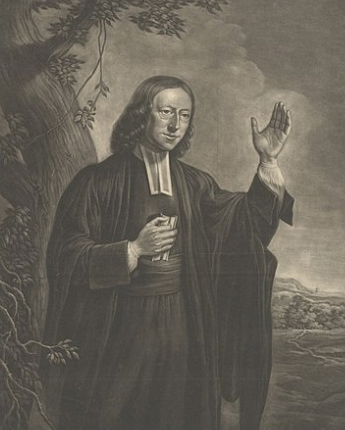
To be fair, it’s pretty clear that Christian perfection was a controversial doctrine from its inception. When John Wesley (the founder of Methodism) started talking about it, a lot of his friends disagreed with it. His ministry partner and brother, Charles, seems to have had a different idea of what it was and how to achieve it. Even Wesley’s exhaustive explanation of the doctrine, A Plain Account of Christian Perfection, is a real challenge by anyone’s definition. It is a composite work that includes personal reflections, hymns, minutes from a conference that he attended, bits from sermons that he preached, journal entries from a person that he thinks may have achieved Christian perfection (right before they died), and arguments against people who claimed to have achieved Christian perfection that he didn’t think managed it (the most notable examples being Thomas Maxfield and George Bell). John went through seven different revisions of this booklet across his life as he added more and more content. It’s kinda like a scrapbook of his doctrine and how he’s come to understand it across his lifetime.
So, yeah, we’re dealing with something that’s challenging and difficult to articulate. To briefly summarize the doctrine, Wesley believed that, through the Holy Spirit, a mature Christian could reach a state where they would avoid willfully sinning. That was Christian perfection. These Christians could still sin through ignorance, mistake, or error, since their bodies and minds were still very much in this world, but their hearts would be so mature in the faith that God’s love would reside in them. THAT’S the core of the idea. If you want to know more about it in John’s words, I recommend his sermon “On Perfection” from the year 1740. It’s much more readable than Plain Account. If you don’t want to read more but think my explanation is way too generous for such a wildly-named doctrine, John’s words from one of his letters put it into words that suit modern people a little more readily:
Perfection is only another term for holiness, or the image of God in man
John Wesley (Letter to Rev. Mr. Dodd, The Works of John Wesley, 11:450-451)
Rather than argue about whether or not this particular doctrine is good or bad, I’d like to share a little revelation about why it takes the form that it does. I’ve always wondered, “Why did John choose that particular name? I mean, if the word “holiness” or “sanctification” accomplish the same thing, why not use one of them? That would have gone a long way with some of his detractors!” Well, reading through some of the sermons of Count Zinzendorf recently (a Wesley friend that, like many Wesley friends, had a falling out with John before the end of his life), and he cited Philippians 3:15 regarding a desire for Christians to become perfect. You can imagine my puzzlement. I flipped open my NIV Bible and checked the verse: “All of us, then, who are mature should take such a view of things. And if on some point you think differently, that too God will make clear to you.” Okay? What was Zinzendorf talking about? Was I reading a bad translation of his sermons? And then I realized that the NIV is hundreds of years away from the translations that were being used in the 1700s. Of course it doesn’t sound the same; it wasn’t what they were reading. I popped open what would have been more normative for the time, the KJV, and lo and behold: “Let us therefore, as many as be perfect, be thus minded: and if in any thing ye be otherwise minded, God shall reveal even this unto you.” There was a “perfect” there historically that was translated differently today!
By no means do I think that’s a bad thing. Language changes, and translations change to keep up with the way that we speak. It looks like the Greek word, teleioi, is translated in different instances as either perfect, mature, or fully grown. But think about that! The fact that the New Testament has 7 instances of that word that all moved from “perfect” to something else over time is wild! And that’s not the only word that was translated away from “perfect” to something else. The KJV has the word “perfect” in it 129 times, versus the NIV’s 45 times. That’s almost three times the number of perfects! Now, obviously you’re going to have a different number of “perfects” depending on your Bible translation (NRSV- 41, NLT- 47, CSB- 32, ESV- 94), but with very few exceptions, most of us see the word “perfect” in our Bibles far less than 18th century Christians like John Wesley would have.
As a side note, I totally acknowledge that even though I stumbled onto this little tidbit while reading Count Zinzendorf, he was a German speaker and wouldn’t have regularly engaged the KJV. I’m woefully under-equipped to manage wading through historic German Bibles to get that primary source verification, but I’m going to assume that the translator of Zinzendorf’s sermons was accurate, which would mean that even German translations from the 18th century were more likely to use words like “perfect” than their modern equivalents are.
Why did John Wesley stick with the name “Christian perfection?” Well, he says in his Plain Account, “There is such a thing as perfection; for it is again and again mentioned in Scripture.” To modern readers, that’s a pretty hollow claim. There’s a couple well-known verses that reference perfection, but it’s usually referencing God, not people. Why would Wesley stake his whole idea on a word that doesn’t appear in the Bible as much as he acts like it does? Because in the translation that he was familiar with, it DID come up again and again. He saw the epistles as packed with references to Christian perfection! Language changes and Bible translators adapt, but it was a joy to see why a doctrine with such an inflammatory name got it’s name.

 Classic Theology