Deciding to post the entirety of a sermon series (The Gospel in a Postmodern World) was a task that took a lot more work than I expected. When I set out to do it, I thought, “All the work is already done! Since I’m moving to a new church, this will be an easy way to post stuff while I get accommodated to my new job.” WRONG! It took me AGES to get all of these sermons edited, transcribed, and posted. There was a lot of unexpected work that went into it, but I’m glad I did it. It was great to go back and look at some old sermons to let them sink in. Not only was it great to look at the material again (which I learned a lot from the second time through), but it was uniquely helpful to wrestle with them for such an extended period of time. Here were some insights I gained throughout the process that I thought were worth sharing.
1. Sermons are a lot of work.
Seriously, pastors are basically up there writing a book chapter by chapter each week. We might have different styles; some of us are writing a verse-by-verse commentary while others are working on a devotional and still others are doing totally different things, but regardless of which style someone uses, it’s a ton of work. We should remember that! As a pastor, I can verify that I feel guilty when I spend too much time on a sermon. Writing good sermons feels like the baseline for the job. The more you do on top of that, the successful you feel.
These seven sermons alone (35,000 words) measured up to a little under half the length of an average novel (75,000ish words) and was on-target for the length of a self-help book (30,000-60,000) or a shorter non-fiction book (40,000-70,000 words). That’s a lot of words! And this only represents seven sermons! Now, I preach for about 30 minutes each Sunday, which puts my sermon length above the average mainline protestant pastor (25 minutes) and below the average evangelical preacher (39 minutes), so my results are a little different than some others might be. Regardless of length or style, sermons are a ton of work, and it’s worth remembering that.
2. Sermons are their own medium
I know I just finished saying how sermons are like books, but they’re also not like books at all. Editing these suckers down to get them posted took a surprising amount of effort. A couple of them were already written, so I just had to do some light editing before I posted them, but the ones that weren’t written were put together using a transcription of the worship service from YouTube, and those ones were brutal to edit. Spoken words tend to be pretty informal. “Hey, how’s it goin’? You feeling tired today?” That sort of thing. There are also a lot of rules you can break while you’re speaking that are much harder to break when you’re writing. For example, writing in incomplete sentences are a no-no. They’re hard to read and look sloppy. On the other hand, when you’re speaking, you can throw around incomplete sentences all you want. If you’re taking a spoken piece and trying to transcribe it, you can try to really mash those incomplete sentences together with enough semicolons and colons, but it’s going to really hinder its readability. The spoken word just isn’t the same as the written word, and it takes some energy and creativity to translate one to the other.
3. Old Sermons Deserve More Attention
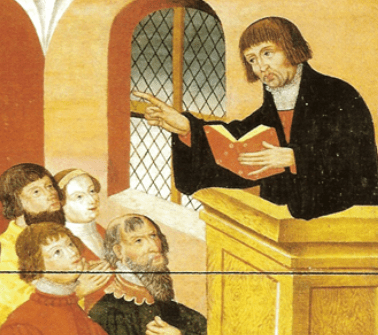
Sermons are one of the most disposable forms of media that I can think of. Books get read time and time again. Plays get performed over the course of a few weekends before the actors call it quits. Lectures from teachers and professors get used annually as long as they continue teaching the class. Even YouTube videos get watched multiple times if they’re good! But most sermons get exactly one day in the sun before they vanish forever. Sure, they’re often recorded somewhere, but very rarely does anyone go back and watch old sermons. Which is a shame! I found some really good stuff in here! And I’m sure there is a lot of really good stuff in all the old sermons out there that goes unnoticed just because their day in the sun has ended.
By no means am I saying that every sermon deserves to be played on repeat, but I am saying that I took a preaching class where I never read, listened to, or watched a single sermon that wasn’t given by myself or a classmate. I have a Master of Divinity degree and my coursework rarely had me looking at old sermons (with the singular exception of the required class on John Wesley to fulfill Methodist ordination requirements). By no means am I blaming any professors or the program I participated in. They had so much to teach already. I don’t blame them for not adding one more thing to the pile. There are a million things that deserve our attention in a given lifetime. We grab what we can and the rest slips by. I’m just saying that I hope to pay more attention to old sermons. There’s more there than most of us recognize.
 Classic Theology