Augustine’s Apologetics and Contra Faustum

Everyone has their favorites when it comes to theologians.

Augustine of Hippo is my guy.

I know, I know, he’s pretty mainstream as far as favorites go, but quality is quality, whether it’s loved by a million people or just one, and Augustine is quality. Is he smart? He was a genius.. Was he faithful? Absolutely. Did he bat 1000 when it came to hard questions and situations? Absolutely not. But that’s ok. Only Jesus did that, and expecting someone to nail it every time is pretty unfair. But even when Augustine is wrong, he’s wrong in an interesting way. He’s not going to leave you bored.

And he wasn’t just an idea guy; he was a people guy. There are some writers that are dry and dusty. Did they ever see the outside of their ivory tower? Probably not. And then there are the weird ones. I’m talking like Søren Kierkegaard weird. They’re brilliant and relatable when they write, but then you find out that they fumbled the love of their life by breaking up with them for no discernible reason and then they pined after them for the rest of their lives and wrote about it in several of their big works and you say, “Man, that guy had issues.” Did Augustine have issues? Yeah. But they were issues that are relatable. Anybody that’s read Confessions knows that even though Augustine was kicking over a thousand years ago, he had a life that is just like so many of our lives today.

At my church, I try to set aside a few Sundays every year to talk about big names in Christian history. I think it’s a fair critique of Protestants to say that too many of us imagine that there’s us and the Bible and that’s all there is, which is a shame because there’s thousands of years of people trying to live out the truth that’s contained in the Bible, and they’re really good examples to look up to. Augustine is one of the guys I set a day aside for every year in the hopes that someone learns about him and says, “Hey, I could be faithful like that!”

This past year, I wanted to highlight Augustine’s way of contending for the faith. He was a master at apologetics. People would come at him from every side, arguing about why orthodoxy was actually wrong and their weird heresy was secretly the real best religion and Augustine would just systematically destroy their arguments piece by piece by piece.

I was trying to pick out one of Augustine’s better arguments to highlight. I looked at Pelagius, the guy who famously said that God gave us the ability to know good from evil and a whole set of laws to help us choose good, so we don’t need extra help from God to do good! We just need to work hard and do it! It’s a bad take and skips over the damage that sin did to our will and our need for the Holy Spirit. It’s a great argument, but I prayed about it and just didn’t feel like it was the right choice. Then I looked at Augustine’s argument against Donatus Magnus, the leader of the Donatists. His clergy split off against the main Church because they endured during oppression when a lot of other Christian leaders had caved. They believed that anyone who betrayed the Church to Roman oppressors should be barred from leadership for life. Honestly, that’s one where Augustine was probably wrong about. I’m not gonna lie. The more you look into that one, the more you think to yourself, “I don’t know, it sounds like they’re the good guys and Augustine may be on the wrong side of this one…” I’m all for discussing someone’s mistakes, but it’s not exactly a great example of apologetics that can edify people. I kept looking and looking…

And then I found it. Augustine’s Contra Faustum (Against Faustus).

Why was this so exciting? Because Augustine writes about Faustus in Confessions. He talks about how he fell in with Faustus and his people (the Manichaeans) when he was trying to understand the point of life. He thought the Manichaeans were goofy, but they kept insisting that Faustus would explain everything when he got there. And then Faustus showed up! Augustine asked all his questions and Faustus responded, “I guess I never really thought about any of that. I don’t know.” Augustine didn’t hang out with the Manichaeans so much after that.

Augustine went on to become a Christian bishop, and lo and behold, years later he found out that the SAME FAUSTUS wrote a book on why Christianity is stupid and nobody should believe it. And because he’s a legend, Augustine literally reprinted Faustus’s book line by line with point-by-point disputations of every single idea that he had.

Contra Faustum isn’t one of Augustine’s more popular works, which makes sense. There aren’t a lot of Manichaeans around today to disagree with, and Augustine wrote over a hundred books, so not every one is going to become a legend. That said, there’s a lot to love here. In the sermon, I tried to pull out some of the arguments that were more relevant today. Does the Gospel have anything to do with Jesus being born of a virgin? Does the Old Testament conflict with the teachings of Jesus? Why don’t Christians keep the Old Testament law? I know I’ve heard each of these points brought up by people today to try to disprove orthodox Christianity, and these arguments aren’t new. Augustine took each one on hundreds of years ago, and most of his responses hold up really well. Here are my summaries/paraphrases of three chapters of Contra Faustum that I used for preaching. I hope they’re edifying for you!

Aquinas and Abortion

Thomas Aquinas’s name gets dropped in quite a few pro-abortion arguments.  Roe v. Wade referenced Aquinas.  President Biden referenced Aquinas.  There’s even a popular undercurrent of pseudo-history you can find around the internet that appeals to Aquinas to portray the Middle Ages as this golden age of abortions where your local herbalist was always at the ready to sell the neighborhood abortion drugs at the drop of a hat.  But why is Aquinas referenced with such regularity?  

Aquinas didn’t believe that a fetus was genuinely human until one to three months after the pregnancy began.

And that’s true!  He didn’t.  We’ll get to why in just a minute.  But the strange thing about all of the Aquinas citations is that the people who reference Aquinas (on both sides of the aisle) don’t seem to know much about him.  They know he’s a famous Christian and philosopher and if they can convince people he’s on their side, boy, that would be a knockout punch in their favor.  But that’s the thing; they’re not curious about what he actually has to say for himself.  They want to explain their own position and drop his name in there when it’s convenient.  When they bother to give any citations, they tend to be from secondary sources (which is so lazy when when the person in question wrote as much as Aquinas did) and even when there are direct citations, his most famous works are usually referenced, rather than the most relevant to the actual topic at hand.  So, I wanted to give Aquinas a fair opportunity to speak on the matter.  What did Aquinas actually believe about abortion? 

It’s a big question, so I’m going to tackle it in three different pieces: Aquinas on the Beginning of Human Life, Aquinas on Sex, and Canon Law in the Day of Aquinas.

And if you’re looking for spoilers, here’s the big picture: working within the bounds of popular science in his day, Thomas did believe that human life starts to be genuinely human between one and three months into a pregnancy (depending on the child’s gender). This qualified early-term abortion as a crime other than murder. That said he still lists it as a crime against nature regardless of when it happens, and he worked within a system where it was legally punishable by law at any stage during the pregnancy. Aquinas’s question wasn’t “Is abortion a crime,” so much as it was, “How serious a crime is abortion at each stage?”

Let’s dig in.

Aquinas on the Origins of Life

If we want to talk about Aquinas and abortion, the first place to go is his commentary on Peter Lombard’s Sentences.  It’s not as well known as his famous Summa Theologica, but it’s the only place where he goes from speaking in abstract terms about human development to a description that’ so concrete that it lists specific timeframes for that development.  The context here is a debate about Jesus’s development during Mary’s pregnancy. When was that little fetus Jesus? Was he the Son of God right from the moment of conception?  Or did he become the Son of God at a certain moment in the pregnancy?  Classic Aristotialian thought held that sperm grew into a person in the incubating space of the womb (indicated in the word’s derivation from the Greek σπέρμα sperma meaning “seed”). That process took 40 days for a male child and 90 days for females.  If you hold to that Aristotlian science (and Aquinas certainly did), you end up with a question: did Jesus have a proto-human phase in which he successively became a human from a sperm?  Or was he just instantaneously there in the womb as a person through the power of the Holy Spirit?  He answers as follows:

[A]ccording to the faith, Christ’s conception must be held to have happened instantaneously, for human nature was not assumed before it was perfected in its species, since its parts were not assumable except by reason of the whole, as is evident from what was said in Distinction 2. … For this reason we must consider that conception to have been instantaneous, so that these things existed in the same instant: the conversion of that material blood into flesh and the other parts of Christ’s body; the formation of the organic members and the soul being infused in the organ-bearing body; and the assumption of the ensouled body into the unity of the divine person.

Now, in others these things occur successively, such that a male child’s conception is not completed until the fortieth day, or a female’s until the ninetieth, as the Philosopher says in History of Animals, [book] 9. But in the completion of the male body Augustine seems to add six days, which are distinguished as follows, according to him in his Letter to Jerome. For the first six days the seed has a likeness resembling milk; in the next nine days it changes to blood; then in twelve days it solidifies; in eighteen days it is formed to the complete lines of the members; and from then on the rest of the time until the time of delivery it grows in size. Thus the verse: Six days as milk, three times three as blood, two times six forms the flesh, three times six the members. However, in Christ’s conception, the matter that the Virgin supplied immediately took the form and figure of the human body, as well as the soul, and was assumed into the unity of the divine person (Commentary on the Sentences, Book 3, Distinction 3, Question 5, Article 2).

You can see him reference some of his previous work (Book 3, Distinction 2, Article 3) in the quote there to try to establish that Jesus Christ was not just the soul, but the body.  In the incarnation, there was a perfect union of God and man, not a material body that developed separately and then a soul that came along after the fact. There had to be a legitimate, full union between the two natures. He admits that for normal humans, the Aristotelian norm of 40 and 90 days before you’re fully human is true, but Christ’s exceptional incarnation led to him just popping into being through the power of the Holy Spirit, rather than developing from a sperm.

All of this science is very strange to us and obviously wrong. He doesn’t even know that eggs exist; only sperm. Even so, you can see how this really clearly gives us the framework to determine when a fetus is a human child. In his words, it’s “ensouled” after the first few weeks. Before that, an organic creature is developing, but it’s not one that’s human just yet.

If we just look at this solitary piece, abortion feels like a pretty rational move for a Christian that’s following in his footsteps, right?  Ah, but we can’t just pluck out his pieces about human development (a proportionally small piece of his works) and ignore the lion’s share of what’s left and declare ourselves to be thinking in his tradition.  Let’s keep going to see why Aquinas actually did not support abortion.

Aquinas on Sex

Now that we know what Aquinas thinks about the development of a fetus, we need to understand what he thinks about the procreative act itself.  On this topic, Aquinas really is absolutely a man of the medieval Chrisitan world.  And what did medieval Christians think about sex?  Well, to them, it was absolutely intertwined with having babies.  You couldn’t rightly separate the sensual aspect from the procreative aspect without stumbling into sin.  Now, obviously I’m not saying that everyone in the middle ages acted according to that worldview and never cheated on their spouse or whatever other thing you can imagine.  Of course they did.  People don’t always live up to the ideals of their society, even if they claim to ascribe to them.  But when it comes to the ideals, doctrines, and philosophy of the time, there can’t be any doubt that any effort to enjoy sex without an openness to procreation was sinful.

And why?  Well, the medieval world, and especially Thomas Aquinas, thought in terms of natural law.They believed the world had a natural sort of logic to it that was built in by God.  As you went about living your life, you were expected to look at each object and each act to consider why it exists.  Why did God make this?  What was his purpose?  Are you acting in a way that’s consistent with the logic of God’s creation?  Or are you twisting things around to serve your own wants, rather than God’s intended purpose?

That’s really abstract, so let’s work through an example.  An obvious one is food.  What is the logic of food?  Food exists to give us nourishment.  The process of eating it might be pleasurable (and there’s nothing inherently wrong with that), but if we’re going to live by the logic of the thing, the process of eating should never be separated from its natural end: we eat to be nourished.  If we start to enjoy it without that end in sight, that’s when we start to sin.  Are you enjoying Doritos because you’re hungry?  That’s great!  Are you enjoying Doritos when you’re already full but you just want to keep munching because they’re delicious?  That’s sin.  You’re losing sight of why God gave us food and just enjoying it out of gluttony.

Now, take that logic and apply it to sex.  Why does sex exist?  To have kids.  That’s the natural, logical end of the process.  If you wanted to have sex righteously, you were expected to look towards the end (babies), rather than just indulging for the pleasure of the process itself.  That was lustful and a misuse of what God gave us.  Not only was this logic very popular throughout the medieval world, but it was very popular with Thomas Aquinas.  As a matter of fact, the argument and examples that I just gave (sans Doritos) are straight out of his magnum opus, Summa Theologica, when he’s rejecting the idea that all “venereal acts” are inherently sinful:

A sin, in human acts, is that which is against the order of reason. Now the order of reason consists in its ordering everything to its end in a fitting manner… Now just as the preservation of the bodily nature of one individual is a true good, so, too, is the preservation of the nature of the human species a very great good. And just as the use of food is directed to the preservation of life in the individual, so is the use of venereal acts directed to the preservation of the whole human race (Question 153, Article 2).

Also, notice that he felt the need to debate whether or not there can be non-sinful sex.  That should tell you something else about the medieval world verses our own!  While we debate, is there any sex that is morally wrong, they were debating whether there was any sex that is morally right!  A very different starting place

This alone helps us shift gears when we’re thinking about Aquinas and abortion.  Aquinas would not have wanted anyone to have sex if they weren’t open to having children.  That would be against the nature of the act and sinful sex, even for a married couple.  Aquinas says as much directly in his Commentary on the Sentences when he addresses one of Peter Lombard’s quotes about birth control:

As for those who procure poisons to induce sterility, they are not marriage partners, but fornicators. (Sent. IV, 31.3 (184). 1.

Although this sin is grave, and to be counted among wicked deeds, and against nature (for even beasts desire offspring), nevertheless it is less grave than murder, since a child conceived could be prevented in another way.  Nor is such a person to be judged irregular, unless he should now procure an abortion for the child about to be born  (Book 4, Distinction 31, Question 2, Article 3).

And in that quote, you can see how he starts to move from birth control to abortion in applying the same logic. We are given food to be nourished.  We are given sex to procreate.  Why is a person made pregnant?  Is it to end the pregnancy?  No.  That would qualify as going against the natural logic of pregnancy in the most direct way possible.  Natural law philosophy was one of Aquinas’s biggest emphases, so if we want to introduce him to conversations about abortion, we have to remember that background first and foremost before we can deal with any of the specifics.

Church Law in the Days of Aquinas

But now that we’ve set the stage on some of Aquinas’s basic convictions as an Aristotilian thinker and a natural law enthusiast, we need to acknowledge the actual law of the medieval church during the era that he was at work.  As famous as he was, he influenced the teachings, and the teachings most definitely influenced him, so what did the church actually hold during the eras in question?  And I do want to acknowledge that this is a really complicated thing to research.  A shocking amount is not readily accessible if you don’t speak Latin.  Luckily, Paul Harrington wrote an excellent summary of laws pertaining to abortion over time in church history in The Linacre Quarterly that makes the depths of medieval church law accessible to anyone. While we have a particular interest in church law during the lifetime of Aquinas (1225-1274), a broader picture of what was going on in the medieval and Roman Catholic church won’t hurt our understanding either.

Looking at church law over time, for a little over a thousand years, the church considered abortion to be legally identical to murder and the standard punishment was usually excommunication.  It’s hard for us to wrap our minds around something like excommunication, since there’s not really an equivalent today. If we get kicked out of our congregation, good riddance! We’ll just go to the church down the street! But if we want to really understand their mindset, it’s crucial to recognize just how serious a punishment like that was in that timeframe.  An excommunicated person was cut off from the church until they had fully repented, meaning they couldn’t go to worship with their family and community.  They couldn’t participate in the sacraments.  They couldn’t get married.  They couldn’t offer prayers for dead relatives.  They couldn’t get buried. And if they died while excommunicated, Hell was the destination.  Excommunication was the most severe punishment you could get from the church.  This was serious.

A little after the turn of the millennium, we do see that distinction between an animated and inanimate fetus make it’s way into law. It first appeared in 1116.  A bishop named Ivo of Chartres first introduced it, and that distinction was taken up by a legal scholar named Gratian and printed in the legal textbook that became the standard for decades moving forward, Decretum.  It continued in Roman Catholic law for 753 years until Pope Pius IX ended that distinction in 1869.  During this period, if you got an abortion outside of the 40 day limit for males or 90 day limit for females, you were a murderer.  If you got an abortion within the limit, you had committed quasi-murder or homicide (the language varied depending on specifics at the time).  As the name implies, the punishments were less severe for quasi-murder.  For example, in 1159, your punishment was 3 years of penance if you aborted an inanimate fetus, verses the 7 years of penance or more that you would receive for aborting an animated fetus (which was the punishment for murder). And that’s just one specific instance. Sometimes, the punishment was a lifetime of excommunication. Sometimes it was left up to regional leaders. You get the idea. The important thing to note is that there was a legal distinction that made one a greater sin and the other a lesser sin. Some of the other abortion-centric laws in this timeframe didn’t acknowledge the distinction. For example, a piece of legislation by Regino of Prum in 1211 introduced a law that anyone caught selling drugs to induce abortion (at any stage of development) was guilty of murder. On the whole though, the distinction stands (for those who are curious, the distinction never really seems to have made a meaningful appearance in the Protestant world).

Notice that Aquinas’s position was the dominant position of the church during this time.  Abortion was always sinful.  The distinction in church law was never used to imply otherwise.  The distinction came up because people wanted to know how severe the sin of abortion was. Was it murder? Was it quasi-murder? Was it grave sin? Is it a lifetime excommunication or a period of penance? What punishment fits the crime?

Conclusion

Whew!  That’s a lot to take in.  Honestly, every time I learned more about this topic, it genuinely pushed me to deeper levels of understanding.  It was wild to see how recent our modern understanding of biology is, how church law was enacted in different eras, and how philosophy and theology have influenced one another in so many different ways.  I didn’t come to this question knowing the answer.  I came because I wanted to see firsthand what the truth was, and after some sifting around, I found more of it than I started with.  And I got to rediscover that history is so weird!  People in different times had such different ideas that are hard to wrap our minds around.

Nevertheless, at the end of it all, I have to wonder whether pro-abortion appeals to Aquinas are a product of ignorance or if they’re knowingly made in bad faith.  The solitary point of agreement is that he did not think human life began instantaneously after sex.  After that point, it’s all downhill.  In spite of that agreement, he did agree to a relatively early date where the child was fully human.  He considered abortion a crime against nature at best and murder at worst (depending on the timing).  He upheld and helped to shape a system of philosophy and canon of law that literally included it as a punishable offense.  Is this really the best person to appeal to?

As humans, we have the unique privilege of looking at this world around us and trying to figure it all out.  That’s wild!  We get to learn and read and try our best to come to knowledge of the truth.  A basic part of wielding that privilege well is acknowledging when we disagree with others and why we do.  When we misrepresent the legacy of others to make our ideas more palatable to those who would otherwise disagree, we’re participating in a lie, and the truth is never uncovered by lying.

Other great recommendations for those who want more:
Summa Theologica Ch. 118
Summa Contra Gentiles, Book 2, Ch. 65 and up
Abortion: Part VIII, Paul V. Harrington
A Great Free Translation of All Things Aquinas by the Aquinas Institute
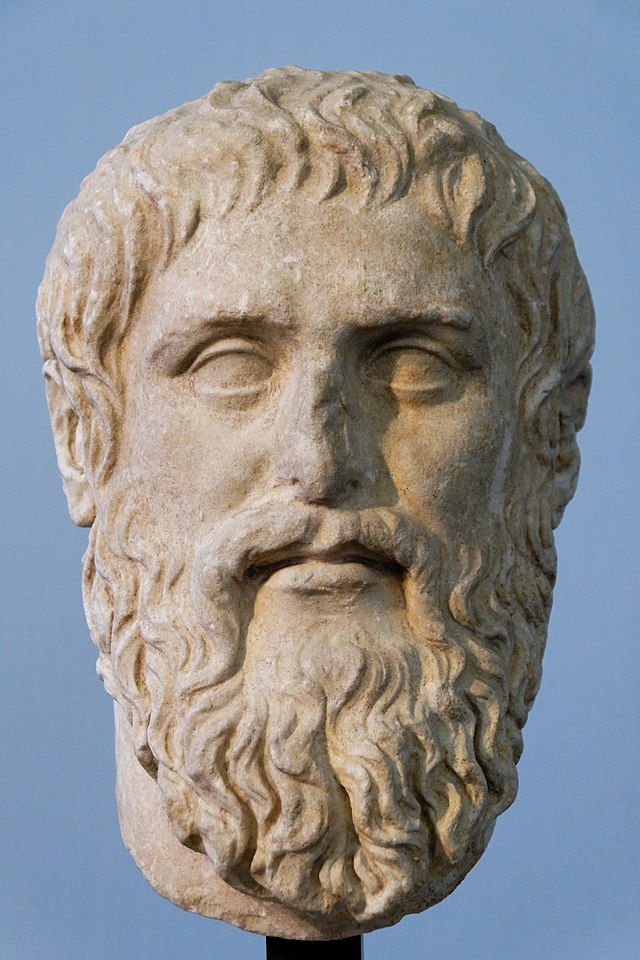
Metaphysical Wonder: Plato and Patristics

The more I learn about Plato, the more I realize that patristic theologians relied heavily on his work to talk about God. I’m reading through Confessions right now, and it’s absolutely littered with echoes and quotations from Plotinus, a prominent Platonist philosopher. For example, here’s his classic definition of sin (the decision to act for yourself, rather than in accordance with God’s will) side by side with Plotinus’s definition:

I directed my mind to understand what I was being told, namely that the free choice of the will is the reason why we do wrong and suffer your just judgement.

Augustine, The Confessions, p. 113, Trans. Chadwick

What is it, then, which has made the souls forget their father, God, and be ignorant of them- selves and him, even though they are parts which come from his higher world and altogether belong to it? The beginning of evil for them was audacity and coming to birth and the first otherness and the wishing to belong to themselves.

Plotinus, Enneads, 5.1.1

Obviously not a one-to-one copy, but Auggie’s understanding is incredibly compatible with the leading Platonist voice. If you were a Christian, you’d be able to use Platonic logic to back up your points without too much trouble. Similarly, if you were a Platonist that wasn’t a Christian, you’d have some common ground with the Christian tradition if you were looking to convert.

Here’s another example. In this passage, Augustine is trying to describe how he thought about God interacting with creation.

I visualized you, Lord, surrounding [creation] on all sides and permeating it, but infinite in all directions, as if there were a sea everywhere and stretching through immense distances, a single sea which had within it a large but finite sponge; and the sponge was in every part filled from the immense sea. This is the kind of way in which I supposed your finite creation to be full of you, infinite as you are, and said: ‘Here is God and see what God has created. God is good and is most mightily and incomparably superior to these things.

Confessions, p. 115, Trans. Chadwick

The universe lies in soul which bears it up, and nothing is without a share of soul. It is as if a net immersed in the waters was alive, but unable to make its own that in which it is. The sea is already spread out and the net spreads with it, as far as it can; for no one of its parts can be anywhere else than where it lies. And soul’s nature is so great, just because it has no size, as to contain the whole of body in one and the same grasp; wherever body extends, there soul is. If body did not exist, it would make no difference to soul as regards size; for it is what it is.

Plotinus, Enneads 4.3.9.38

Whether we’re sponges or a net, there’s a massive entity in each example (God/soul) that exists as the water that extends in all directions and contains us. When Augustine wanted to talk about God, he used Platonic ideas that had been spread around the Mediterranean for hundreds of years to get the job done.

It’s beyond obvious that these aren’t complete rip-offs. Augustine didn’t pop open Plotinus and start copying bits word for word. Nor are all Platonic ideas are even compatible with Christianity. The guy believed in reincarnation, for crying out loud. To be Christian, you had to admit that Plato got some of it wrong. But clearly Plato and his gang were often seen as people that got most of it right; they just needed a bit of tweaking to fully get there. Augustine credits the Platonists with giving him the logic that prepared him for the Gospel:

You brought under my eye some books of the Platonists, translated from Greek into Latin. There I read, not of course in these words, but with entirely the same sense and supported by numerous and varied reasons, ‘In the beginning was the Word and the Word was with God and the Word was God. He was in the beginning with God. All things were made by him, and without him nothing was made.’

The Confessions, p. 121, Trans. Chadwick

In other words, thank God for Plato’s books, which prepared me for the Bible.

Before going too much further, I do feel obligated to discuss the possibility that patrstic authors like Augustine were too influenced by philosophers like Plato and weren’t really looking at the Bible on it’s own merits. Totally untrue. Patristic sources quote the Bible constantly. Confessions is littered with Bible quotes. These were people that swam in the Scriptures; the assumptions they approached reality with were just very different than our own.

Plato’s work gave early saints the metaphysical concepts and language they needed to talk about God. Platonism had it’s own version of the trinity (the One, the spirit, and the soul). It explained how when we do good, we participate in God’s good actions, rather than act independently of our own ability. It gave the Eastern churches the framework for the doctrines of theosis (becoming like God through constant participation in his actions) and apocatastasis (all things eventually returning to God, really only common in Eastern Orthodoxy). Even the ways that classical Christian orthodoxy frames God as the timeless, spaceless, source of all being are built partially on the assumptions that Plato built. That philosopher gave ideas and language to Christian theologians that were desperately trying to find words to describe their God. In the words of Anglican theologian Dean Inge, “Platonism is part of the vital structure of Christianity, with which no other philosophy, I venture to say, can work without friction.” More aggressively, he wrote that there is an “utter impossibility of excising Platonism from Christianity without tearing Christianity to pieces,” (History of Western Philosophy, 285).

Maybe Paul’s disciplemaking trip to Athens in Acts 17 served a greater purpose than we knew! Maybe spreading the Gospel to Greek minds was God’s way of preparing the ancient Church for the metaphysical work ahead. Ok, technically Plato was known by academics throughout the Mediterranean region, and Plotinus (an Egyptian) specifically wasn’t even born until over a hundred years after Paul’s death. The quotes from above aren’t direct results of Paul’s venture to Athens, but I still think Acts 17 is a brilliant symbol to represent the early Church’s theological growth. The Gospel made it’s way to Greece and was spoken to and by a new people, gaining new expression in the process.

Obviously, the average person today doesn’t know a lot about Plato. I wonder if that’s why so many classical ideas about God’s nature are under attack. It’s fairly common (at least, in my circles) to hear someone say that God is subject to change (not timeless), that God is capable of making mistakes (not good), and that God chooses to let us make whatever choices we want to make without interfering (no participation). If we’re reading the Scriptures with today’s prevailing philosophies in mind (probably some brand of rationalism and materialism), God might seem remarkably human. He bargains with a merciful Abraham about the minimum number of righteous people left in Sodom and Gomorrah before he’ll destroy it (Gen 18). He regrets making humanity (Gen 6:6). He changes his mind about disasters that he’ll send (Amos 7). You get the idea. God is personified relatively often, and those personifications are commonly read by modern thinkers in unflattering, very mortal ways. In the patristic era, it was common for theologians to say, “Well, those stories are just symbols to communicate God’s immense, unfathomable ways to a limited, sinful, mortal people,” but that’s not a common response that I hear anymore. With the loss of a language to describe the things we can’t see, it’s hard for most modern people to imagine a God beyond our mode of being. If God exists, he must be like us, which leaves us why he’s worth worshiping at all.

We need a cure for our loss of metaphysical wonder. I don’t know that everyone ought to go read Plato. There’s a lot of stuff in there that the Church Fathers rejected in long, drawn-out, messy theology battles. We don’t need to start those up again! But we do owe it to ourselves to listen to Christian voices that had a common philosophical vision so different from ours. Their writings have gifts that we won’t find anywhere else, and they point us to a God that’s so delightfully other from our cultural imagination that we can’t help but stand back in awe.

Can God Act? Charles Taylor and the Impact of Secularism

A few weeks back, I was chatting with my spiritual director and somehow I got on the topic of religious language.  A friend of mine uses religious language that’s really foreign to me.  For example, she might say: “I woke up this morning and was so grateful that the Lord gave me one more day, and so I thanked him with all my heart.  Later on, as I ate my cereal, I pondered, ‘Lord, what are you asking of me today?  What do you want?  Should I go to the store?’”  For some reason, her language just makes me a little uneasy. Obviously it bothered me enough that I wanted to process it with someone else! Why does she have to talk like that?

My director’s response was simple enough, “It’s very brave of her to talk like that.  She knows that most people in our world don’t sound like her, but she chooses to use that language anyway.  What makes you uncomfortable with her language?”

I threw out some bad guesses about religious background and education, but they were all nonsense.  I didn’t have a good answer.  I’ve just been sitting with that question for a few weeks, trying to ask myself why her language bothers me so much.

God must have heard me crying out, because I certainly ended up reading in the right direction; I stumbled back onto the work of Charles Taylor.  His work in A Secular Age may only be from 2007, but it’s a masterwork for religious people of all traditions.  He investigates the philosophy of secularism, how it developed, what ideas hold it in place, and what it means for religious thought today.  Admittedly, I’m not reading Taylor directly; I’m reading Andrew Root’s The Pastor in a Secular Age, which builds on Taylor’s work to see how pastors understood themselves and their society historically to determine what a pastor’s challenges are today.  That being said, it’s a book in Charles Taylor’s tradition.  Root is very much building on what Taylor’s work (in a delightfully readable way).

In any case, it had an answer to my burning question: I’m a pretty secular person. It’s no wonder that language about a God that acts feels wrong.  Does God exist?  Sure!  But it’s uncomfortable to address him as a being that acts and moves and has a being.  God is, after all, in us!  He is sustaining all things!  He is creating!  At least, that’s the way we talk about him in mainline churches.  But if we’re being honest, that’s all pretty passive, impersonal stuff.   God looks suspiciously like a weird spark somewhere between personal inspiration and natural law.  It’s not the kind of God you really need to worry much about, and it’s certainly not one that you wake up every morning talking to.

Here’s two big reasons that really hit me as why mainstream Western society has a hard time talking about God in an active voice:

1. We’ve dis-embedded God from public life.

Historically, God’s will was understood to be the foundation of public life.  Just think about Joan of Arc!  Why did she fight the English?  Because God wanted France to win.  She was God’s instrument, and God’s will was made manifest through her.  Again, think about the “divine right of kings.”  Why was someone the king?  Because God wanted it like that!  There was no way to divide what was happening in the world from the active work of God.  God acted, and the world was shaped according to his authority.

The rise of democracy made God’s action in the world a little harder to understand.  Power wasn’t vested in a king; it was in the will of the people!  But if you consider the way that God’s authority was popularly interpreted in the public square, that brings a bit of a problem to seeing God’s work in the world:

[In democracy,] sovereignty comes from the people, not from the king; but the king’s sovereignty comes from above, from God; so democracy is already an implicit rejection of God.

Taylor, Dilemmas and Connection: Selected Essays (Cambridge, MA: Belknap Press, 2011), 228.

Ever wonder why so many American founding fathers were deists?  This is why!  When public life is a primarily a product of human will, rather than divine action, it’s harder to believe in a God that actively takes an interest in public affairs.  We moved from a system in which God was acting and the world was shifting according to his will to a system in which people were responsible for organizing themselves to manifest God’s ideal world.  God ceased to be the primary actor in public affairs and the role of the individual became far more prominent than ever before.

If you’re a citizen in a Western democracy, you’ve probably internalized this logic.  For example, what’s your first thought when a political candidate you despise wins the election?  Probably something like, “Dang, we needed to mobilize our voting base more effectively and appeal to a broader audience.” You probably don’t worry that this is a judgement from God for failing to live faithfully. When we have such power at our disposal, it’s hard to envision the results of an election, the outcome of a war, or the laws that we live by as a product of God’s action, rather than our own successes or failures in the public arena.

2. We’ve divided the natural world from divine purpose and action.

In previous eras, everything that happened was full of deep meaning.  Lightning struck near you?  Sign from God.  Good crops?  God is happy.  The sun rose?  God wanted the sun to rise.  The whole world was a theater for the divine, and God’s intimate work was everywhere.  Was it superstitious by our standards?  Oh, absolutely.  But every detail mattered intimately.  Today?  Well, today it’s hard to believe that anything is particularly meaningful.  The discovery and codification of natural laws have brought huge breakthroughs to the understanding of science and medicine, but (when they’re coupled with the elements of our secular philosophy) they’ve also closed off our understanding of the universe.  Whereas before the universe was open to God’s action, constantly being affected by the divine will (or the will of other, less pleasant entities), now the system is largely seen as self-governing and closed off to any outside parties.  For example:

When the fifty-five-year-old woman asks her pastor about her cancer, we’re quick to claim that its cause is impersonal. It’s just the odds, bad luck, the randomness of an impersonal order, or childhood exposure to some toxin or chemical. Yet if this is so—and it might be—then it becomes much harder for her to trust that a personal God can act to heal her. It is less frightening to assume that it is just the odds or bad luck that makes her sick—it’s nothing personal. She did nothing wrong, nor is some malevolent personal force after her. Yet, while this is less frightening, without a personal cause it is much harder to imagine (and explain) the intervention of a personal God in a presumed impersonal universe. And maybe more importantly, it becomes a challenge to provide meaning to her illness and death. She is stuck with a meaninglessness to her disease because, though deeply personal to her, her disease is only a fading echo in a dark, cold, impersonal universe where everything dies, swallowed in the tsunami of massive, impersonal time and space. If the cancer is caused by no personal force, how can a personal God affect her, other than by providing some banal comfort or cold indifference?

Root, Andrew. The Pastor in a Secular Age (Ministry in a Secular Age Book #2) (p. 56). Baker Publishing Group. Kindle Edition.

Where we previously saw God reaching into our world and acting, now we only see the cold logic of natural law. It’s harder to blame God, but it’s also harder to expect anything from him.

Hopefully none of this feels like a glorification of the past and an utter rejection of our present world.  Not at all!  After all, I live here and there’s some pretty cool stuff to enjoy!  It’s just a way of trying to explore why previous generations could easily see God acting in the world around them, and why we find it so hard.  Their philosophy naturally emphasized the role of the divine, whereas ours emphasizes human action and natural law to a far greater degree.  No wonder my friend’s language made me so nervous!  God is doing things?  Talking to people?  Planning stuff?  Eew.  Gross.  Please use more passive language for your God.  It sounds ridiculous when you act like he exists. 

What would it mean to imagine that God can talk over a bowl of cereal?  That he wants something and that we’re capable of hearing it?  More than that, that other people are capable of hearing God too, and he is acting in the world to make his will manifest?