Keep: Deep Tradition

This is my final entry on my series on the things I inherited from Eastern Orthodoxy and my re-evaluation of them in light of my awakening to classical Protestantism.

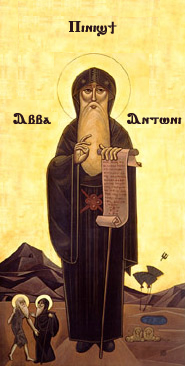
The time has come to bring this to a close. I could go on at length about the influences I want to keep and the sources I want to let go of from the Eastern Orthodox world. I could talk about the beauty of Anthony of Egypt’s biography! I could opine about the liturgy of John Chrysostom. I could grumble about their failure to stand firm against encroachment by corrupt state officials. I could critique their decentralized role of Scripture. I could do all of that and more. But at some point, you have to move on. As I said previously, I’m skeptical of Eastern Orthodox reads on Church History, I’m lovingly mixed on the impact of the Desert Fathers, and I’ve dropped Bulgakov completely. Time to write about something I definitely want to keep: the emphasis on traditional sources.

The Eastern Orthodox world is so good at treasuring their spiritual heritage. When they have a resource or a writer or a saint that’s especially worthy of remembering, they remember them! Their sermons reference John Chrysostom! Their books reference Gregory of Nazianzus! Their devotionals are often written by figures like John of Damascus! They stand on the shoulders of giants! Now, is every Eastern Orthodox Church like this? I couldn’t tell. you. I can only see the little enclaves they have in the West. But what I see here is amazing. What a precious, delightful gift to see people being nourished by the historic heroes of their faith..

Nikodemos of Athos is one Eastern Orthodox figure in this pattern who particularly stands out to me. He was this Greek monk in the 19th century that was renowned for his writing. And what did he write? He translated and compiled old Orthodox writings so that Greeks could see the beauty of their spiritual heritage. And it was timely to do so! As Greece became more secular and modern, people started lionizing old pagan philosophers as “the real Greek heroes.” Nikodemos was pointing back to the saints of the Byzantine era and telling people, “Don’t forget who you really are! This is your real heritage!”

We Protestants would benefit so much from this. In too many of our churches, there’s almost no substantive reference to any timeframe except the pastor’s personal life and the Bible. Two-thousand years of studying, praying, living, and dying are just cast aside. And what do we lose in that? We lose voices that could help guide us and teach us. We lose access to wisened saints who can tell us, “Hey, I’ve been there, and here’s what you can do.” We lose access to the record of questions that have been asked time and time again, reminding us that we’re not the only ones to ponder things. We lose so, so much.

Why don’t we engage with our spiritual heritage? There are probably a lot of things that could rightly be pointed to. We could look at the role of emotionality in Western Protestant churches after the Enlightenment. There was a cultural movement that come along and told the Church, “Science is the realm of facts and logic, religion is for feelings and stuff. Stay in your bubble and we’ll stay in ours.” Too many churches took them up on that deal. Heck, there are whole traditions where the Holy Spirit is more or less equated with strong emotionality! And those traditions cross-pollinate with other Christian groups and cause all sorts of headaches. If we divide our lives into facts and feelings, we can’t be surprised when our church gets “sorted”fixed” to fit cleanly into our boxes. And if we’re happy enough for church to just fill our hearts, other things will come along and fill our heads.

A second challenge that I think is uniquely worth mentioning for American Protestantism is our denominational history. Some of our biggest denominations (Methodist, Baptist, Pentecostal) were able to spread across the frontier areas of the United States so quickly and gain such a strong foothold partially because they had really low educational requirements. For some of those denominations, that’s a source of pride; God can use anybody that he calls if they’re sincere and want to serve him! Which is partially true, but also implies that Christianity is really pretty easy when it comes down to it. All you need to do is pray and read your Bible and you’re good to go, which is a bafflingly low bar. Nobody wants to hire a lawyer whose only qualifications are feeling God’s call on their life and reading a few pages from the constitution every morning. Nobody wants to receive surgery from a doctor who didn’t go to medical school but has a nice smile and feels convicted that the Holy Spirit moves his hands during surgery. “But Vincent, those aren’t the same things!” You’re right! They’re not. Neither of these can affect our eternity quite as much as a pastor can. Why should the people who do work on eternal souls be held to a lower standard than the people who handle any other serious task in our lives?

Yes, theology is hard. No, not everyone in a church needs a comprehensive knowledge of patristics to know Jesus. But do they need a total lack of theological knowledge? Do we need to avoid talking about who Augustine and Luther and Gregory the Great to make sure nobody feels too challenged? How many folksy analogies should a Protestant congregant have to wade through to hear something about one of the giants of the faith? Because the Eastern Orthodox Church is going wild passing on historic treasures to its congregations. It isn’t trying to be cool; it’s busy being important. It’s not trying to be accessible; it’s teaching people what they need to learn. It’s not trying to be relevant to pop culture; it’s busy trying to be relevant to God. And maybe some of that praise is a little over the top, but I see that they have something that we desperately need. They have a sense that the contributions of their saints are actual, life-changing teachings, not just strange burdens that clergy in training are obligated to stumble through before they can get ordained.

That’s one thing I don’t think I’ll ever lose. I’m really thankful that my time with Eastern Orthodoxy taught me that tradition is a blessing, not a burden. The saints that went before you WANT to help you understand the Bible! They WANT you to grow spiritually! They WANT to be a blessing! And they were to generations of people. Jesus Christ is the foundation, but these are the spiritual bricks that are in the wall beneath us. We need to know the saints from our tradition. We need to share the treasures of Spurgeon, Chrysostom, Machen, and so many others. We have a history. If we want to look forward, we need to be empowered by our past, not free of it.
God in the Mountains: Moving from Bulgakov to Machen

I’ve been doing this little series about thinkers and doctrine from the Eastern Orthodox world that I’m slowly moving away from since uncovering classical Protestantism, and today, I’m looking at Sergei Bulgakov.  Bulgakov is a towering figure in Eastern Orthodoxy, though not without controversy.  He was accused of heresy for his teachings on Sophiology (more on this to come).  Even still, he’s influential enough that his name is pervasive. As someone who spent a fair amount of time with his works, I wanted to appreciate the best of what he brought to the table while holding the more theoretical parts very loosely, but the further I’ve moved away from Eastern Orthodoxy, the more I can see that Bulgakov’s work just isn’t worth holding on to at all. Not only are his ideas overly-complicated and bizarre, but they really influence every other part of his work.

But what is this potentially-heretical Sophiology?  It’s an uncommon enough field that a lot of people have probably never heard of it.  I’m going to try to keep it simple (which is more than can be said about Bulgakov, whose books are both annoyingly long and unimaginably unintuitive).  The core of it can be found in Proverbs.  You know that female figure that’s supposed to be the embodiment wisdom?  In Greek, the word wisdom is “sophia,” so this female incarnation of wisdom is occasionally referred to as “Sophia,” (which is strange, given that Proverbs is written in Hebrew; her name should really be Chokhmah instead of anything in Greek, but what are you going to do?).  Sophiology starts here.  Rather than taking the traditional view that lady wisdom a metaphorical character intended to represent wisdom, she is fleshed out into a whole other divine being that is literally the wisdom of God.  And that comes with tremendous implications.  Is Sophia God?  Is she a fourth member of the Trinity?  Theologians know they can’t have a second god or a fourth trinity member and still consider themselves legitimately Christian, so they have to come up with elaborate explanations to avoid these problems. In Bulgakov’s case, he said that the trinity was three beings (hypostases) with one essence (ousia), but Sophia was one essence with no being. She was fully hypostasized by the Trinity (and I hate to use an abundance of Greek words, since it obscures more than it enlightens, but if I didn’t drop the Greek words, I don’t think I’d be properly representing his thoughts).  Despite Sophia being made of the essence of God, she was set apart by him in creation so that she could continually creatively grow to be more like Him and His holiness. In other words, she is creation, constantly growing and becoming more like God, which is what she’s really made of.

If the bar for good theology was creative thought, Bulgakov would be crushing it.  If the bar is accurately expressing the apostolic faith found in the Scriptures, we’re in trouble. Almost none of this stuff is clearly present in the Bible.  We’re taking some “made in the image of God” stuff from Genesis, a little of John 1, and some select chapters of Proverbs and running wild with it.  The divide between creator and creation is practically non-existent in this model.  Yes, humans are made to be like God, but nowhere in Scripture is creation said to be from the essence of God, eternally returning to Him.  That’s fanciful and completely made up.

To be fair to the Eastern Orthodox world, Bulgakov’s Sophiology was mostly rejected.  Probably the best quote about him comes from an untranslated Russian work of little snippets from Archbishop Nathaniel of the Eastern Orthodox Church. He recalls sitting with a group of people that were all hating on Bulgakov and Metropolitan Anthony said:

Unfortunate Father Sergius, unfortunate Father Sergius. After all, this is a very smart person, one of the smartest in the world. He understands many things that only very few understand. And this makes him terribly proud. It’s hard not to be proud if you know that something is clear and completely understandable to you, but no one around you can understand it.  
(Archbishop Nathaniel L’vov, https://azbyka.ru/otechnik/Nafanail_Lvov/krupitsy-pospominanij-o-vstrechah-s-velikim-avvoj-mitropolitom-antoniem/, trans. Google)

He isn’t wrong.  Bulgakov’s work and feels very much like the creation of someone who got bored and felt a need to invent a whole philosophical system to delight themselves. The fact that it’s almost impossible to explain his ideas to anyone without them making a confused face and saying, ‘Huh?” is a really, really bad sign. Ideas are generally supposed to solve problems. Here, Bulgakov has created a problem where there was none to introduce a solution that is nothing but a problem.  I have no doubt that he was smart.  I don’t know that he was interested in receiving the faith so much as he was creating one.

Despite his Sophiology never catching fire, Bulgakov still has a lot of clout in Eastern Orthodoxy.  He’s one of the big names.  His works have weight.  A lot of people are willing to ignore the worst to enjoy the best. As was I!  Until I started noticing just how much everything depends on his worst.  For example, Bugakov was an atheist and a communist before he converted.  One of his big conversion moments was a beautiful meditation on the mountains and God’s presence in them:

Evening was falling. We were travel-ling along the southern steppe, covered with the fragrance of honey-coloured and hay, gilded with the crimson of a sublime sunset. In the distance the fast-approaching Caucasus Mountains appeared blue. I was seeing them for the first time . . . My soul had become accustomed long ago to see with a dull silent pain only a dead wasteland in nature beneath the veil of beauty, as under a deceptive mask; without being aware of it, my soul was not reconciled with a nature without God. And suddenly in that hour my soul became agitated, started to rejoice and began to shiver: but what if . . . if it is not wasteland, not a lie, not a mask, not death but him, the blessed and loving Father, his raiment, his love? . . .God was knocking quietly in my heart and it heard that knocking, it wavered but did not open . . . And God departed. (Unfading Light, trans. Thomas Allen Smith, 8.)

Breathtaking!  But the more I looked, the more I saw trouble.  Notice that God isn’t just visible because of his work in nature.  No, God is in nature.  There’s an intimate unity between the two.   If it were anyone else, I would say I was reading into it, but isn’t it interesting that a man that insisted that creation was actually Sophia, the essence of God, becoming like Him and striving to return to Him, is the one that said that the oneness of God and nature were critically important to his conversion?  Uh oh.  That’s right.  The example in question is, at its core, an affirmation of his Sophiology.  The creation/creator divide is intentionally wibbly-wobbly.  And while it might be Eastern Orthodox, it’s certainly not orthodox in the traditional sense.  

I realized I had to move on from Bulgy, and luckily for me, there are plenty of examples of people seeing God’s hand in nature that are a lot more theologically-sound than Bulgakov’s.  For example, I stumbled across John Machen’s account of seeing God’s hand at work in creation when he looked out at the Alps.  Both men were looking at mountains, but you can see how Machen does a better job respecting that creature/creator line:

To me, nature speaks clearest in the majesty and beauty of the hills. One day in the summer of 1932, I stood on the summit of the Matterhorn in the Alps. Some people can stand there and see very little. Depreciating the Matterhorn is a recognized part of modern books on mountain-climbing. The great mountain, it is said, has been sadly spoiled. Why, you can even see sardine cans on those rocks that so tempted the ambition of climbers in Whymper’s day. Well, I can only say that when I stood on the Matterhorn, I do not remember seeing a single can. Perhaps that was partly because of the unusual masses of fresh snow which were then on the mountain, but I think it was also due to the fact that, unlike some people, I had eyes for something else. I saw the vastness of the Italian plain, which was like a symbol of infinity. I saw the snows of distant mountains. I saw the sweet green valleys far, far below at my feet. And as I see that whole glorious vision again before me now, I am thankful from the bottom of my heart that from my mother’s knee I have known to whom all that glory is due. (Machen, Things Unseen, 16)

Is the land God?  No.  It’s a symbol of infinity.  A symbol that has been ignored by so many that only see the dead stuff of humanity, but an effective one to those who are really looking.  The same core elements are all there, but the little details check out. I can share that account without having to wonder, “What weird stuff could that lead to if they ever google the guy I talked about?”  

As much time as I spent with Bulgakov, I don’t think there’s much (if anything) worth the effort in his work.  Even the little moments are too caught up in his bizarre theories.  I don’t care if he has clout.  I’m starting to take these tools out of my toolbox to replace them with more reliable ones.


The Desert Fathers and Works Righteousness? Say it ain’t so!

In my last post, I mentioned that there were some theological tools I picked up from my mentor that I’m not sure I want to keep. For the most part, they’re Eastern Orthodox. Since I didn’t have classical Protestant thinkers at my fingertips when I connected with so many of these resources, they were great for that period of my life, but now that I’ve had some time to get a little more classical Protestant thinkers under my belt, I think it’s time to say goodbye to some of the things from my past that I have more disagreements with than I fully understood at the time.

And this first one is a hard one: the Desert Fathers. SAY IT AIN’T SO! If you haven’t read The Sayings of the Desert Fathers before, let me just affirm that it is one of the most beautiful books I’ve ever read. Selections from this book were a part of my morning devotions for a long time. Here’s one of my favorites:

A brother came to see Abba Macarius the Egyptian, and said to him, ‘Abba, give me a word, that I may be saved.’ So the old man said, ‘Go to the cemetery and abuse the dead.’ The brother went there, abused them and threw stones at them; then he returned and told the old man about it. The latter said to him, ‘Didn’t they say anything to you?’ He replied, ‘No.’ The old man said, ‘Go back tomorrow and praise them.’ So the brother went away and praised them, calling them, ‘Apostles, saints and righteous men.’ He re- turned to the old man and said to him, ‘I have complimented them.’ And the old man said to him, ‘Did they not answer you?’ The brother said no. The old man said to him, ‘You know how you insulted them and they did not reply, and how you praised them and they did not speak; so you too if you wish to be saved must do the same and become a dead man. Like the dead, take no account of either the scorn of men or their praises, and you can be saved.’ (The Sayings of the Desert Fathers, trans. Benedict Ward, 132)

Isn’t that wonderful? Each of these sayings balance wittiness and wisdom, and they’re always focused on living Christianity, not just theorizing about it. I ran across this book for the first time while I was in seminary, studying abstract (and unorthodox) theories about how the Bible was written in my Bible class. I randomly plucked it off a shelf in the library, and when I opened it up? Boom. It felt like the Holy Spirit was right there next to me, encouraging me to live a Christian life, not just theorize about things that will never be edifying for real Christians.

As much as I love this collection of sayings, I’ve come to see its limitations. You can even see one of them in this piece. Did you catch what the man said when he asked for help? “Give me a word that I may be saved.” There’s only one word that can save you, dude, and that’s Jesus himself (Jn 1). And I know some would argue that I’m nitpicking here, since that little saying is just a standard part of the Desert Father’s story formula and there’s ways you can try to justify it, but on the whole, I think it’s pretty honest. A massive portion of the Desert Father’s stories are about how to develop a virtuous character, and they usually open with someone asking, “Father, give me a word that I might be saved.” A virtuous character is key to their understanding of salvation. And my logic here isn’t random or unfounded. The deadly edge of monasticism, as expressed by Luther so often and so clearly, is works righteousness. That’s incompatible with the Christian faith that you see in John 3:16 or Ephesians 2:8-9. There’s a big, glaring disagreement with most monastic literature and the Protestant battlecry of Sola Fide (by faith alone).

I may not have fully understood this when I picked up The Sayings, but it did rub off on me. I started reading more and more monastic literature, which pointed me towards Aristotle and his virtue-based ethics. His work is the philosophical underpinning of monastic thought. He argues that practicing good character traits consistently slowly molds you into a just person. I read up on that and thought it was pretty good! Just like the monks, really. So I decided to share my new leanings with my wife. I told her that Protestantism was probably a little wrong in parts. After all, it’s not just faith that makes you what you are! It’s what you do that molds you. It’s faith AND works that save you, when you think about it. Aristotle told me so.

While the monks would have approved of my thoughts, my wife certainly didn’t. She doesn’t often go all-out in arguments against me, but saying, “We might not be saved by faith alone,” was something she absolutely went all-out to defend. And I’m thankful that she did, because when your husband says, “I think Aristotle might be more right than the Bible,” you probably need to set him straight.

I’ve bounced back a lot since then. I’ve come to see that as much as I love the monks, they didn’t always focus on things in a way that reflects what the Bible clearly teaches. To use another Protestant phrase, I genuinely believe that Sola Scriptura (by Scripture alone) is true. Everything we need for salvation is in the Bible. Unfortunately, I can’t find anything that looks like what the Desert Fathers were doing. I think they have a logic to their actions that doesn’t reflect the heart of Scripture. Does that mean I think they’re all garbage? Absolutely not. But it does mean I think some of their emphases are a little off. If I want to read them, I have to be aware of the points where we diverge so I can get the best and leave out the worst.

So what to do with the Desert Fathers. Are they perfect? No, but here’s still a lot that I appreciate about them. I’ve just shifted my level of enthusiasm. Whereas historically, I would unapologetically have loved to do whole a sermon series that focuses on the Desert Fathers and their stories, now I’d rather keep Scripture at the center and maybe occasionally use them for a fun devotional or illustrative story. Am I throwing out these tools? Absolutely not. But they’ve gone from a core part of my toolbox that I used every day to some tools that stay up on their hooks until a special occasion comes out.

Still Orthodox, but Less Eastern

Every worker needs good tools to do good work.  A carpenter needs a quality hammer.  A janitor needs a durable mop.  A politician needs a tailored suit.  Regardless of the specific profession, everyone needs good tools.  Theologians are no different.  We need good tools.  We need finely-tuned doctrines, illustrative metaphors, and relatable stories to communicate the faith.  And just as in other fields, the name attached to these tools matters.  A carpenter might prefer Craftsman tools and a janitor might prefer Clorox disinfectant.  Why?  Because those are reliable names in their field.  The name shows that the tool is trustworthy.  We should also prefer tools associated with trustworthy names.  A metaphor that we find on some random website might seem clever, but will it sound half as good when you say it out loud?  Who knows?  It might end up confusing someone more than it helps them understand.  But if you’re working with time-tested materials from trusted names, such as John Calvin or Augustine of Hippo, you know any given metaphor has been used time and time and time again.  Someone didn’t come up with it over their lunch break!  It’s good stuff.

I say all of this because I’m doing a little cleansing of my theological toolkit right now. When I was in seminary at Duke Divinity School, Eastern Orthodoxy was a huge influence on me.  And why?  Well, I was an evangelical Christian at a mainline seminary.  While I was still a long way from being “fully cooked,” there were certain doctrines common among my classmates that I couldn’t accept.  For example, a fair few thought that Scripture often reflected the biases of the author, including ignorance, sexism, and racism, rejecting the doctrine of plenary inspiration of Scripture.  Others were excited by “new” and “innovative” ways of thinking about faith, rejecting historic orthodoxy.  Still others would begin their theologizing by talking about a specific solution to a modern issue facing the world and then ask how that solution could be found in Scripture, which it struck me as a very backwards sort of process.  And far be it from me to suggest that every professor or every student that thought that way, but it was enough that the “norm” was definitively uncomfortable for me.  Edward Rommen, an adjunct professor and Eastern Orthodox priest, was someone that felt the weight of tradition and orthodoxy in a way that was very different than the norm.  I considered him my mentor and snapped up independent studies and classes with him as often as I could.

There are many things I’m grateful I learned from him.  I learned to love tradition.  I learned to listen to the voices of the saints before me by diving into classical Christian resources (which led to the creation of this little blog).  I learned to see Church history as a way to reveal the faith we practice, rather than as a burden to be shoved under the rug.  All good stuff.  I did, however, pick up some tools that haven’t served me as well as I’d hoped.  Father Rommen was DEEPLY Eastern Orthodox, and while it seemed cool at the time, I wasn’t as critical of some of it as I’ve come to be.  For example, both he and most of his Eastern Orthodox contemporaries were very enthusiastic about the “seven ecumenical councils.”  They were said to be binding for Christians everywhere and things that were agreed upon by the whole church before the Great Schism between Eastern and Western Christianity.  That sounded impressive to me.  Who was I to question it?  It wasn’t until I dug into the historical record that I saw that these seven councils weren’t as representative of all Christians as I had thought.  The seventh council was literally about why icons were great and should be used in worship.  And do you see any icons in Western Churches?  No!  So why would one of these seven all-inclusive, inarguable councils approve something that nearly all Western Christians don’t like?  Because that particular council was attended by and disproportionately controlled by Eastern Christians.  Western ones were mostly peeved at the council’s decision and saw it as a document full of “the errors of the Greeks” (see Libri Carolini by Theodulf of Orléans for a response from a prominent Western Christian to the seventh ecumenical council).  So these seven authoritative ecumenical councils weren’t particularly ecumenical in all cases and weren’t as authoritative as it seemed at the time.

And far be it from me to bash away at Eastern Orthodoxy for having their own perspective.  That’s what it really boils down to, I think.  If you like icons and think they’re great, OF COURSE you’re going to be excited about that one council that happened while you were still in communion with the Western Church where the result was favorable to you.  Fair enough.  I’m not mad.  But I have to ask myself, was the result of that council really inarguable?  Certainly not.  They argued about it while it was happening!  And is the practice of prayer to icons clearly represented in Scripture?  Certainly not.  It seems laughable to imagine Mary, Joseph, or Jesus, first century Jews that weren’t even comfortable having people’s faces on coins because of graven image laws, busting out an icon of Elijah during prayer time.  The historical record just doesn’t line up for that practice unless you’re only looking at very specific, secondary Eastern Orthodox sources.  And if I disagree on the legitimacy of these councils, which carry so much weight in the Eastern Orthodox world, what else needs thought through?  Are some of my tools stamped with a name that I may not trust as much as I used to?  Because while throwing everything out isn’t the answer, keeping tools that I’m not comfortable using benefits no one.

This is not some great, emotionally-laden process, by the way.  All of this discovery has happened a good deal back for me.  Which is for the best!  Trying to throw out tools that you were just using the other day would be a perilous prospect indeed!  But I know there are little arguments that I have sitting around in my head that don’t hold anymore.  There are stories that I enjoy that I’m no longer committed to.  There are people that I’d gladly cite for one purpose that I don’t actually agree with on a fair amount of other things.  And there are resources that better reflect where I’m at spiritually that I could be using now.  I’m thankful for some of the tools in my theological toolkit because of Eastern Orthodoxy, but I’m also curious about which ones are no longer as effective as I once perceived them to be.