Augustine’s Apologetics and Contra Faustum

Everyone has their favorites when it comes to theologians.

Augustine of Hippo is my guy.

I know, I know, he’s pretty mainstream as far as favorites go, but quality is quality, whether it’s loved by a million people or just one, and Augustine is quality. Is he smart? He was a genius.. Was he faithful? Absolutely. Did he bat 1000 when it came to hard questions and situations? Absolutely not. But that’s ok. Only Jesus did that, and expecting someone to nail it every time is pretty unfair. But even when Augustine is wrong, he’s wrong in an interesting way. He’s not going to leave you bored.

And he wasn’t just an idea guy; he was a people guy. There are some writers that are dry and dusty. Did they ever see the outside of their ivory tower? Probably not. And then there are the weird ones. I’m talking like Søren Kierkegaard weird. They’re brilliant and relatable when they write, but then you find out that they fumbled the love of their life by breaking up with them for no discernible reason and then they pined after them for the rest of their lives and wrote about it in several of their big works and you say, “Man, that guy had issues.” Did Augustine have issues? Yeah. But they were issues that are relatable. Anybody that’s read Confessions knows that even though Augustine was kicking over a thousand years ago, he had a life that is just like so many of our lives today.

At my church, I try to set aside a few Sundays every year to talk about big names in Christian history. I think it’s a fair critique of Protestants to say that too many of us imagine that there’s us and the Bible and that’s all there is, which is a shame because there’s thousands of years of people trying to live out the truth that’s contained in the Bible, and they’re really good examples to look up to. Augustine is one of the guys I set a day aside for every year in the hopes that someone learns about him and says, “Hey, I could be faithful like that!”

This past year, I wanted to highlight Augustine’s way of contending for the faith. He was a master at apologetics. People would come at him from every side, arguing about why orthodoxy was actually wrong and their weird heresy was secretly the real best religion and Augustine would just systematically destroy their arguments piece by piece by piece.

I was trying to pick out one of Augustine’s better arguments to highlight. I looked at Pelagius, the guy who famously said that God gave us the ability to know good from evil and a whole set of laws to help us choose good, so we don’t need extra help from God to do good! We just need to work hard and do it! It’s a bad take and skips over the damage that sin did to our will and our need for the Holy Spirit. It’s a great argument, but I prayed about it and just didn’t feel like it was the right choice. Then I looked at Augustine’s argument against Donatus Magnus, the leader of the Donatists. His clergy split off against the main Church because they endured during oppression when a lot of other Christian leaders had caved. They believed that anyone who betrayed the Church to Roman oppressors should be barred from leadership for life. Honestly, that’s one where Augustine was probably wrong about. I’m not gonna lie. The more you look into that one, the more you think to yourself, “I don’t know, it sounds like they’re the good guys and Augustine may be on the wrong side of this one…” I’m all for discussing someone’s mistakes, but it’s not exactly a great example of apologetics that can edify people. I kept looking and looking…

And then I found it. Augustine’s Contra Faustum (Against Faustus).

Why was this so exciting? Because Augustine writes about Faustus in Confessions. He talks about how he fell in with Faustus and his people (the Manichaeans) when he was trying to understand the point of life. He thought the Manichaeans were goofy, but they kept insisting that Faustus would explain everything when he got there. And then Faustus showed up! Augustine asked all his questions and Faustus responded, “I guess I never really thought about any of that. I don’t know.” Augustine didn’t hang out with the Manichaeans so much after that.

Augustine went on to become a Christian bishop, and lo and behold, years later he found out that the SAME FAUSTUS wrote a book on why Christianity is stupid and nobody should believe it. And because he’s a legend, Augustine literally reprinted Faustus’s book line by line with point-by-point disputations of every single idea that he had.

Contra Faustum isn’t one of Augustine’s more popular works, which makes sense. There aren’t a lot of Manichaeans around today to disagree with, and Augustine wrote over a hundred books, so not every one is going to become a legend. That said, there’s a lot to love here. In the sermon, I tried to pull out some of the arguments that were more relevant today. Does the Gospel have anything to do with Jesus being born of a virgin? Does the Old Testament conflict with the teachings of Jesus? Why don’t Christians keep the Old Testament law? I know I’ve heard each of these points brought up by people today to try to disprove orthodox Christianity, and these arguments aren’t new. Augustine took each one on hundreds of years ago, and most of his responses hold up really well. Here are my summaries/paraphrases of three chapters of Contra Faustum that I used for preaching. I hope they’re edifying for you!

Christian Perfection and the King James Bible

If you’re not in a church with Wesleyan heritage, you probably don’t know what Christian perfection is. Heck, even if you’re in a church with Wesleyan heritage, there’s a solid chance you haven’t heard about this particular doctrine. It’s not hard to see why. The name is pretty bad. Yes, fellow Wesleyan people, I said bad. Try to hang with me for a second. “Perfect” isn’t something most people see as either achievable or desirable in our era. Folk wisdom tells us that “nobody’s perfect.” Movies feature villains that want perfection in this world and are willing to fight, hurt, or kill people to find it (“The Lego Movie” and “Kubo and the Two Strings” both come to mind). Self-help books of all shades encourage us to accept the imperfections in this world, rather than lose our mind seeking perfection. Even a lot of contemporary church language is caught up in appreciating our “brokenness,” rather than hating ourselves for falling short. In the eyes of the average person, any doctrine including the word “perfection” is scary from the start.

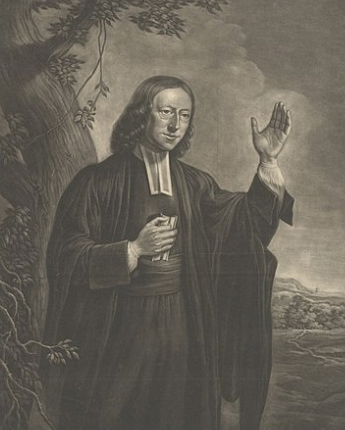
To be fair, it’s pretty clear that Christian perfection was a controversial doctrine from its inception. When John Wesley (the founder of Methodism) started talking about it, a lot of his friends disagreed with it. His ministry partner and brother, Charles, seems to have had a different idea of what it was and how to achieve it. Even Wesley’s exhaustive explanation of the doctrine, A Plain Account of Christian Perfection, is a real challenge by anyone’s definition. It is a composite work that includes personal reflections, hymns, minutes from a conference that he attended, bits from sermons that he preached, journal entries from a person that he thinks may have achieved Christian perfection (right before they died), and arguments against people who claimed to have achieved Christian perfection that he didn’t think managed it (the most notable examples being Thomas Maxfield and George Bell). John went through seven different revisions of this booklet across his life as he added more and more content. It’s kinda like a scrapbook of his doctrine and how he’s come to understand it across his lifetime.

So, yeah, we’re dealing with something that’s challenging and difficult to articulate. To briefly summarize the doctrine, Wesley believed that, through the Holy Spirit, a mature Christian could reach a state where they would avoid willfully sinning. That was Christian perfection. These Christians could still sin through ignorance, mistake, or error, since their bodies and minds were still very much in this world, but their hearts would be so mature in the faith that God’s love would reside in them. THAT’S the core of the idea. If you want to know more about it in John’s words, I recommend his sermon “On Perfection” from the year 1740. It’s much more readable than Plain Account. If you don’t want to read more but think my explanation is way too generous for such a wildly-named doctrine, John’s words from one of his letters put it into words that suit modern people a little more readily:

Perfection is only another term for holiness, or the image of God in man

John Wesley (Letter to Rev. Mr. Dodd, The Works of John Wesley, 11:450-451)

Rather than argue about whether or not this particular doctrine is good or bad, I’d like to share a little revelation about why it takes the form that it does. I’ve always wondered, “Why did John choose that particular name? I mean, if the word “holiness” or “sanctification” accomplish the same thing, why not use one of them? That would have gone a long way with some of his detractors!” Well, reading through some of the sermons of Count Zinzendorf recently (a Wesley friend that, like many Wesley friends, had a falling out with John before the end of his life), and he cited Philippians 3:15 regarding a desire for Christians to become perfect. You can imagine my puzzlement. I flipped open my NIV Bible and checked the verse: “All of us, then, who are mature should take such a view of things. And if on some point you think differently, that too God will make clear to you.” Okay? What was Zinzendorf talking about? Was I reading a bad translation of his sermons? And then I realized that the NIV is hundreds of years away from the translations that were being used in the 1700s. Of course it doesn’t sound the same; it wasn’t what they were reading. I popped open what would have been more normative for the time, the KJV, and lo and behold: “Let us therefore, as many as be perfect, be thus minded: and if in any thing ye be otherwise minded, God shall reveal even this unto you.” There was a “perfect” there historically that was translated differently today!

By no means do I think that’s a bad thing. Language changes, and translations change to keep up with the way that we speak. It looks like the Greek word, teleioi, is translated in different instances as either perfect, mature, or fully grown. But think about that! The fact that the New Testament has 7 instances of that word that all moved from “perfect” to something else over time is wild! And that’s not the only word that was translated away from “perfect” to something else. The KJV has the word “perfect” in it 129 times, versus the NIV’s 45 times. That’s almost three times the number of perfects! Now, obviously you’re going to have a different number of “perfects” depending on your Bible translation (NRSV- 41, NLT- 47, CSB- 32, ESV- 94), but with very few exceptions, most of us see the word “perfect” in our Bibles far less than 18th century Christians like John Wesley would have.

As a side note, I totally acknowledge that even though I stumbled onto this little tidbit while reading Count Zinzendorf, he was a German speaker and wouldn’t have regularly engaged the KJV. I’m woefully under-equipped to manage wading through historic German Bibles to get that primary source verification, but I’m going to assume that the translator of Zinzendorf’s sermons was accurate, which would mean that even German translations from the 18th century were more likely to use words like “perfect” than their modern equivalents are.

Why did John Wesley stick with the name “Christian perfection?” Well, he says in his Plain Account, “There is such a thing as perfection; for it is again and again mentioned in Scripture.” To modern readers, that’s a pretty hollow claim. There’s a couple well-known verses that reference perfection, but it’s usually referencing God, not people. Why would Wesley stake his whole idea on a word that doesn’t appear in the Bible as much as he acts like it does? Because in the translation that he was familiar with, it DID come up again and again. He saw the epistles as packed with references to Christian perfection! Language changes and Bible translators adapt, but it was a joy to see why a doctrine with such an inflammatory name got it’s name.

That OLD Church Music: Psalms

The split between contemporary and traditional worship is one of the great dividers of Protestant churches in our time.  If we’re being honest, a great deal of that split comes down to music.  Do you prefer singing soft rock from Christian radio stations?  Or do you prefer classical hymns from around the year 1700 until around 1970?  For a lot of people, the answer to that question determines what kind of service they’re going to be looking for.  But what is there for people that like the oldies?  I’m talking about traditional traditional music.  No, not that newfangled Gregorian chant.  I mean that really old stuff.  I’m talking about the psalms.

The English word “psalm” comes from the Greek word psalmos which was a type of sacred song that was sung to a harp.  In Hebrew, the book of Psalms is called tehallim.  It comes from the same root as the word “Hallelujah” (hll are the three letters both words are built around), and it means “praises.”  These aren’t poems.  They’re songs.  They’re meant to be sung during worship, usually by chant (which was the easiest way to get large groups to sing a song together before sheet music was widely available).  Not only were the psalms sung in Jewish worship (including during the time of Jesus), but they were so important to early Christians that a fair few councils in the first thousand years of Christianity went out of their way to encourage people not to sing anything other than the psalms of the Bible.  For example, canon 59 of the Council of Laodicea (held in 363 AD) reads, “No psalms composed by private individuals nor any uncanonical books may be read in the church,” (trans. Schaff).  That’s not to say you can’t find any hymns from these eras.  You certainly can, but mature Christians leaders were constantly calling Christians back to the basics.  Sing the psalms.  Before you start singing anything else, sing the psalms.

The particulars of congregational worship became less of a concern of the average person in the Middle Ages.  Every song (be it psalm or hymn) was sung in Latin, which the average person didn’t speak.  They couldn’t join in because they didn’t even know what was being sung.  Choir monks handled the singing duties on their behalf.  For the early Protestants, the Reformation wasn’t just about taking back the Bible; it was about taking back worship for the average person.  While some groups favored the use of hymns (Lutherans), Reformed and Anglican Christians stuck to the Book of Psalms.  It wasn’t until the 18th century that writers like Isaac Watts popularized and spread what we think of today as hymns in English-speaking countries.

That sense that we ought to be singing the psalms is pretty rare today.  While some of us favor guitars and some favor organs, there aren’t many that are particularly interested in singing psalms.  Which is a real shame!  For thousands of years, the psalms were the mainstays of Christian worship.  And why?  Did our ancestors lack the lyrical creativity that we have?  Were they too dull to come up with any real hit songs?  No!  They sang the Psalms because they didn’t think you could do any better than Scripture.  As great as hymns like A Mighty Fortress is My God (that one happens to be my favorite) might be , they’re not Scripture.  If there’s one little piece of worship music that sticks in a person’s head in a given week, why not have it be one of the songs that Jesus sang?  Why not have it be a psalm?

But what about our hymns?!?  What about trendy, newfangled pieces like “Rock of Ages” and even trendier pieces like “In Christ Alone”?  Is it time to get rid of them?  Of course not.  And if we’re being honest, I don’t think that’s a realistic fear at this point.  These are the songs we know.  We love them, and they’re quite good.  We don’t have to abandon them.  We could, however, afford to add the older oldies to our mix.  Take a minute today and find an arrangement of a psalm that you like.  Youtube is full of them.  There are orchestral arrangements, contemporary pieces, and even chants.  You’ll find something that you can enjoy.  Not that you’ll enjoy it all, of course, but you probably don’t like everything on the radio or in the hymnal either.  Even if it takes a few minutes, take the time to do it.  The psalms are your spiritual heritage, and they were made to be sung.  Give them a try!

The Prosperity Gospel

In worship, I’ve been preaching through John 6. In overview, Jesus makes bread for hungry people, the people get excited, the people chase Jesus down for more miracle bread, Jesus says he’s the bread of life and all they really need, and finally people get disappointed and leave. Here’s a crowd of people that legitimately witness a miracle, but instead of bowing down before Jesus, they want to put him to work. They don’t really want the bread of life; they want a life of bread.

Naturally, I started thinking about people that have that sense of religiosity today. There are plenty of popular speakers who claim that God wants to lead you to a life of bread. The prosperity gospel preachers are the most obvious example. I didn’t want to misrepresent them when talking about them, so I started digging through some of the their writings to get a sense for the kinds of things they say and believe. Let me tell you, it was a wild ride. Not only was it broadly ickier than I expected (you’ll see), but there were a lot of little dots I got the chance to connect.

Prosperity gospel preachers are overwhelmingly nondenominational. They’re also well represented by people of every race. Neither of these first two items surprised me. I can’t imagine most of these pastors being open to denominational oversight, and no race is immune from the temptation of money. What did catch me off guard was the religious background that most of these preachers had. There’s a surprisingly strong tie between prosperity gospel preaching and the Charismatic/Pentecostal tradition. Not every prosperity gospel preacher has a Pentecostal background, but the modern American prosperity gospel did get its start there (Oral Roberts tends to be the usual starting place for religious historians), and it still has really, really strong ties to it today. As a non-Pentecostal/Charismatic looking at their tradition from the outside, the connection seems pretty logical when I think about it. Charismatics often put a really high premium on miracles in a Christian’s life today. It’s not wild to assume that you can get to, “God wants to give me money if I have enough faith,” pretty quickly from there if you go off the rails. Pentecostalism also lacks the clear denominational structures that can prevent obvious false teachings from reaching the pulpit, and it tends to have a really low emphasis on (and even active skepticism about) education. I didn’t expect the connection between those two entities, but it makes good sense.

History aside, I was shocked at how shameless prosperity gospel preachers can be. Legitimately, wholeheartedly, shameless. Here are some quotes that just broke my heart:

  • “Sow a seed on your MasterCard, your Visa or your American Express, and then when you do, expect God to open the windows of heaven and pour you out a blessing.” -Oral Roberts (“Success in Life” broadcast on the Trinity Broadcasting Network September 21, 1990)
  • “The best thing you can do for the poor is not become one of them.” -Rev. Ike (“The Gospel According to Rev. Ike,” Ebony Magazine, Dec. 1976)
  • “Don’t wait for the pie in the sky by-and-by when you die. Get yours now with ice cream and a cherry on top!” -Rev. Ike (“The Gospel According to Rev. Ike,” Ebony Magazine, Dec. 1976)
  • “If you’ve got one-dollar faith and you ask for a ten-thousand dollar item, it ain’t going to work.  It won’t work!  Jesus said, ‘according to your [faith,]’ not according to God’s will for you, in His own good time, if it’s according to His will, if He can work it into his busy schedule.  He said, ‘According to your faith, be it unto you.’  Now, I may want a Rolls Royce, and don’t have but bicycle faith.  Guess what I’m going to get?  A bicycle.” -Rev. Frederick Price (Fredrick K. C. Price. “Praise The Lord” broadcast on TBN. 21 Sept. 1990)
  • “God works by faith. You must believe first, and then you’ll receive” -Joel Osteen (Your Best Life Now, p. 33)
  • “You will often receive preferential treatment simply because your Father is the King of kings, and His glory and honor spill over onto you” -Joel Osteen (Your Best Life Now, p.40)
  • “Remember, only what you give can God multiply back. If you give nothing, and even if God were to multiply it, it would still be nothing!” -Oral Roberts (The Miracle of Seed-Faith, p.27)

And my personal favorite, when Oral Roberts told all of his followers that he was going to die unless they sent him eight million dollars. There are a million newspaper articles about it, but that wasn’t enough for me. I wanted something more incriminating. I wanted to read about the incident in his own words. I didn’t have to look far. He literally wrote about it in his own autobiography:

  • “The Lord spoke to me near the end of 1986 and said, ‘I told you to raise $8 million to carry on My medical work. You have from January 1 to March 31 to get it done. If you don’t then your work is finished, and I am going to call you home.'” -Oral Roberts (Expect a Miracle: My Life and Ministry, p.289)

Yikes.

You read quotes like this and can’t help but feel angry. When the anger subsides, you worry about the people that they’re taking advantage of. Sure, some of them might be able to afford a donation here and there to support a charismatic speaker, but what about the people who are desperate? What about the woman who has cancer, trying to juggle her medical bills, sending “Rolls Royce faith” checks in the hope that thing will turn around? What about the poor man with brain damage who sends in any little bit of cash that he can in the hopes that God will miraculously restore him? I believe in miracles and tithing as much as the next pastor, but I’ve known people in these circumstances, and I’ve seen the damage that prosperity gospel preachers can cause. Here is a pack of wolves on the prowl for desperate, down-on-their-luck people. Not everyone has the gift of discernment, and they’re counting on that. It reminded me of another certain historical preacher that assured people that God would give them blessings if they forked over some cash:

You should know that all who confess and in penance put alms into the coffer according to the counsel of the confessor, will obtain complete remission of all their sins…. Why are you then standing there? Run for the salvation of your souls! Be as careful and concerned for the salvation of your souls as you are for your temporal goods, which you seek both day and night…

Don’t you hear the voices of your wailing dead parents and others who say, ‘Have mercy upon me, have mercy upon me, because we are in severe punishment and pain. From this you could redeem us with a small alms and yet you do not want to do so.’ Open your ears as the father says to the son and the mother to the daughter, ‘We have created you, fed you, cared for you, and left you our temporal goods. Why then are you so cruel and harsh that you do not want to save us, though it only takes a little?

-Johann Tetzel , Sermon on Indulgences

Where’s a Martin Luther when you need him?

Discipleship in a Postmodern World

This entry is part of a series called “The Gospel in a Postmodern World.” Learn more about the series here.
Preached on December 4, 2022
Scriptures: John 18:28-40, 2 Timothy 4:1-8

Haven’t you heard of that madman who in the bright morning, lit a lantern and ran around the marketplace crying incessantly: “I’m looking for God!  I’m looking for God!”  Since many of those who did not believe in God were standing around together just then, he caused a great laughter.  “Has God been lost, then?”  Asked one.  “Did he lose his way like a child?”  asked another.  “Or is he hiding?’  “Is he afraid of us?”  “Has he gone to sea?”  “Emigrated?”  Thus they shouted and laughed, one interrupting the other.  The madman jumped into their midst and pierced them with his eyes.  “Where is God?”  he cried.  “I’ll tell you!  We have killed him- you and I!  We are his murderers.  But what does it mean?  … Is there still an up and a down?  Are we now straying through an infinite nothing? … God is dead.  God remains dead.  And we have killed him!… Do we not ourselves have to become God merely to appear worthy of it?”… Here the madman fell silent and looked again at his listeners: they too were silent and looked at him disconcertedly.  Finally, he threw his lantern on the ground so that it broke into pieces and he left.  “I come too early,” he then said, “My time is not yet… This deed is still more remote to them than the remotest stars and yet they have done it themselves!”  It is still remembered how on the same day the madman forced his way into several churches and started singing a requiem.  Led out and called to account, he is said to have replied nothing but “What then are these churches now if not the tombs and sepulchers of God?”

That little parable was written by the great philosopher Friedrich Nietzsche.  I’m sure you’ve heard the quippiest line from it, “God is dead.”  It’s often used by amateurish atheists trying to argue that God isn’t real.  “God’s dead! Science has disproved him!”  Not true.  And not what Nietzsche was interested in saying.  Nietzsche isn’t trying to make some big clever atheist point.  No, in its original context, Nietzsche isn’t celebrating.  He’s lamenting.  God is conceptually dead to the world around him!  Nobody believes that he’s there.  Our way of thinking no longer includes that particular dogma.  We assume that God doesn’t act and probably isn’t capable of changing the world.  People act!  People change the world.   We vote and we invent and we work and we plan.  The idea that a God is genuinely represented in that process seems absurd to most!  If there is a God, he’s certainly not imagined to be the sort of God that can do things.  He exists in a little irrelevant box at best.  At worst, that box is his coffin.  As far as popular imagination goes, God is conceptually dead.  And what does that mean? 

If we don’t believe in God anymore, nothing can be the same as it was when we did.   Everything has to be different.  Is there still an up and a down?  Is there still a right and a wrong?  Can there be real meaning in the world?  Or are we all just floating in an infinite nothing, trying desperately to create meaning where there is none?  If God is dead, we are still here, we still crave some kind of point.  If God is dead, we need to become Gods to fill the void in the cosmos that we created.

In the end of his little parable, the madman (clearly a stand-in for Nietzsche) wanders away.  The crowd isn’t ready for him yet.  They want to pretend that everything is still the same.  That up is objectively up and down is objectively down.  That there’s an objective point and that things can politely go on as they have been.  But the madman knows better.  Nothing is objective anymore.  People just aren’t willing to admit it just yet.  And that’s a summation of Nietzsche’s philosophy.   Nietzsche’s whole idea was that if Westerners no longer believe in God, they need to start being honest with themselves.  There can be no appeals to absolutes.  There can be no pleasant, safe reliance on old social structures that were built with the assumption that a god existed and wanted certain things for us.  If we don’t believe in God, we need to tear down the old structure and build fresh.  Because the rules that we are playing by are absurd.

The future Nietzsche foretold is now.  The postmodern era is here.  There are no absolutes.  There is no objectivity…  no singular way of being.  We have each become as God, creating our own meaning, crafting our own laws, and living free from the commands of others.

And what has become of churches in this world?  If Nietzsche is to be believed, they’re tombs and sepulchers.  Evidence of something that’s gone.  Memorials for a lost era.  They exist so people can look backwards at what once was for those that wish to reminisce.

That’s not far off.

Eight weeks ago, we went through the statistics of not only United Methodist decline, but also Christian decline in the Western world.   I think they bear repeating.  In the early 1990s, around 90 percent of American adults identified as Christian.  In 2007, the number was down to 78% (a twelve percent loss).  In 2020, that number was 64% (a further 14 percent loss).  And that’s just the amount of people that are willing to tick the “Christian” box on a survey!  The number of devout Christians is much lower than that.

And there’s the fact that the average number of new United Methodists in the United States each year is about -200,000.  And there’s the fact that a person going into undergraduate studies as a confessing Christian only has between an 18 and a 30 percent chance of leaving that same campus as a confessing Christian.  Things are declining.  And on top of all of those sobering statistics, we saw the pandemic.  Some experts are saying that it sped things up by about ten years.  The decline that was happening slowly in our churches happened quickly.  Churches that looked like they were just one good pastor away from recovery can’t pretend anymore.  And the United States is one of the most religious countries in the Western world.  Don’t even start with Europe. 

If we’re going to be a church in the West, we have to acknowledge that we no longer live in a culture that creates Christians by default.  We live in a culture that is statistically proven to convert people away from Christianity.

Ever since I got here, you guys said you wanted to grow.  And that’s what every church says, right?  Well, most of ‘em anyway.  They say they want to grow.  If we want to share the Gospel with people around us, we can’t bury our heads in the sand as to these facts.  We’re past the time when most of the population is actively looking for a church to attend.  There are still cultural conservatives (people that look back and see something of value, even when others are moving away from it).  Which is brilliant!  That instinct will lead them to the most valuable truth there is.  But most people aren’t like that.  Most aren’t looking for churches, nor are they interested in what we’re doing.  Making disciples right now is the most difficult it’s been in over a thousand years.   Because for the very first time in Western History, we’re trying to share the Gospel with people who think they know it and think it doesn’t hold up.  They think that God is dead.

If you’re discouraged right now, don’t be.  Legitimately.  The downside of sermons like these is they sound so horrendously dire.  Gloom and doom and sadness all around.  There’s no point in that.  Here’s the good news:  God is real.  He doesn’t require our approval to exist.  He simply exists!  And he’s in control!  And we’re never alone or abandoned.  He has called us, you and me, to be missionaries to the Western world at the dawn of a new era.  We have been chosen by God for a remarkable task!  No need to feel upset.

We aren’t doing this to sit around and feel miserable.  We’re asking a question.  How?  How can we share the Gospel with a world that thinks God is dead.  How can we share the greatest news there ever was with a new generation?  

Evangelism today won’t look the same.  The status quo will not hold.  We can’t just wait for people to come to us and expect that with the right preacher at the helm, the right extra-fun event, and the right decor, people will come flocking.  They won’t.  A lot of them don’t even know we exist.  They’re not looking for events from us.  They’re not even thinking about us.  We have to go looking for them!  We’re missionaries in a new world, and we have to go to the people.  We have to know them.  To know what they love.  What they fear.  What they long for.  What concerns them.  We have to know the culture.  And once we do, that’s when we can start to meaningfully consider how we can share the Gospel.

So what did we learn over the past eight weeks?  What are the themes that emerged?  What do I hope we walked away with?

Well, I want to start with a Scripture.  If there’s one Scripture that reflects the post-modern person, I think it’s our first reading about Pontius Pilate, John 18:28-40.  Here is a man that is face to face with Jesus himself… and what does he say?  “What is truth?”  What is truth?  Pilate is a big, bad Roman governor.  He’s heard a thousand people tell him what’s “true.”  And he’s done bothering with all that.  There’s one truth: power.  The Roman Empire has sent him to govern this territory.  Fact.  The people of the territory are angry at Jesus for having the audacity to tell them that he’s God.  Fact.  They demand his execution.  Fact.   And now?  Now Pilate has to act.  Don’t bother talking to him about truth.

And here’s Jesus.  Weak.  Captured.  Assailed by enemies at every turn.  And he makes his claim once more.  “I’m God.”  And he does make that claim.  How else could you possibly read verse 36?  I have a kingdom but it’s not of this world.  Hmmm, so he is a king and has a kingdom, but it isn’t here.  I wonder where it is…  And yet he’s always clever enough to never quite say something that could get him killed.  Did I say I was a king?  I never used those words.  YOU used those words.  I was someone who was born to testify to the truth.  Everyone on the side of truth listens to me.

And then the words of Pilate.  “What is truth?”  Pilate is world-weary. To him, there is no truth in this world outside what we make of it.

That’s the postmodern world.  There is no truth in this world outside of what we make of it.

In our time on this theme, we’ve thought specifically about five big ideas that cause controversy.  Five doctrines that the post-modern world holds that our doctrines prevent us from agreeing with.

1. There is no objective truth.
2. The authentic self is inherently good. Society is inherently evil.
3. The only legitimate authority over a person is themselves.
4. The world is defined by power.
5. Happiness is the goal all living things should strive for.

First, we spoke about absolute truth.  Just like Pilate, we live in a world where people assume that talk about truth is ridiculous.  There is no objective truth.  We each have our own truth, our own separate way of being, our own assumptions, but our truth isn’t actually true for other people.  That would be absurd.  What is truth?  An unwillingness to consider truth as objective is a challenge to Christianity because Jesus never claimed to just be a subjective truth; a great option for those interested.  He claimed to be THE WAY.  The singular, objective truth in a world that is swimming with confusion.

Then we spoke about the second doctrine: authenticity.  Augustine and Jean Jacques Rousseau and their dueling stories of produce theft.  Why do people do bad things?  Is there something in us?  Or do the real factors lie outside of us?  The dominant philosophical forces tend to assume that wrong lies outside of ourselves.  That’s why it’s so easy to rail against society and so hard to talk about sins that we ourselves are actively fighting.  Another hurdle for people today.  Because believing in Christianity sounds like moving to a very positive way of thinking (I am inherently good) to a very negative way of thinking (I need help to be good).

Next, we talked about authority.  We looked at poetry and art and other mediums that reflect that great question: where does authority lie?  In an author?  In a work?  Or in an audience?  Postmodernism assumes there is no author that matters and the work is what you make of it!  The audience (us) holds all the real authority.  But it’s hard to live when you’re the one making up everything as you go along.  Because you know you made it up!  And there’s a suspicion that it was entirely arbitrary.  This is a sticking point where Christianity has some power over postmodernism.  Because we aren’t just making up meaning;  we’ve got it!

We spoke about power.  The world has become so cynical.  In our stories, we see self-interested characters doing whatever it takes to gain power.  And that’s what history has started to look like: just a bunch of jerks trying to get power over one another.  Our trust in any governing entity is just rock bottom, and not just because of particulars, but because it’s hard to believe that anyone is trying to lead for anything more than money.  Christianity presents, what I believe is a more compelling option.  The Bible says there’s more at work in the world than selfishness.  There’s hope, joy, and love.  Things aren’t as grim as they seem.  Things are more complicated than that.

Finally, we talked about suffering.  Since the post-modern world has no objective meaning, there’s no real reason to suffer.  You’re in charge of your own destiny, so aim to get as much pleasure as possible.  Seek pleasure.  Avoid pain.  Enjoy happiness.  Which makes all this suffering in the world hard to account for.  Because what does pain have to do with existing?  It’s just a meaningless frustration that humanity should have solved by now.  Christianity has always held that suffering is not all bad.  It’s not pleasant, but it’s not evil in and of itself.  Sometimes, we grow through difficult situations.  Because our lives aren’t just intended to make us happy.  They’re intended to make us holy.  And becoming holy can’t happen if everything is smooth.  We are challenged to smooth out those rough edges keeping us from listening to God.

That’s the past few months in a nutshell.  The world around us is different than us.  It has new assumptions that influence not only the way non-Christians look at us, but the way we look at ourselves.  If we’re going to be missionaries to the postmodern world, we have a lot to think about.

So what’s something to end on?  What’s a big takeaway that represents kind of an amalgamation of all we’ve learned?   I’ve been thinking about that all week.  I’ve been reading book after book of the Bible, looking for a Scripture that speaks to how we should hold ourselves.  And the more I looked, the more I was drawn to some of the last words of one of the greatest evangelists in all of history: the Apostle Paul.  And why?  Because here was a man that evangelized from some of the earliest days of the faith.  He traveled from town to town, trying to share the Gospel with people that weren’t actively looking for it just yet.  The passage we have today is from the last verse of the last letter he wrote.  Paul was in a prison cell in Rome awaiting his execution when he wrote this letter to the evangelist Timothy.  So these are his last words.  The last words from one masterful evangelist to another.  And here’s what Paul has to say in 2 Timothy 4:1-8:

In the presence of God and of Christ Jesus, who will judge the living and the dead, and in view of his appearing and his kingdom, I give you this charge:Preach the word; 

If you want to see people become Chrsitian, you have to tell people!  We don’t get to just politely show up on Sunday and then wonder, “Gee, why is it nobody is coming?  Is the sign not big enough?  I’ll go measure the sign.  Are we not having enough fun activities?  Let’s arrange for a few more of those.  Do we need some t-shirts with our logo that we can wear in public?  That’ll turn things around!

By no means are any of those bad things,right?  They’re good!  But in a world where people don’t think that God exists, nobody is going to start attending church because they saw a great sign, they attended a fun event, or saw us wearing a t-shirt with our logo on it.  Nope.  They know that churches exist!  There’s dozens of them littering the landscape.  They know we’re here.  They’re not gonna start believing in God because they saw a great sign.  They need someone to talk to them.  To actually explain to them why Christianity than they think it is.  Why it’s not just a relic of the past or a hand-me-down from a more primitive age; it’s the truth at the center of every life.

be prepared in season and out of season;

Have you ever had a moment where you thought to yourself, “Man, I could have witnessed back there, but I wasn’t sure that I could handle it.”  Sometimes that happens!  We’re talking to someone and it starts to get deep.  And we know that there’s room to start talking about Jesus.  But we’re scared.  What if we say it wrong?  What if they aren’t open to it?  What if they get mad at us?  What if we’re not good enough.

And you know, I’d like to say that in that moment, the Holy Spirit will take over and you’ll be shockingly eloquent and your speech will supernaturally start to be more than you were capable of on your own.  I’d like to say that… but I won’t.  Because even though miracles can happen, it’s best for that not to be plan A.  If we want to share our faith, we have to be prepared.  Be prepared to talk about it!  Be ready to answer questions.  Be ready to say why it makes a difference and answer questions that people have!  And you might think, “Oh, not me.  I’m not good at that sort of thing.”  That’s nonsense.  You are uniquely gifted with a perspective that no one else has.  You have relationships that no one else has.  You have a personality that no one else has.  You have a story that no one else has.  You are uniquely equipped to talk to people about Jesus in a way that no one else can.  So practice.  Talk about Jesus to other Christians.  Talk about Jesus to your family.  Talk about your faith so when the time comes to witness, you’ll be prepared regardless of whether it’s a moment you expected or a moment you didn’t expect.

correct, rebuke and encourage—with great patience and careful instruction.

Here, the Bible is showing us that this is about more than theory.  Nobody is asking you to talk at length about abstract philosophy.  There’s nothing wrong with philosophy when it’s addressing real needs that we have, but real life is not abstract.  It’s real.  It’s earthy.  It’s urgent.  When we share the Gospel with people, we need to do more than just tell people, “Well, you know, I think it’s quite viable that a God could exist.  Let me give you my list of proofs.”  That might be good, depending on the person, but it’s hard to work a theory that there might be a God into everyday conversation organically.

No, we share the truth of a God that we KNOW.  A God that we can talk to.  A God we have a relationship with.  A God that helps guide our lives towards what’s good for us and leads us away from those things that would harm us.  This isn’t about abstract theory.  This is about everyday living.  It’s about the choices that we make every second of every day to move towards truth or to move away from it.  To become the people that God is calling us to be, or to walk on paths that we’re not made to walk.  Paul mentions correcting, rebuking, encouraging, and patience because this is a lived faith, not a theory.

For the time will come when people will not put up with sound doctrine. Instead, to suit their own desires, they will gather around them a great number of teachers to say what their itching ears want to hear. They will turn their ears away from the truth and turn aside to myths. But you, keep your head in all situations, endure hardship, do the work of an evangelist, discharge all the duties of your ministry.

This is a theme that came up repeatedly that I didn’t expect: the fight between the hard work of believing God’s truth, and the comfortable work of accepting a convenient lie.  Repeatedly, the Bible has told us, “Watch out!  You’re gonna be tempted to make up easier stuff.  Don’t do it.  It’s not the way to go.”  Now Paul refers to a particular time in which sound doctrine will be unacceptable to people.  They don’t want anything to do with it.  They’d rather make up their own thing than believe what God says.

If you look through Chrsitian history, in every era people have wondered, is this that time that Paul was talking about?  Is THIS the era in which people will not put up with sound doctrine?  I’m not comfortable making that claim.  I mean, to even make it assumes that things in the West are what God is really focusing on and, as we’ve said before, Christianity is growing in Asia, South America, Africa, and other regions.  Just because some of us might feel like things are bad in our area doesn’t mean it’s not different in other places.  There are Chinese people on the other side of the world where church numbers are swelling thinking to themselves, “Finally, an era where people crave the truth!  Praise God!”  It’s always hard to know if this is THE TIME, given the limitations of our own perspective.

But it’s not new to assume that the time might be now.   I think that speaks to the reality that whether or not a specific, ultimate instance of that time has come, people naturally have a hard time accepting truth.  In our sin, it’s much easier to accept a pleasant lie rather than an uncomfortable truth.

People might not want to hear the tough truths that God is telling.  Sometimes WE don’t want to hear the hard truths that God is telling us.  Because truth is hard to swallow.  Life is hard enough.  Usually, we just want a pat on the back. But we were not born so that we could limp through life and get a pat on the back.  We were born for more than that.

So is this THE time that Paul was talking about?  Or is this just A time like any other?  I don’t know.  I only know that we can’t go around sharing God’s truth with people and expecting that they’re gonna be thrilled right off the bat!  We have to be gentle.  Patient.  Kind.  Understanding.  Because truth can be hard to hear.  It’s tempting to look for people who just tell us what we want to hear.  It’s hard to listen to the truth.  So we need to listen, even when it’s hard.  And we need to be kind and patient when we share with others.  Endure.  Do the work of an evangelist.

For I am already being poured out like a drink offering, and the time for my departure is near.  I have fought the good fight, I have finished the race, I have kept the faith.  Now there is in store for me the crown of righteousness, which the Lord, the righteous Judge, will award to me on that day—and not only to me, but also to all who have longed for his appearing.

Paul knows that his time is almost up.  He’s in prison.  He’s going to die.  Throughout his epistles, he compares the Christian life to running a race.  Here, he says that he has run the race.  The end is here for him.  And is he afraid?  Afraid that he didn’t do enough?  Afraid that all the churches he planted are gonna die now that he’s not there?  Afraid that he went too far in his preaching and should have chilled out a little so he could stick around?  No!  He didn’t do all of this evangelizing because he wanted to build a bigger church and get famous.  He did it because he loves God.  God commanded him to share and so he did!  There was no fear.  Because now, as things come to a close for him, there is only joy.  Joy for what lies ahead.  Joy for union with his creator.  Joy for himself and for all others that love Jesus.  The crown of righteousness lies ahead.   The life of an evangelist shouldn’t be defined by fear of how things are going to go or what others are going to say.  It’s defined by joy.  It’s defined by peace!  It’s defined by faith. 

As we come to the end of this series, here’s the post-pandemic truth: every church in America has to wake up to the fact that we have reached a fork in the road.  There are two paths ahead of us.  We have to pick one and move.  Because we can’t keep going like we were.  There’s no path at all in that direction.

The status quo isn’t a real option at this point.  Don’t get me wrong; we can keep the status quo as far as church goes.  We can change nothing.  We can even reset everything back to the way it was in the 90s, back when 90 percent of people were confessing Christians and things were easier.  We can do that.  We won’t make any new disciples, mind youm because we don’t live back then anymore.  We live now.  Looking backwards will feel good, but it will  be a huge waste of time.  Nostalgia is a heck of a drug.  It’ll make you feel better.  But it won’t change anything.

There’s two real options for those that want to build churches: The Path of Pilate.  And the Path of Paul.

The first option is the Pilate option.  We can recognize that we have enjoyed a certain level of power in Western society for thousands of years.  Our doctrines naturally made sense to people.  Our ways seemed intuitive.  Christianity was woven into the fabric of society, and that kept our churches full and the number of disciples high.  But Nietzsche is right.  We’re in a new world now, and our logic is no longer intuitive.  If we want to continue existing as a powerful, respectable, comfortable institution, we’ll need to make some trade offs.  We’ll need to adjust our doctrines to align with the world as it is today.  It’d align with the intellectual authorities of our age.  It’d be popular with the average person.  We can stop saying that Jesus is THE way and start saying he is A way.  We can stop saying that people are sinful and start saying that people need to be themselves.  We can trade out holiness for happiness.  And will we thrive?  Honestly?  Probably not.  But it’ll be comfortable, and a few people that are uncomfortable with the hard truth that other churches tell but that want the trappings of Christianity will walk through the doors hesitantly, and say to themselves, “Oh thank goodness, I found a reasonable church.  That’s great.”

Some of you may be thinking, geeze Vincent, tell me how you really feel.  The way you’ve presented it, that’s no option at all!  To the contrary, not only is the Pilate path an option, this would be a much easier option than all the alternatives.  None of us will have to work overtime.  None of us will have to have uncomfortable conversations.  Each of us will be free to relax.  Pilate lived a pretty good life, right?  He enjoyed a certain level of power in his heyday!  And we could too.  We could cling to our historic power and find ways to make it last.  What is truth, we’d ask.  And we’d eat and drink and be merry.

The second option is Paul’s option.  We can acknowledge that the world has changed its assumptions.  That they’re no longer eager to buy into what we’re saying.  A lot of what the average person assumes actually conflicts significantly with what God tells us.  And under these circumstances, we can say, “Welp, time to get out there and evangelize.”  And we’ll be weird in a lot of people’s eyes!  We’ll be those crazy outsiders that make wild claims that don’t make any sense.  But we’ll be those weirdos that chose Christ over Caesar.  The God of the next world over the God of this one.  It’ll be much harder.  But we stand to gain infinitely more.

We’re at the dawn of a new era, and a decision must be made.  I can’t answer this question for you.  Because this isn’t just a leadership decision or an institutional decision.  It’s not just the church that has to answer this.  It’s you.  Each and every one of you.

Pilate or Paul?
Power or Weakness?
Caesar or Christ?

Are you really willing to go all-in on this?  Because it’s not too late to cash out and enjoy the time we’ve got left.  It only costs your integrity.

Caesar or Christ?
Do you want to sell out?  Or are you going to go all in?

The History of Power

This entry is part of a series called “The Gospel in a Postmodern World.” Learn more about the series here.
Preached on November 20, 2022
Scriptures: 1 Samuel 26:1-12, 1 John 4

I want to read to you the dust jacket of a book I read long ago. The name of the book is King David: A Biography.  It’s written by Stephen McKenzey, a professor of Old Testament over at Rhodes College.

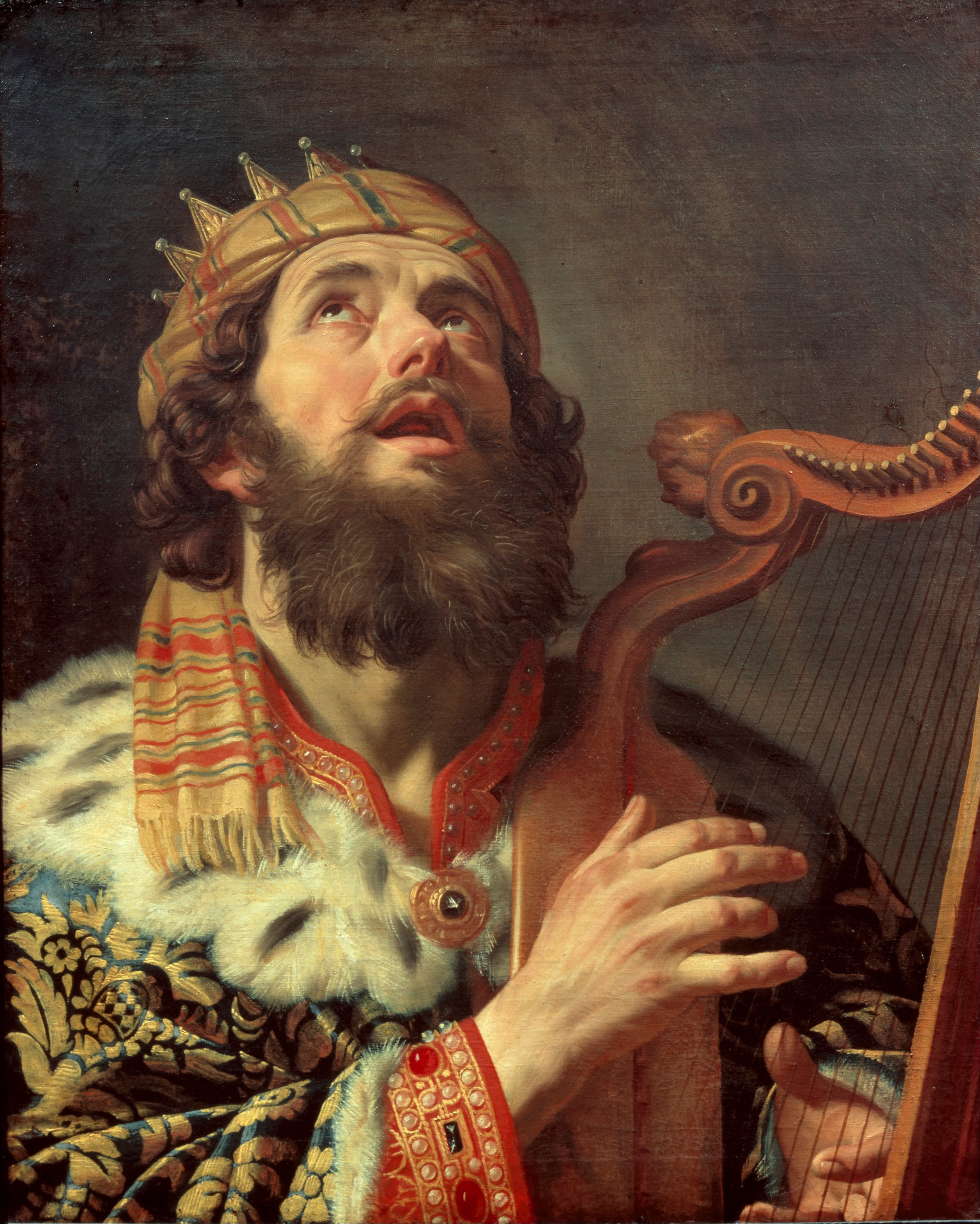
“Through a close and critical reading of biblical texts, ancient history, and recent archeological discoveries, Steven L. McKenzie concludes that David was indeed a real person. This David was not the humble shepherd who slew Goliath and became king, however, but was a usurper, adulterer, and murderer–a Middle Eastern despot of a familiar type. McKenzie shows that the story of humble beginnings is utterly misleading: “shepherd” is a metaphor for “king,” and David came from a wealthy, upper-class background. Similarly, McKenzie reveals how David’s ascent to power, traditionally attributed to popularity and divine blessing, in fact resulted from a campaign of terror and assassination. While instituting a full-blown Middle Eastern monarchy, David was an aggressive leader, a devious politician, and a ruthless war chief. Throughout his scandalous reign, important figures who stood in his way died at convenient times, under questionable circumstances. Even his own sons were not spared. David’s story, writes McKenzie, ‘reads like a modern soap opera, with plenty of sex, violence, and struggles for power.'”

That is a very different story than what is contained in Scripture!  In the Bible, we see King David as someone who is kind, gentle, and devout.  That doesn’t mean he always gets it right. There are some pretty bad stories in there about him too, but the overall vision of David is very different, especially in his ascent to power.  We see a young kind musician that is able to drive away the anger of someone as brutal as King Saul.  McKenzey imagines the opposite.  David is someone who is not at all kind.  He’s horrible!  He’s cruel, he’s vicious, he’s conniving.

How does McKenzey find a David that is the opposite of what the Bible says?  Well, a lot of this particular project comes from taking modern historical trends towards ancient documents and applying them to the Bible.  His first question: cui bono?  Who benefits from what happened in the story of David’s ascent to power?  Well, David did.  His second question: what biases might the author have?  The Biblical account was written by the royal scribes of Israel who worked for David.  The third question he asks is, “Where are they a little too insistent that something is true?”  Because if they had to keep telling people repeatedly that something was the case, maybe it wasn’t.  Maybe it was a lie, and they had to sell that lie with propaganda.  And that’s how McKenzey sees large portions of the Biblical narrative: royal propaganda to make the population think that David’s rise to power wasn’t as violent and brutal as it really was.

For example, in Samuel 24, King Saul is worried that David is more popular than he is and he could usurp the throne if he really wanted to, so Saul tries to kill him and David goes into hiding.  He’s hiding in a cave at one point, and Saul and his men are just outside, searching for him.  And the text says that Saul, “had to cover his feet,” which is a euphemism.  In our time, it might say something like, “Saul had to relieve himself.”  So Saul goes into the cave to relieve himself, and David is hiding right near him in this very vulnerable state, but David is not the kind of person that would murder the king that God put over Israel, so instead, he cuts off a piece of his robe.  When Saul gets back to his army, David comes out and shows him the fragment, essentially saying, “I could have killed you, but I didn’t.  I am not your enemy.”  So Saul gives up and goes home.  But then, Saul gets jealous again almost immediately.  He tries to kill David again, and again David has to go into hiding, and we end up with another story about how David could have killed Saul if he wanted to, but didn’t.  In Samuel 26, Saul and his men set up camp right by David’s new hiding spot.  So David sneaks into Saul’s camp in the dead of night, and, lo and behold, there’s Saul sleeping, his spear right next to his head.  One of David’s men whispers that David could kill him if he wanted to, but again, David is not that kind of man.  He will not kill God’s anointed.  So again, he doesn’t kill Saul.  Two instances where David has a very clear opportunity to take out his enemy; two times where he decided that he wouldn’t do that.  Mackenzie would look at that with suspicion.  Isn’t it convenient that David repeatedly had the opportunity to kill the man that he took the throne from but was just too good to do it?  Don’t trust the propaganda of Israel.  Look for the real story by sifting through their lies.

There’s nothing particularly unique about what McKenzie has done here, and I don’t say that to be dismissive.  By no means.  I only mean to suggest that this sort of reading technique is exceptionally common among modern historians.  It’s not surprising that he applied it to the Bible.  He wasn’t the first, and he won’t be the last.  It’s not any new methodology that makes me hesitate.  It’s the cynicism of that modern methodology.  How cynical is it to imagine that people are so incapable of good that the whole of a story is really just about power?  It’s not about God!  It’s not about being devout!  It’s not about being kind!  That is all nonsense.  No one is really like that.  No, people want to gain power.  That’s what David was really like.  

The last sentence on the dust jacket is particularly telling: “David’s story reads like a modern soap opera with plenty of sex violence and struggles for power.”  I just met with someone last week that was complaining about how hard it is to find a good show on tv today.  Every time a new show comes out, it’s darker and grittier than the last one.  More sex!  More violence!  The popular stories in our world, the stories that we see on tv and read in cheap paperback novels, are the ones we find to be the most comprehensible.  We can imagine people doing things to gain power, sex, and money.  Of course!  That’s what people do.  Stories about people doing things for God?  That’s a little hokey, don’t you think?  It’s unbelievable.  That cynicism bleeds into the stories from the past.  If stories aren’t about power, it’s because someone must have lied to cover up the real story.

This way of reading history isn’t uncommon. It’s not just for authors.  I’m sure you’ve run across it in random places.  I certainly have.  I remember being at a pub once with a friend of a friend.  He asked me if I was Christian.  I said yes.  He then asked whether or not I was Anglican.  I told him no.  He responded, “Good.  That one is so fake it’s ridiculous.  Everyone knows the Anglican Church was made when King Henry VIII wanted a divorce and the Pope wouldn’t give it to him, so he created his own religion to make it ok and now millions of people today believe in it.  Why?  Because they don’t know history.  If they knew their history, they would know how fake all of it is.”  To give some credit to the gentleman, King Henry VIII was the one who started the Anglican church and his interest in getting a divorce was the deciding factor in many ways, but at the same time, the actual historical narrative is a little more complicated than that. When we reduce such a massive story to something so small, we miss a lot of it. 

It was common practice for the Pope to grant divorces to rulers who were looking for an heir and had a spouse that wasn’t able to provide one. Kings need an heir, and if they don’t have one, things get messy.  Mind you, the king was expected to ask the Pope with all due respect to show that he respected the faith and wasn’t being frivolous, but a divorce under those circumstances was considered a reasonable ask.  When King Henry VIII wanted a divorce, his wife was Catherine of Aragon.  She was older than him and had already shown that she had some significant issues when it came to bearing children, so the divorce didn’t seem all that wild… but the Pope said no.  A lot of the Pope’s good friends and supporters were her relatives.  If the divorce was approved, they would feel that she had been humiliated.  He would lose a lot of support.  Naturally, he chose to make sure that his allies were happy at the cost of Henry VIII and did not approve the divorce.  So  beyond lust, you already have some more motivations.  You have a king who wants to hand over his kingdom peacefully.  You have a church leader that needs to win points with powerful friends.  You have relatives protecting someone they love.  Now consider church tradition.  For all we know, the Pope really was sincere.  Maybe he was genuinely concerned about the institution of marriage and wasn’t willing to approve of sin just because the world found it convenient.  I mean, I can relate to that.  I’m not going to approve of any of your divorces, even if you do woo me a bit first!  So now we have tradition and faith added to the mix.  But beyond that, we have to remember that Protestants didn’t just pop into existence in England because the King was interested in talking to them.  They were already there!  They were already evangelizing!  It was hard to be a Protestant in England.  You risked martyrdom daily, but a lot of people risked a lot to tell the English that their church was leading them away from what God wanted and the Bible could steer them right again.  There were people who had lived and died hoping to see England embrace Protestantism like this.  When someone suggests that one man wanted a divorce so he made up a religion, it implies the whole thing was about lust and power, but really, it was about so much more.  There was fear of a succession war!  There were the obligations of leadership!  There was the love of family!  There was the weight of the Scriptures and hundreds of years of church tradition!  There was the rugged witness of the martyrs!  There was a lot that went into the creation of the Anglican Church.  It wasn’t  just a story about sex and power.

And we could get even closer to everyday life.  How many people say that churches are a scam?  I can remember a friend saying, “You know it’s a scam because they ask you for money every time you show up.  If it was really true, they wouldn’t want any money for it.”  Not an unpopular opinion, but a lazy one.  Most churches have pretty open finances.  If you want to learn more about them, you can ask and someone would be delighted to talk about where the money is spent, but that takes effort.  It’s much easier to just say it’s all about power and people are lying to get your money.

When people look at the world today, there’s this clear, repeated tendency to be cynical about motivations.  History looks like this long series of stories about people trying to get a leg up on one another.  This particular way of reading the world and its history really has its root at the beginning of the 19th century.  Last week, we talked a little about the shift from the pre-modern world to the modern.  How we went from seeing the author as the one with authority, to seeing the work as having its own authority, to seeing ourselves as the only authority.  That shift changed the way people told history, because there were no distinct inarguable causes that people needed to rally around sincerely.  There wasn’t even an objective framework to say what was good anymore.  If someone did something for love or beauty or God, that was just their opinion.  Their take.  Their way of obscuring their real motivation: they were promoting their personal thoughts and trying to twist the world to benefit themselves and those like them.

Things get a lot more cynical right around here.  There’s a quote from one of the most famous tellers of history in the modern era, Karl Marx, that comes to mind.  And if you’re wondering why your pastor is sneaking communism into the sermon this morning, stick with me.  Marx is such a good example of a cynical historian.  Right from the beginning of his most famous work, The Communist Manifesto, he attempts to explain the history of everything, and he starts like this:

The history of all hitherto existing society is the history of class struggles.  Freeman and slave, patrician and plebeian, lord and serf, guild-master and journeyman, in a word, oppressor and oppressed, stood in constant opposition to one another, carried on an uninterrupted, now hidden, now open fight, a fight that each time ended, either in a revolutionary reconstitution of society at large, or in the common ruin of the contending classes.

In other words, he’s claiming to summarize every history book ever written right here.  There are people in power and they want to stay in power, and there are people who aren’t and they need help.  His big pitch is that we need to overthrow the people at the top so we can create a new society without these wealthy oppressors.  He may not have pulled off his utopia, but that big idea was very influential: history is about power.  There are wolves, and there are sheep.  There are oppressors, and there are oppressed. There are people who will hurt others to get what they want, and people who are too weak and disenfranchised to seek power.  It’s all very disenchanted; hopeless even.  

As we’ve been exploring the postmodern world, we’ve noted not only the challenges that we have in expressing Christianity to the world around us, but the advantages that we have.  Even if they don’t always understand us, we possess things that the world craves.  Last week, it was the simple fact that we know that there’s a point to all this.  There’s a real, actual point to life!  So many people in this world don’t know why they bother to wake up every morning.  They get up and ask, “What am I doing?”  They have to invent reasons to exist because they have no objective framework!  Nothing to wake up for!  We know that there’s a point.  There is something bigger than ourselves worth existing for: there’s God.  This week, it’s clear that we can offer a better reading of history.  The world is not just mired in selfishness and greed.  There’s more in this world than that.  People do things for so many reasons: hope, fear, courage, strength, weakness, and love.  There is so much more to the human heart and all of history than just a cynical drive to accumulate for ourselves.

This passage we’re looking at, 1 John 4, is one of the most famous passages of Scripture of all time.  It’s known for its beauty and quoted time and time again, but you’ll notice I grabbed a little more than normal.  People often start quoting from verse seven forward, when the language about love kicks in, but there’s an advantage to going back to the beginning of the chapter.  If you don’t have the context, it’s easy for a modern person to interpret this passage in a way that ironically doubles back on self-centeredness.  You’ll see what I mean.  Let’s begin at verse one.  

Dear friends, do not believe every spirit, but test the spirits to see whether they are from God, because many false prophets have gone out into the world. This is how you can recognize the Spirit of God: Every spirit that acknowledges that Jesus Christ has come in the flesh is from God, but every spirit that does not acknowledge Jesus is not from God. This is the spirit of the antichrist, which you have heard is coming and even now is already in the world.

That’s odd, right?  This is right before the “God is Love” bit that we all know and love!  You go up just a few lines and BOOM!  We’re talking about the Antichrist.  Nice, normal people may not talk about the Antichrist, but the Bible sure does, so we’ve got to look at it.  What is he really trying to get at here?  John is trying to address the fact that not all ideas religious ideas that people have are good ones.  Sometimes, people have bad ideas.  Sometimes, what people say is bogus.  Just because someone says, “Well I prayed and I really feel that God is saying XYZ,” does not mean that God has suddenly decided XYZ.   Sure, sometimes people get things from God, but sometimes people get them from other places, so John tells us to test the spirits.  See if this is legit before you buy in.

The test he proposes is asking people about Jesus.  People that are going to go off script and do something weird in their faith often have a warped understanding of Jesus.  They invent their own Jesus because the real one is too challenging for them to deal with.  To domesticate Jesus and his Gospel, they craft an idol in Jesus’s image.  You’ll see that he specifically warns about people in their region that are saying, “I believe Jesus is God, but I don’t believe he was really a man.”  Orthodox Christianity has always held that Jesus is fully God and fully man, but in the first three centuries, the “fully man” thing was really hard for people to accept.  Some people claimed that even though Jesus may have looked human, he must have really been a spirit.  If you touched him, your hand would have gone right through him.  Even his death on the cross was just an act!  He pretended to be crucified to teach us how to be a kind person, but he wasn’t actually crucified, because gods don’t become people and gods don’t die.  That school of thought was called docetism, and docetism was one of the first heresies.  

And what is a heresy?  Heresy comes from the Greek word haresis, which means to choose.  When the Church deemed something a heresy, they were saying that the people involved in those thoughts had not actually received the faith that was passed down by the apostles from Jesus himself.  Instead, they chose to pick out the bits that they liked and invent new ideas to cover up the things they didn’t like.  Heretics choose their faith, rather than inheriting it.  The docetists chose their own vision of Jesus, rather than accepting the real one.  That’s why John encourages us to test out ideas by asking people about Jesus.   If their vision of Jesus does not line up with what Scripture shows us, be wary.  Be very wary.

Today, I doubt we’d find many people that would claim that Jesus was pure spirit. That’s  just not a trendy idea anymore.  If anything, you’d be likely to find the opposite!  There are plenty of people that believe that Jesus was a good man, but not God.  Isn’t that interesting?  As much as things have changed, people still find it hard to believe that Jesus was fully God and fully man.  Here, John is warning us about people who have created an idol in the image of Jesus, but don’t have any interest in the real thing, and he says this only verses before his famous speech about love.  

He goes on:

You, dear children, are from God and have overcome them, because the one who is in you is greater than the one who is in the world. They are from the world and therefore speak from the viewpoint of the world, and the world listens to them. We are from God, and whoever knows God listens to us; but whoever is not from God does not listen to us. This is how we recognize the Spirit of truth and the spirit of falsehood.

Now, we start that classic build to the most famous line:

Dear friends, let us love one another, for love comes from God. Everyone who loves has been born of God and knows God.  Whoever does not love does not know God, because God is love.  This is how God showed his love among us: He sent his one and only Son into the world that we might live through him.  This is love: not that we loved God, but that he loved us and sent his Son as an atoning sacrifice for our sins.  Dear friends, since God so loved us, we also ought to love one another.  No one has ever seen God; but if we love one another, God lives in us and his love is made complete in us.

The center of everything Is love.  Love is the beating heartbeat that keeps everything flowing. Love is what keeps everything from collapsing in on itself!  Love stands at the center of time.  It is the most dominant force.  Is there still selfishness and oppression?  Sure, but there’s a force better than that, bigger than that, and more powerful than that.  It’s not just this sort of background entity that has no real power.  It’s not just a matter of taste and aesthetics that justifies the people who are seeking to oppress.  No, it is a real, legitimate force at work in the world.

This is how we know that we live in him and he in us: He has given us of his Spirit. And we have seen and testify that the Father has sent his Son to be the Savior of the world. If anyone acknowledges that Jesus is the Son of God, God lives in them and they in God. And so we know and rely on the love God has for us.

People become truly capable of loving when they have a relationship with God.  That’s a bold claim, right?  We’ve all known Christians that sure don’t love very well, and we’ve all known non-Christians that seem to love a whole lot better.  How could he say something like that?  It seems absurd!  Where’s the logic to it?  He boils it down to three words:

God is love.

This is the section I warned is easy to misread.  It says, “God is love,” but it’s easy for people to reverse it in their head.  They think, “love is God.”  That would mean that whatever we think about God ought to be subjugated to our understanding of love, and we tend to think we have love figured out pretty well (at least, on a conceptual level).  We love watermelon!  We love our spouses!  We love running.  We love all sorts of things that make up our daily life.  If love is God, we don’t have to worry, because as long as we’re enjoying something, we’re being driven by love, and love is God, and we don’t have to change anything about our lives or anybody else’s.  But it doesn’t say love is God; it says God is love.  We should be subjugating our knowledge of love to what the Bible reveals about God.  What we know of love is so small so incomplete we’re just barely scratching the surface.   As we start to explore this thing called love, we become aware of a greater mystery; something that invites us forward beyond our shallow understanding and that is God. That is God.  

All of that can be a little confusing.  One theologian that said it very well is a man named Dionysius the Areopagite.  I can tell you guys want to say that one too!  That’s all right!  Try it with me: Dionysius the Areopagite!  Once more!  Dionysius the Areopagite!  There we go!  Don’t let anyone say we don’t have fun in church.  Dionysius the Areopagite was someone that wrote about this passage.  He taught that there are two ways to know God: we know God by what he is but also by what he is not.  There’s positive knowledge, and there’s negative knowledge.  Positive knowledge is used by comparing God to things that we know.  He uses this exact example!  God is love.  What does that mean?  This thing we know as love?  That is something like what God is.  But he also encourages us to be aware of the opposite which is equally true: God is not love.  By no means is he saying that Scripture is wrong.  He has tremendous respect for Scripture, but he says the point of making a statement like that is remembering that what we know as love is so rarely the fullness of what love really is.  Our love is often tainted by self-interest, lust, and ignorance.  It’s not really the kind of love that God has for us.  If we say, “God is love” and compare our paltry understanding of love to the fullness of the transcendent God, that’s not enough.  No, God is love, but that’s just the beginning.  God is also not the kind of love that we know because he is more than that.  The love that is God is infinitely more pure than we can imagine.  It is infinitely better.

John is writing in that same spirit.  He was saying that true love begins with God because nothing else is capable of bringing out pure love.  It’s not a matter of effort.  If you try your hardest, you might be able to capture something that is somewhat like love, but it won’t be pure love.  It’s also not a matter of knowledge.  Even someone who has studied the theory of love for years won’t be able to love perfectly.  Effort and knowledge might get you close sometimes, but it’s not either of them that truly allow us to love.  The fullness of love is something that can only be known through a relationship with God.  God is the only source of that pure, perfect love in creation, and it’s not effort or knowledge that can really bring us to that kind of love.  It’s faith in God.  Through faith, we can become instruments of the Holy Spirit, channeling that perfect love into this world. That’s what he’s saying.

He continues:

Whoever lives in love lives in God, and God in them. This is how love is made complete among us so that we will have confidence on the day of judgment: In this world we are like Jesus.  There is no fear in love. But perfect love drives out fear, because fear has to do with punishment. The one who fears is not made perfect in love.  We love because he first loved us.  Whoever claims to love God yet hates a brother or sister is a liar. For whoever does not love their brother and sister, whom they have seen, cannot love God, whom they have not seen.  And he has given us this command: Anyone who loves God must also love their brother and sister.

Modern readings of history are stuck.  They are mired in cynicism.  Since we assume genuine goodness can only come from acting as our authentic self, it is so easy to read any attempt at communal action as a power-grab by the few to oppress the many.  King David becomes a tyrant.  Anglicanism looks like nothing more than an excuse for a divorce.  Churches start to be seen as schools for aspiring con artists.  If all action involving others is an exercise in oppression, the only thing we can hope for is an ideal future date where we can all be free from each other.

Christianity tells a different story.  It’s not about getting away from one another; it’s about coming closer together.  It’s not about subduing the world with our own affections; it’s about allowing our affections to be subdued by something far greater and purer than us.  It’s not about trying hard enough to love or learning something about love; it’s about living in God and allowing that love to show through.  The world is not mired in hopelessness.  There are more powerful things than self-interest afoot.  There is love.  God is love.  Amen. 

Questioning Authority

This entry is part of a series called “The Gospel in a Postmodern World.” Learn more about the series here.
Preached on November 13, 2022
Scriptures: Psalm 119:161-168, Judges 17:1-13

Comedy of Errors at an Elegant Downtown Restaurant
The chair is really a table making fun of itself. 
The coat tree has just learned to tip waiters.
A shoe is served a plate of black caviar.
“My dear and most esteemed sir,” says a potted palm to a mirror, “it is absolutely useless to excite yourself.”

I remember my English teacher reading this poem by Charles Simic to the class back when I was a junior in highschool.  When he was done, he asked us what it meant.  One student said that maybe Simic was trying to talk about how objects take on their own personalities over time.  Not a bad guess, but the teacher just nodded his head and kept waiting for more answers, so we kept going.  Another raised their hand and suggested that the author was talking about how we treat objects better than we treat people.  Again, solid guess.  But still, the teacher just kept waiting with that stoic look on his face.  A few other people took a stab, but nothing seemed to satisfy him.  Finally, an uncomfortable silence settled over the room.  He said, “I noticed all of you were trying to tell me what the author meant.  What if he didn’t have anything in mind when he wrote this?  What if this is just a random thing he wrote down?  What if YOU’RE the one who has to decide for yourself what it means?”

He was introducing us to that classic dilemma within literature: where does the authority to declare the meaning of a piece lie?  Is it with the author, is it in the work, or is it with the audience?  If the author is the person who has the right to tell us what their piece really means, the best way to learn more about it is to read a biography about them.  The more we can learn about them, the more we can figure out what it was they were trying to get at.  But if you think the work itself has authority, you may not want to waste your time with a biography.  The author might have created something that they didn’t even fully understand!  Spending more time with the work itself will reveal things that they might not have dreamed of.  Pablo Picasso was famously in favor of this way of looking at things.  He would paint something and then critics would say, “Ah were you trying to get at this?” and he’d respond, “You know, when I painted it I didn’t think I was, but now that you pointed out it’s very clearly there.  You’re right.”   And then, of course, the meaning might rest with the audience.  Who cares what the creator wanted to say?  What do you experience when you’re engaging with the work?  How does it make you feel?  How does it help you to see things in a new way?  That’s what it’s all about.

Where does meaning lie?  Where is the authority: the author, the work, or the audience?  This question broadly correlates to three different eras that we’ve been talking about (premodern, modern, and post-modern).  In real life, we have those same three possible sources of authority available to us today.  We’ve got an author (God), we’ve got a work (creation), and we’ve got an audience (ourselves).  Where does authority lie?  Each era answered the question differently.

In the pre-modern world, especially from the Middle Ages until around 1700, it was broadly assumed not only that there was definitely an author of all of creation, but that author had the authority over everything.  If you look at the way their society was structured, it was deeply, deeply religious.  Political theory was steeped in faith.  The economy was highly religious.  Even their everyday language was constantly pointing to God.  Something as tiny as a basic greeting had a religious dimension to it.  Instead of “hello,” you might get something like, “God be with ye,” or “God save you.”  And why?  Because they assumed if you really want to understand things, you look to God.  God knows the meaning of everything.  Look to Him and you’ll know what’s going on.  You can see that attitude reflected so clearly in their writings.  I’m going to stick with poetry to explore the thought processes in each era because, you know, pick a motif and go with it.  John Dunn’s poem, Death, Be Not Proud, is a great example of thought in the Middle Ages:

Death, be not proud, though some have called thee
Mighty and dreadful, for thou art not so;
For those whom thou think’st thou dost overthrow
Die not, poor Death, nor yet canst thou kill me…

It goes on from there in that same general spirit.  What’s he drawing trying to draw attention to?  God.  We see this thing called death, and it might look scary, but it isn’t as bad as we think.  If you have faith in the author of creation, in God, you have to recognize that death isn’t anything to fear.  Look up to God and you’ll know how everything works out in the end. God makes sense of the world, even in the face of death.

Now let’s move forward to the Modern Era.  In the 17th through the 20th centuries, people started to think differently.  They said, if there is an author out there (and who can say whether there is or not), he doesn’t seem to do much.  Let’s not worry about authors.  Let’s worry about the work: creation.  Clearly creation has certain laws, regardless of where they come from.  If we understand those laws, we will understand existence.  So people set about uncovering those natural processes that governed creation.  

Some people think of this as a great scientific revolution.  A time of light, as opposed to the darkness that came before it.  I mean, the movement was called, “the Enlightenment,” so that’s certainly what they were trying to invoke, but I would push back on that.  Yes, there were some great advances in technology during this timeframe, that much is undeniable, but was it really as totally unprecedented as some make it out to be?  I don’t think so.  Science was advanced in startling ways in a lot of timeframes.  If it weren’t for the accomplishments of Medieval scientists that came before them, people like Alcuin of York, Roger Bacon, William of Ockham, Thomas Aquinas, Duns Scotus, and others, much less the thinkers of antiquity and before them.  No, the heart of the movement wasn’t nearly as scientific as it sometimes presented itself to be.  No, the biggest difference was that philosophical change in perspective: the world is its own authority.  We just have to understand it’s laws if we want to live well. To see that in action in a very unscientific way, let’s take a look at Walt Whitman’s Song of Myself:

I celebrate myself, and sing myself,
And what I assume you shall assume,
For every atom belonging to me as good belongs to you.

I loafe and invite my soul,
I lean and loafe at my ease observing a spear of summer grass.

My tongue, every atom of my blood, form’d from this soil, this air,
Born here of parents born here from parents the same, and their parents the same,
I, now thirty-seven years old in perfect health begin,
Hoping to cease not till death.

What’s Whitman excited about?  Nature!  This air!  This soil!  This blood!  Natural things are good.  There’s an earthiness that makes all of creation worth paying attention to.  It has value in and of itself.  Don’t look up!  Look out.  Look to creation.  It will tell you all of the meaning that needs to be known.

And then, of course, we have the Postmodern Era which we have discussed at length throughout this series.  That’s where you end up with poetry about shoes getting fed caviar.  What’s the point?  It’s up to you.  What does the work bring up in you?  What journey do you undertake internally when you encounter creation?  That’s what matters.

As you go through each era, you can see how people think about meaning and order.  The pre-modern mind saw a sacred order.  God at the top, everything goes around him.  The modern mind saw a natural order.  Keep the order in mind and you’ll figure things out as you go.  In the postmodern world, you make your own order, because there’s no natural logic to the things out here.  The world is what you make of it.

I know some of you may not be big fans of poetry, so thank you for suffering through those examples with me.  You can see these philosophical elements in any artistic medium, though.  I just chose poetry because I liked it and it’s short enough to get to quickly, but you can choose anything you like.  Think about literature.  Dante’s Divine Comedy is a perfect example of a pre-modern story.  A man goes through Hell, Purgatory, and then Heaven, detailing things along the way.  We’re literally observing the divine order at work.  You move into the Modern Era and you have Walden.  It’s just a guy living in the natural world.  The whole point is showing the beauty of living well within that natural order.  And then take something from today, for example, A Song of Ice and Fire a.k.a. Game of Thrones.  It may not be exactly a literary classic but it’s a story that got a lot of people’s attention.  Who’s the good guy in Game of Thrones?  No one.  There’s no divine order.  There’s barely any order at all.  Everyone is trying to seize power for themselves because where does power lie here? You.  You decide what the world is and you try to make what you can of it. 

You start in the medieval section and you will see art everywhere depicting divine beauty: Jesus, saints, and angels.  Then you move forward a little and what do you see?  Landscapes.  People want to capture the beauty of the natural world.  And the further on you move, the more you see the landscapes start to vary.  Artists like Monet and Van Gogh start to paint landscapes from perspectives that earlier artists would never have imagined.  And then, of course, you get to contemporary art and things just fall apart.  I saw one exhibit that was just a fence leaning against the wall.  If they didn’t have a plaque with the artist’s name next to it, I’d have assumed they were just doing construction!  I even googled it and found that exact fence on sale at Home Depot for $219.  You too can have an art installation in your home for the low, low cost of $219.

As we move through these different philosophies in each era, from seeing the authority in an author, to seeing authority in the work, to seeing it in ourselves, you would think it would be like a process of taking off shackles.  Theoretically, we should be the freest people of all time.  We should feel lighter than air!  We should be freer than ever since we’re only answerable to ourselves!  But if that’s the case, why is our Postmodern Era so typified by existential dread?  Why do so many people wake up in the morning and ask themselves, “What’s the point?  What am I even doing here?  What’s the point of any of this?”  It turns out, when we’re the only ones with authority and we invent our own meaning, it’s really easy to remember that it’s all nonsense.  We made it all up!  It’s pointless.  If we get frustrated or bored by what’s going on, the sheer arbitrariness of it all is right there, staring us in the face.  Is it any wonder that people can’t be bothered to enjoy a meaning that they know they’ve made up?  Why bother reading a book or a speech or short story when all of it is nothing more than an opportunity for me to expound upon myself.  Things feel pointless because in many ways, they are.  When the world is bound by the smallness of our own horizon, it seems so tiny.  We have nothing to live for!  We have nothing to die for!  It’s all tremendously shallow.  

This is not the first time that these sorts of ideas have taken hold.  There’s this temptation to assume that whenever something happens, it’s happening for the first time ever.  That’s rarely the case.  Here, we can see in the Scriptures a period not so very different from the one we inhabit; a period where people see no legitimate authority outside of themselves.  Let’s read through Judges chapter 17 carefully.

Now a man named Micah from the hill country of Ephraim said to his mother, “The eleven hundred shekels of silver that were taken from you and about which I heard you utter a curse—I have that silver with me; I took it.”

Then his mother said, “The Lord bless you, my son!”

Right from the beginning, this story should strike you as odd.  What a strange opening!  A man steals his mother’s fortune.  It’s 1,100 shekels of silver.  We don’t need to do any kind of ancient conversion rate to figure out that this is a lot.  Near the end of this story, someone is promised ten silver shekels of silver annually for a job and he takes it without complaint.  If ten shekels a year is a decent wage for one year, this is massive!  He’s set for life!  But he stole it from his mother, who curses whoever took the silver, so he brings it back.  And what’s her reaction?  To bless him.

Why?  Returning the money you stole because you’re worried about a curse is better than keeping it, of course, but it’s not exactly an example of sterling behavior.  Maybe it’s worth lifting the theoretical curse over, sure, but giving a blessing?  Why?  He hasn’t done anything good!  He barely managed to avoid the obvious evil that he was headed towards!  He hasn’t earned anything!  Even though he’s a sketchy guy, he gets a blessing.  I’m sure only good will come of this.

When he returned the eleven hundred shekels of silver to his mother, she said, “I solemnly consecrate my silver to the Lord for my son to make an image overlaid with silver. I will give it back to you.”

So after he returned the silver to his mother, she took two hundred shekels of silver and gave them to a silversmith, who used them to make the idol. And it was put in Micah’s house.

There has been some debate among commentators about what exactly was intended by the word “idol” in this particular story.  Is this idol intended to represent a being other than God, or is this idol a visual representation of the god of Israel?  I tend to assume the latter.  She essentially says, “Thank the Lord! I’ll have this idol made,” so to me that tips the scales towards an idol designed in service of God, rather than Baal or someone like that.  But here’s the thing, it doesn’t actually matter in the end. Either you’re making an idol for some other God, in which case you are guilty of breaking God’s law because you made you’re worshiping some other God, which is wrong, or you’re breaking the law by making an idol, which is against God’s law regardless of the intent you had when you made it.  

God explicitly forbids idols multiple times throughout the Scriptures.  It’s in the Ten Commandments!  Don’t make idols!  Why?  Because even if the idol is intended to serve God, idolatry fundamentally reverses the divine order.  God created us.  We are in his image.  When we turn around and create idols, in some sense we’re turning around and creating God.  We’re designing him in our image.  God is not subject to the smallness of our understanding.

The pattern of disordered behavior continues.  At first, a blessing went to a thief.  Now an idol goes to God because someone wants to thank him.

Now this man Micah had a shrine, and he made an ephod and some household gods and installed one of his sons as his priest. 

Even if I was right earlier and that first idol was intended to serve God, Micah has decided that one god wasn’t enough.  He’s filling out a little pantheon for himself, giving his main god some little friends.  Then he designs his own priestly garb and finds a priest to hire.  He’s got his own little religion going on!  And then we see the through line for the whole book of Judges:

In those days Israel had no king; everyone did as they saw fit.

This line appears throughout Judges, and it’s one of the last lines of the entire book: in those days, Israel had no king; everyone did as they saw fit.  It’s not necessarily a reference to a physical King.  Not long after Judges ends, Israel does get someone to be king and God warns them that they don’t need a king over Israel.  He warns them that he should be their king and that any king other than him is going to make all kinds of mistakes.  But they tell God, “That’s a little abstract for us.  We’re not really into the whole ‘king we can’t see’ thing. We’d rather just get a physical king just like every other nation.  Thanks!”  So they get a king, and he’s pretty rotten.  The point here is not just that there’s no physical king; it’s that there’s no authority.  There’s no god that anyone really acknowledges.  They are their own authority.  They do what they want.

A young Levite from Bethlehem in Judah, who had been living within the clan of Judah, left that town in search of some other place to stay. On his way he came to Micah’s house in the hill country of Ephraim.

We’re introduced to this Levite, a priestly figure, out traveling around.  He’s looking for somewhere to stay.  We don’t know why, but we know he has responsibilities back home.  For whatever reason, he’s out and about and he meets Micah…

Micah asked him, “Where are you from?”

“I’m a Levite from Bethlehem in Judah,” he said, “and I’m looking for a place to stay.”

Then Micah said to him, “Live with me and be my father and priest, and I’ll give you ten shekels of silver a year, your clothes and your food.” So the Levite agreed to live with him, and the young man became like one of his sons to him.

Micah hires this Levite away from his responsibilities in Bethlehem. And notice that at the end, it says that this Levite became like a son to him. In Roman Catholic churches today, people refer to priests as “Father,” partially to show reverence to a religious authority, but here this Levite is just the opposite! He’s “like a son.”  This priest isn’t someone he’s going to submit to.  He’s hired a false authority for show, but he retains authority over this Levite. 

Then Micah installed the Levite, and the young man became his priest and lived in his house. And Micah said, “Now I know that the Lord will be good to me, since this Levite has become my priest.”

What an absurd statement we get to end this story.  This man has done nothing but break the God’s law since the story began.  He stole money from his own mother, he made an idol, he invented new gods, he started his own religion, and then he hired a corrupt priest to serve as the head of this new religion.  And he sits back and thinks, “Yeah, God must be pretty happy right now.”  Why?  He’s never done anything that God wanted.  He’s only done what he wanted.  He imagined what he thought a good divine order might look like, he usurped traditional elements and ritual to make it look like it had some dignity to it, and now he’s bought in to what he himself invented.  He’s not interested in worshiping God!  He’s only interested in legitimizing his own self-worship.

All too often, that is the way Christians approach church today.  Is there an interest in God?  In church?  In his divine order?  No.  But there is an interest in legitimizing self-worship with traditional elements and ritual.  We come to church with our lives just the way we like them and tell God, “I’m happy with the way I’ve arranged things.  I just need you to sign off on it.  Please tell me it’s ok to break your law.  You want me to be happy, right?  So approve of what I’ve done!  Tell me you’re happy.  Tell me you’re happy!  Tell me you’re happy!”

The whole thing reminds me of a theory by the famous mystic Evelyn Underhill.  She once explained the goal of life by telling people to map their lives out on paper.  Write the central element of your life in the middle, and then everything that serves that center all around the page.  For most people, their name goes in the middle of the page, and most events in their lives are intended to serve them.  God ends up in a corner of the page, propping up their ego.  In this model, the assumption people carry is that God exists to serve them.  People assume that if everything serves them, they will be happy.  Ironically, it makes them miserable.  We long for something greater than ourselves to serve.  As long as we’re using all of the elements in our lives to serve ourselves, we’re eternally frustrated by just how shallow everything seems.  If we want to make a better map, we start with God in the center and design everything in our lives around him. How are we serving him?  How is our life a part of something greater than ourselves?  Serving God brings joy!

I think she’s right. I think she’s absolutely right.  In a world where there’s a sense that we ourselves are the ultimate authority and there’s no meaning outside of ourselves, we Christians have the meaning of life at our fingertips!  But there’s a temptation to slink back and say, “Maybe they’re right.  Maybe I am the authority.  Maybe all of these religious trappings are intended to serve me.  God is here to endorse my order.  He’ll like what I do.  He’ll sign off on it.”

But if we do that, we are denying the world something it desperately needs.  People are waking up every morning asking, “What’s the point?”  People desperately crave to know that there’s a point to all of existence.  For crying out loud, they’re reading poetry about feeding caviar to shoes and they’re staring at gates!  We can do better than that!  People are seeking legitimate beauty!  Legitimate truth!  Legitimate authority!

We have to accept God’s authority to understand any of that.  We have to seek to serve Him, rather than ourselves.  There is an authority outside ourselves.  There is an author, and he carries incredible authority over creation, revealed to us most completely in his word.  The great missionary, Leslie Newbiggin once said, “If we cannot speak with confidence about biblical authority, what ground have we for challenging the reigning plausibility structure.” In other words, we can’t present a genuine Gospel to the world if we can’t trust that God’s authority, as put forth in his word, is actually legitimate.  No, we need to look to Scripture and see how the God that we claim to serve is communicating with us!  Talking to us!  Telling us what the point is!

Of course, sometimes, it’s hard.  Sometimes, the things God asks of us in Scripture are incredibly difficult.  Some of his ways don’t seem to serve our wants at all.  The world might look on and say, “What are you doing?  Why don’t you just live an easy life?”  Nobody remembers people who live easy lives.  Nobody writes stories about people that did nice, easy, normal things.  Nobody writes a book about someone who went and got coffee one day.  People read stories about heroes that slay dragons and save kingdoms.  People crave stories about people who overcome the odds for something greater than themselves.  That’s something we have the opportunity to do: to serve something greater than ourselves. 

For the past three sessions (not counting our Reformation Day detour), we’ve talked about Postmodernism.  We’ve talked about the ways that the church is, in many aspects, on the back foot.  We’ve talked about truth; in the postmodern world claiming to know objective truth is seen as arrogant.  How do we communicate in a way that seems humble without giving up on truth?  We’ve talked about sin; in a world where the assumption is society is the sole corrupting force, how do we acknowledge the sin that rests in the human heart?  Both truth and sin are complicated to discuss honestly with people outside the Church.  It violates popular thought in ways that are often seen as offensive.  But when it comes to authority, I think we may have something intriguing on our hands.  It’s something that doesn’t violate the orthodoxy of secularism in a way that’s obviously offensive, but is still outside of the norm enough to make people hesitate and ask, “What?”

If we started to live into God’s authority, REALLY started to live into it, we would probably be perceived as pretty weird people.  We’d be those Christians; the ones who take it a little too seriously.  Too often, we try to distance themselves from those Christians.  We try to seem religious, but not too religious.  We try to be approachable and cool.  That’s proven pretty ineffective.  Looking at attendance rates in larger denominations, the more a church ignores the uncomfortable bits in Scripture to seem cool, the more their attendance rates plummet.  The more a church presents a Biblical counterculture to the world, the more likely they are to grow.  I don’t mean to oversimplify things by suggesting that attendance proves that something is right.  Obviously popularity is a poor substitute for truth.  But I do mean to suggest that people outside the church are seeking more than just an institution willing to rubber stamp the dominant cultural order.  They’re actually more interested in a weird place that they don’t fully understand than they are a safe place where that affirms their own authority.  Weird isn’t all bad.

When you’re weird, you show that you’re willing to break from a status quo that’s proving itself ineffective.  You also become the kind of group that earns a second glance from people.  Have you ever stopped to look twice at something normal?  No!  Of course not!  You see a million normal things every day.  Why on Earth would you stop to look at one more normal thing any longer than you have to?  But something weird?  You may well stop and look for a minute!  This thing, foreign though it may seem, is different.  It’s got something to say.  That’s a huge advantage to the Church, if we’re willing to take it.

Some churches do, and it proves surprisingly effective.  I remember one Pentecostal girl in seminary that spoke very well on this.  When I met her, I asked her about tongues because that’s what you do when you’re talking to someone who’s Pentecostal!  You talk about tongues!  It’s a rule somewhere I think.  We chatted about it a bit before I said, “You know, it must be really hard to evangelize because that’s really out of the norm.  I mean I think it’s weird and I’m a Christian!  I already agree with you on like a huge chunk of things that non-Christian people don’t, and I think your understanding is, forgive my saying it, strange.  It must be infinitely more challenging to talk to non-Christians about your faith, since this is a significant part of it.”

She responded, “Are you kidding me?  It’s so much easier for me to evangelize.  People want to talk to me.  They come up and say, ‘You’re Pentecostal, right?’ and I say, ‘Yeah.’  And they say, ‘But you obviously don’t believe in that tongues stuff, right?’ and I say, ‘I don’t just believe in it; I’ve seen it.  Come and see!’”

I may not agree with the way Pentecostals understand tongues, but wow, that’s a good sell.  I almost went to church with her there and then.  “Come and see!” 

In a world that isn’t used to accepting authority outside of themselves, there’s a shallowness that many feel.  Increasingly, people crave something bigger than their own thoughts and whims, and we have something they’re looking for.  Something weird.  Something that should be forcing us to live in a way that’s totally different from the people around us.  If we’re honestly accepting the authority of God as presented in the Scriptures, people should have to look twice!  If we’re living the way that we’re supposed to, there should be conversations a lot like the ones she experienced.

“You’re a Christian, right?”

“Yeah.”

“But you don’t believe in any of that weird stuff do you?”

“Yeah.”

“Wait, so you actually think there’s a God that you can talk to and outdated laws he wants you to keep and an objective point to all of this?”

“I don’t just believe it; I know it.  Come and see.”
Relative Truth

This entry is part of a series called “The Gospel in a Postmodern World.” Learn more about the series here.
Preached at The Plains United Methodist Church on October 23, 2022
Scriptures: John 14:5-14, Acts 4:1-13

If you missed last week, we’re doing a series about culture.  Specifically, modern Western culture.  The postmodern era has brought tremendous challenges both to our own discipleship and our ability to share the faith with others, so we’re going to think about what this postmodern era is.  How it functions.  What are these challenges that it has brought and how can we navigate them well?

There’s no more obvious place to start than a conversation about truth.  Postmodernism is defined by a plurality of truths.  The word “truth” may as well be translated into “perspective” or “healthy mindset.”  It would function almost the same.  Think about when you’ve heard people say things like, “I need to speak my truth.”  My truth?  What is my truth?  In no other era would there be this assumption that your truth is different than my truth and our two truths might contradict each other, but they’re both true.  That would have been insane!  Either something IS or it IS NOT truth!  There can’t be two contradictory truths at the same time.  But here and now?  That’s the norm.  Truth is perspective.  It’s whatever is healthy (by our definition) for us.  It’s certainly not a single unified thing that is the same for everyone.

To see this in action, one need look no further than that reality show legend, Survivor.  Yes, I still watch the occasional season of Survivor.  I know it lost it’s magic somewhere around season 32, but I just can’t help myself sometimes.  In any case, in one episode, a tribe was debating which person they should vote out that night.  It was a particularly nasty conversation.  And of course, nobody’s story is lining up.  They all have their own idea about how things should unfold based on who they think the heroes are and who they think the villains are; who is helpful and who is harmful.  This goes on for a while before one woman finally calms everyone down and said, ““You have your truth, I have my truth, and we have to decide how to navigate in the light of all of these truths at tribal council tonight.”  Everyone stopped fighting and nodded as though she’d said something very wise.  Sure enough, there was a delicate peace until the vote that night.

That’s what we’re talking about right there!  Notice that she didn’t say, “We each have our own perspective.”  That would have been accurate, but she didn’t say that.  She said, “We each have our truth.”  As though there were a million different, completely accurate realities that had played out.  Nobody was actually wrong.  Nobody had a warped perception or different goals.  No, they had their own truth.  And arguing wasn’t pointless because they were all competing to be the last one standing on a gameshow and naturally had conflicting goals.  No!  There were just so many truths that they couldn’t be navigated fairly.  To say, “You’re wrong.”  would have been chaos!  To say, “I disagree” wasn’t worth it!   They all had to all be right to stop the fighting, which was totally insane to the viewers at home!  Because we knew what was happening behind the scenes!  We knew that half of the people were lying through their teeth to try to get their way!  They were obviously more interested in winning the game than discovering any kind of truth!  But no.  They all had their own truth.

Why was that woman’s plea so effective?  Surely it would have been easier to just say that we all have our own ideas and settle things at tribal council.  But no.  Each of the players had something more than ideas.  They had their truth.  Social cohesion within the group was only possible insofar as they were willing to give up their claim to the truth.  It didn’t matter if you were honest or dishonest, winning or losing, none of that mattered.  Unity was possible by giving up on truth.  Was it a true unity?  Not really.  But it was an easy unity.  One in which everyone was equally wrong.

That same spirit is present in the Church.  In an effort to be socially acceptable in this new era, in an effort to get a seat at the table, we often give up claims to absolute truth.  Rather than honestly tell people who believe totally different things, “I think you’re wrong,” there’s a temptation to say, “we’re both equally right in our own way.”

There’s an anecdote that I occasionally hear people tell about religious truth.  There are three blindfolded men all in the same room as an elephant.  The first man is standing near its head, so he reaches out and touches its trunk and says, “This animal feels like a snake!”  The second man is near the back of the elephant and he’s sitting down.  He touches the elephant’s leg and says, “No!  It’s like a tree!”  The third man is standing on a ladder, and he reaches out and feels the bristly hairs on the elephant’s back and says, “Nah, it’s probably a horse.”  Who was right?  All of them.  They only knew what their circumstances allowed, but they were all right in their own way.  The implication here is that all religions are fundamentally the same.  All a little wrong.  All a little right.  Who’s to say what’s genuinely real?  But note that for the story to exist at all, there has to be someone in the room that’s seeing these weirdly-positioned men with the elephant!  Otherwise, there would be no story to tell!  Someone has to have an objective point of view.  Chrisitians used to feel comfortable claiming to be that person.  We were the ones who saw when everyone else was blindfolded!  But now?  Now things seem more complicated.

You heard our first passage earlier today.  Jesus said, “I am the way, the truth, and the life.  No one comes to the Father except through me.”  Classic.  That phrase alone makes Jesus such a challenge in a postmodern world, because he doesn’t claim to have a truth.  He claims to be THE truth.  The only truth.  That makes people bristle.  Even pastors!  In one Bible study I attended, someone read this passage and said, “This is why evangelism is so important.  Because Jesus is the only way.  He said so right here.”  Then the pastor spoke up.  “Well, hold on now.  It might say that he is THE way, but I think we need some ontological humility.  We don’t know how Jesus comes to others and how he works with people that we don’t know.  This is him speaking to us, but not to them.  I prefer to imagine him saying, ‘I am a truth, a way, and a life.’  That’s much closer to what he was actually trying to say.”  Where were that pastor’s ideas grounded?  Certainly not in the Bible.  Even if you take these passages back to the Greek, each of those words, way, truth, and life, are preceded by the Greek word “hay.”  That’s an exclusive singular word, not a generic singular.  “The” is undoubtedly the proper translation, not “a”.  And “except through me” could more literally be translated as “if not by me.”  Again, very exclusivist language here.  No, the hesitation wasn’t rooted in the Bible.  It was rooted in postmodern thought.  For Jesus to say that he was THE way was terrifying.  Far too cocky.  Far too self-assured.  And so, to translate the Bible “with humility,” it had to deliberately be mistranslated.  That’s how frightening absolute truth claims are in the modern world.

And it’s not just claims in the Bible that are “adjusted.”  It’s the way we consider our own faith.  A different pastor explained to me once that they believed that they believed that Jesus was God.  I said, “So you believe that’s true, in other words.”  And they said, “I wouldn’t go that far.  I believe that it’s my belief.  I don’t feel comfortable talking about what’s true.  Who am I to say what’s true?”  Who am I to say what’s true… And we wonder why evangelism has fallen on such hard times.  “Hello, I want to talk to you about Jesus.  I believe it’s my belief that he’s a way to living.  And if you don’t like that, it may not be your truth, but it’s my truth.”  What a life-changing prospect to be given something that’s so totally peripheral to your existence.

Postmodern life has shifted the way we think.  We’re afraid of admitting that we have THE truth to all of existence.  We’re afraid of a Jesus that would actually claim to be THE truth.  And so we change our language to appeal to a new culture.  What if Jesus was just an option?  Just a way.  Just a belief you can hold.  And if you don’t like him, that’s fine!  But if you do, then come to church.  Jesus becomes a product in the grand supermarket of beliefs.  He’s great!  Unless he’s not the product you’re looking for, in which case just go a few isles over and try out buddhism or agnosticism or any other thing.   The customer is always right!  Find what suits you.  That’s your truth.

In the battle for people’s hearts and minds, Christians have made a strategic retreat from the concept of absolute truth in the hopes of gaining ground later on other topics.  But when you retreat from a concept as central to the Christian message as truth, everything else collapses after it.  What began as a strategic retreat turned out to be a rout, stacking loss after loss after loss.  

To be a Christian in the postmodern era, we have to wake up to the core of what Jesus was and what we’re supposed to be.  We have to yearn for truth.  Not the safe, comfortable, postmodern truth that is self-contradictory and optional.  We have to pursue real truth. Absolute truth.  The kind that says, “This is how the world is, and if you don’t agree with it, you’re wrong.”  The kind that says, “This is how the world is, and if I don’t live it out, I’m wrong.”  A truth that doesn’t snivel and beg for consideration, but commands respect.  A truth that we may not fully comprehend in every aspect, but one that doesn’t for one second become anything less than binding.  And that’s not to say we can’t be humble.  Of course we need to be humble.  But our humility has to be humility to the truth first and foremost.  If Jesus is God, we have to humbly accept that and accept nothing else.  If he’s not, we need to move on.

As someone who was an atheist, I’m passionate about this.  I hear people say that Christianity is a way but there are many other equally good ways and I shudder.  Because being a Christian is not easy.  It’s hard.  It takes constant repentance, study, and devotion.  It takes self-denial, self-awareness, and the boldness and courage necessary to witness to others.  It’s not comfortable!  You have to give your life completely to something greater than yourself.  If all of this is optional, I’d quit so fast your head would spin.  If I can get the same results by doing whatever I want, I’m gonna go do whatever I want.  If Christianity isn’t true, it’s certainly a much less attractive option than raw hedonism.  I’d take that any day of the week!  If Jesus isn’t actually God, if his commandments aren’t actually binding, if he didn’t actually break the powers of sin and darkness on the cross, if he doesn’t command my heart, my soul, my all any more than my couch does, then why bother?  Christianity is either uniquely true or an unnecessarily rigorous option in the marketplace of ideas.

And that’s the thing about historic Christianity.  Never before the postmodern era did Christianity claim to be a neat way of living for those that were interested.  It rose precisely because it claimed to be the ultimate truth by which everything else was truly seen.  It was the light in the darkness.  It was in a way that nothing else could ever be.  Let’s turn to our second reading here Acts 4:1-13.  We have Peter and John, and they have gone to the temple where tey met a man who couldn’t walk.  They healed him and they started preaching.  Of course, the temple is the seat of religious power in this area, so it starts to cause trouble.  That’s where we pick up.

1 The priests and the captain of the temple guard and the Sadducees came up to Peter and John while they were speaking to the people. 2 They were greatly disturbed because the apostles were teaching the people, proclaiming in Jesus the resurrection of the dead.

Keep in mind, preaching the resurrection of the dead would have been very controversial here.  The Sadducees did not believe in the resurrection of the dead.  They were a bit of an outlier.  The Pharisees did believe in the resurrection and they were much more popular with the common Israelite.  The Pharisees were men of the people; the Sadducees were men of the aristocracy.  Even if their belief was outside the norm, these men were not to be taken lightly.  Talking about the resurrection of the dead on their turf would have been considered a very bad move.

3 They seized Peter and John and, because it was evening, they put them in jail until the next day. 4 But many who heard the message believed; so the number of men who believed grew to about five thousand.

Only a few chapters earlier it said that three thousand people believed, but now we’re already at five thousand!  They didn’t get there because things were easy!  Because it was just so darn delightful!  No, there was active persecution towards those who were preaching about Jesus!  But the Church grew, not because it was pleasant or easy, but because it was bold!  This was something that people had to take notice of!

5 The next day the rulers, the elders and the teachers of the law met in Jerusalem.

Now we have a list of names.  A few of them should be familiar.  Caiaphas especially, who was involved in the crucifixion of Christ.

Annas the high priest was there, and so were Caiaphas, John, Alexander and others of the high priest’s family.They had Peter and John brought before them and began to question them: “By what power or what name did you do this?”

8 Then Peter, filled with the Holy Spirit, said to them: “Rulers and elders of the people! If we are being called to account today for an act of kindness shown to a man who was lame and are being asked how he was healed, 10 then know this, you and all the people of Israel: It is by the name of Jesus Christ of Nazareth, whom you crucified but whom God raised from the dead, that this man stands before you healed. 11 Jesus is

‘the stone you builders rejected,
 which has become the cornerstone.’

12 Salvation is found in no one else, for there is no other name under heaven given to mankind by which we must be saved.”

That’s a bold claim.  That is precisely the kind of claim that made people uncomfortable across the spectrum of society.  Both the Israelites and the Romans would balk at this.  First, there’s the Israelites.  Did they believe in a savior?  Sure.  But they believed in a savior that was only for them.  He was a military hero!  He’d come and kick out the foreigners and restore Israel to its rightful place on the world stage.  This was a personal savior only for Israelites.  Outsiders didn’t have any business with him.  At best, news about the savior would be neutral for them, and at worst, the news was about their impending downfall.  Israelites already earned their savior by virtue of their birth.  They were waiting for him all this time.  Now these men are talking about a savior that isn’t honoring their birthright?  And this savior is for everyone?  Absurd.  The Israelites loved their good news and most of them genuinely believed it, but their good news was for them alone.

The claims would have caused just as much trouble in Roman society.  They were happy to have as many gods as you can imagine!  If a neighboring country had some gods that they were excited about, great!  Add them to the pantheon.  No big deal.  They would even show how open they were to new gods by making public sacrifices to their enemy’s gods before combat.  After the battle was over, they would claim that those gods obviously liked the Romans better.  Otherwise they would have won!  Sacrificing to enemy gods wasn’t just for bragging rights after the battle.  It also showed the enemy that their gods weren’t a problem.  They could keep their gods.  They just had to bend the knee to Caesar.  Their gods could stick around as long as he played nice with the others.  As long as that god didn’t claim to be THE god, there was no problem.  That’s why one of the earliest charges that Romans would make against Christians was atheism.  People were martyred over that!   Denying the existence of the other gods was horrifying to Romans!  One god wasn’t nearly enough for a fair-minded, tolerant person.

13 When they saw the courage of Peter and John and realized that they were unschooled, ordinary men, they were astonished and they took note that these men had been with Jesus.

I love this verse especially.  They assumed that these men in the temple must have been powerful or influential.  Maybe they were self-styled mystical gurus or a couple of aristocrats trying to gain power.  Maybe they were even some kind of rare religious scholars with years of research under their belts.  They had to be big shots in some way, shape, or form to be making claims like that!  But then they start to interact with Peter and John and they realize that these are just regular guys.  They’re not even pretending to be better than anyone else.  There’s no arrogance about them.  There’s a humility.  They’re just average people that somehow found the truth, and now they cling to it more than life itself.

The elders and teachers of the law send the disciples out of the room so they can deliberate and they decide to warn them never to do anything like this again.  We pick up at verse 18:

18 Then they called them in again and commanded them not to speak or teach at all in the name of Jesus. 19 But Peter and John replied, “Which is right in God’s eyes: to listen to you, or to him? You be the judges! 20 As for us, we cannot help speaking about what we have seen and heard.”

These were humble men, but also ones that were totally transformed by this truth that they’ve found.

We’ve established that absolute truth was core to the Christian message from the beginning.  We’ve established that postmodern Westerners have a really hard time accepting that there is any one genuinely true truth.  So how do we fight for truth in a way that’s intriguing?  How do we promote truth in a way that’s beautiful?

That’s the thing.  Christian truth is beautiful.  God became man and died for us?  God loves us so much that he pursues us even when we’re fleeing him?  The awful things that people do in this world aren’t just subjectively distasteful but genuinely wrong.  And God wants to build a new world by transforming us by his grace.  And in the end, God wins.  THAT’S beautiful.  All of that is beautiful. 

But let’s be honest, people don’t get hung up on that.  People get hung up on parts that they don’t like.  They don’t like what the Bible says on certain topics.  They can’t understand what certain parts of Christian doctrine really mean.  They can’t imagine a God that would say something that they don’t like.  To go back to the metaphor of the supermarket of ideas, they’re standing in the isle, trying to pick out what religion is best for them, and Christianity keeps telling them that they’re wrong about things and need to get with the program.  How offensive.  How absolutely rude.  Why on earth would they pick a product that doesn’t fit them?

But Christianity doesn’t claim to be a product.  It claims to be the truth.

This world doesn’t need more products.  It doesn’t need more philosophies that excuse us doing whatever it is we want in a given moment.  It needs something that dares to bind the world together with more than mutual apathy.  It needs something that dares to tell people, “God cares about you so much that he’s not content to leave you where you’re at.  He cares about everything you do.  He cares about the dumb stuff you post on social media at midnight.  He cares about what you read and what you do and how you act.”  We are not our own.  God will not rubber stamp whatever we feel is acceptable.

The strength of the postmodern mindset is that nobody ever has to feel wrong.  You have your truth and nobody can argue with that.  The weakness is that we KNOW things are already wrong and we need something to change it.  And can we change it?  We in all of our sin?  We who can’t get through the week without doing something that we’re not proud of?  You wanna put all your eggs in that basket?  Or is there something greater that we can turn to.  Someone that is better than our best.  Someone that just might actually be able to clean all this up.

That’s why Jesus is good news to the postmodern person.  He makes the claim to objectively be at the heart of everything.  We have the opportunity to not just live out our own random, selfish, made-up, self-satisfying claims, but to OBJECTIVELY transcend our own nature.  In a world where evil stands strong as ever, a philosophy built on mutually leaving one another to our own devices is not enough.  We need to be held accountable for our actions, philosophies, and desires.  We need objective truth.  We need God


the Gospel in a postmodern world

Preached at The Plains United Methodist Church on October 16, 2022
Scriptures: Psalm 23, Ezekiel 20:18-31

Our first reading this morning was Psalm 23, and it was a version that I know I wasn’t used to.  When it comes to classic Scriptures, my mind just expects the King James version.  When I hear the NIV, it catches me off guard!  Here’s yet another translation of Psalm 23 that’s worth hearing:

The Great Boss is the one who takes care of my sheep;
I don’t want to own anything.
The Great Boss wants me to lie down in the field.
He wants me to go to the lake.
He makes my good spirit come back.
Even though I walk through something the missionary calls the valley of the shadow of death,
I do not care.  You are with me.
You use a stick and a club to make me comfortable. 
You manufacture a piece of furniture right in front of my eyes while my enemies watch. 
You pour car grease on my head.
My cup has too much water in it and therefore overflows. 
Goodness and kindness will walk single file behind me all of my life. 
And I will live in the Hut of the great boss until I die and am forgotten by my tribe.

(Richards and O’Brien, Misreading Scripture with Western Eyes, 91)

This psalm was translated by missionaries from Hebrew into the language of the Khmus tribe of Laos and then to English.  It’s always fun to find something that’s been through several translations because certain ideas inevitably get lost in the process. You get to see the limitations of language and just how hard it is to capture the essence of something in a tongue that might not might not even have words for certain things.  I mean, just look at verse five!  “You manufacture a piece of furniture right in front of my eyes.  You pour car grease on my head.” God preparing a table in the presence of our enemies also becomes a more literal task than we usually assume.  And I’m guessing olive oil isn’t common in that region, so instead of that, we end up with car grease on our heads.  We also have the confusion in verse four where it reads, “Even though I walk through something the missionary calls ‘the valley of the shadow of death.’” They were so confused by what that missionary was trying to talk about that they just gave up on translating the idea entirely. “‘Even though I walk through…’ oh geeze.  I don’t know. Whatever that thing was that the missionary was going on about!  That!”  But the part I really want to hone in on is the last line “and I will live in the hut of the Great Boss until I die and am forgotten by my tribe.” That’s a lot grimmer than what it is in English, “I will dwell in the house of the Lord forever.” That’s distinctly more positive than being forgotten.  Why is it so negative?

One of the biggest reasons for that negative tone is the Khmus tribe’s culture.  They live in a collectivist culture.  People in collectivist cultures tend to think of themselves as one piece of a larger cohesive social unit.  When they’re asked to describe themselves, they tend to explain the social relationships that they play a part in: “I’m a father,” “I’m a nurse,” “I’m a sister.”  Their self-identity is built on the relationships that they participate in and the obligations they have towards others.  That’s a very different outlook from us people in individualist cultures.  Individualist cultures tend to focus on how each individual is unique and has their own goals and purpose.  If we were asked to describe ourselves, our descriptors would probably point out the ways that we’re different from the people around us: “I’m smart,” “I’m hard-working,” “I’m strong.”  Our self-identity is wrapped up in the ways they’re unique from other people.  There can be hesitance about the idea of Heaven from people in collectivist cultures.  It sounds like they have to be torn away from the social network that defines who they are.  That’s no good! 

On top of that, the Khmus people think about death in a very different way than your average Westerner.  If you go back to ancient Greece, you can see some of the very early ways that Westerners started to think about death.  In Greek mythology, when you died, you had to pay the boatman, Charon, so that you could cross the river Styx and go on to the land of the dead.  You went from here to there.  We’re hardwired to be comfortable with the idea that death is going from here to there.  In Khmus culture, there’s no sense that death involves going anywhere.  When you die, nobody can see you, but you’re still there with your people.  Going somewhere after you die seems bizarre to them.  Between the collectivist urge to find identity in relationships and the sense that leaving after death is odd, you end up with a disappointing end to a classic psalm.

That being said, it is interesting that missionaries have found that there are parts of Scripture that resonate with them that we have trouble with.  For example, Revelation 21 says that God will recreate everything in the end.  He’ll make a new Heaven and a new Earth, and that new Earth is where all of his people will go.  We don’t just stay in Heaven forever!  We go to a perfect, sinless, recreated Earth.  Then and only then will everything finally be as God would have it.  I don’t know how many times I’ve told this to churchgoers and they’ve looked at me like I’m crazy.  To the average Westerner, death is going from here to there.  That just makes sense.  You don’t go from here to there and then back to a new form of here again.  That’s counterintuitive!  But the Khmus people heard about this passage and were incredibly excited.  Finally, something that made some sense!  You get to come back to a new Earth in the long term.  That was a reasonable sort of plan in their eyes.

Cultures make such a difference in the way we perceive the world.  They’re these collections of ancestral ideas that are tweaked and passed down time and time again.  They’re critical to understanding the world.  All too often, in modern Western culture, there’s this temptation to see someone’s culture as little more than window dressing.  It determines whether you wear a sari or a dress.  It determines whether you celebrate Christmas or Kwanza.  Things like that.  Underneath our clothes and our celebrations, it’s assumed that we’re all decent secular citizens that broadly share the same ideas.  Culture appears to be little more than some seasoning for our otherwise flavorless lives.  But it is so much more than that. 

When we reduce culture to window dressing, we fail to capture the essence of it.  Cultures pass on more than clothes; they pass on ideas.  Tremendously good ideas and tremendously bad ones can both be passed on!  The ancient Spartans would kill children with any deformities.  Why?  Because they needed to be a strong, warrior society.  To them, that was a good idea.  It was a natural idea.  But what seems logical to them seems horrifying to us!  The Aztecs believed in human sacrifice.  If things weren’t going so well, they assumed that sacrificing someone might perk things up.  To us?  Horrifying.  To them?  Logical.  Some may resist calling this culture.  No, this is a matter of morality!  But consider that in Japan only 200 years ago, cultural tradition dictated that someone who made a big, humiliating mistake ought to kill themselves.  That showed that they had some shred of honor left in them.  To live after your mistake?  That was shameful.  To modern Westerners, that seems nightmarish!  If you make a mistake, even a horrible one, you’re expected to build back!  It happens to everybody.  You hear folk wisdom about how it’s not the number of times you get knocked down that matters; it’s the number of times you get back up.  To a 17th century samurai, that would have been the height of cowardice.  Culture is not just window dressing.  It changes our perception of the world itself. It affects what ideas we accept as good ideas, and what ideas we’re wary of.

Now, why do I keep talking about culture?  Because I think we need to address our own culture.  A few weeks back, I was having a conversation with some of the people over in the contemporary service.  Some of the band members were around my age (30-something), and we were just shocked at how much things have changed in the religious sphere since we were young.  It hasn’t even been that long!  We’re not that old!  But it’s changed so much.  When we were young, being Christian was pretty normal.  It’s what you did.  Of course we went to church.  That was pretty reasonable.  Most people did.  You could wear a “What Would Jesus Do” wristband and that was considered reasonably cool.  You watched VeggieTales because of course you watched Veggie Tales.  VeggieTales was awesome!  We couldn’t imagine any of that being popular today.

Christianity is no longer seen as something mainstream.  It’s seen as something odd. Something weird.  Something that’s hard to swallow.  And you can see that in the statistics. Someone that goes into undergrad as a confessing Christian has lower than a 30 percent chance of remaining a Christian over the next four years.  Depending on the poll, you can get as low as 18%.  30% is the high.  I spoke with some people in campus ministry at Ohio University this past week and they confirmed that it was incredibly tough to work in campus ministry.  They said that God’s Not Dead was a little too cheesy to be a reasonable comparison, but the natural cultural environment on a campus made Christianity really hard to practice for the average student.

College campuses aren’t the only place we can turn to for sobering statistics.  If we look at our own denomination, the United Methodist Church lost a net total of 180,000 active members from their lists last year.  The year before that, they lost 220,000 total active members.  We’re only a few million big!  We can’t take losses like this year after year, but people are dying faster than we can make new disciples.

A lot of us may be initially disheartened by these statistics, but we need to fight that reaction. I remember talking to a friend from England.  England is much further along in the process of secularization in the United States.  The number of confessing Christians there is even lower than the number here, and he was wrestling with that.  I got to hear one of his very early sermons and, man, it was just depressing.  His through line was, “The church is dying, and there’s nothing we can do.” He said that throughout the sermon, time and time and time again.  That was the line he ended on!   I left church that morning thinking, well shoot, how am I supposed to go enjoy brunch after that?  Right?  That’s grim!  I’m not one who believes that  sermons have an obligation to be peppy, but the gloom and doom approach is the wrong approach.  We shouldn’t count all of this as some sort of grand failure.  There’s more than that in front of us: there’s opportunity.  We have the opportunity to serve God at a historic moment!  We get to witness to a Western culture that has forgotten the most important thing there is.  That is new ground!  There have always been missionaries called to share the Gospel in challenging places, but the post-Christian West is still brand new on the world stage, and we’re the first ones called to spread the Gospel here.

Just look at how new this whole thing is!  There was obviously a time in Western nations for initial conversions.  We wouldn’t be here without those.  There were also times where individual people and even whole people groups were called back to the faith, but that’s just the thing!  They were called back to faith.  That cultural Christianity from the initial conversion was still strong in their minds.  People didn’t have to argue about whether or not Christianity was good or explain what its most basic premises were.  That was obvious!  The average citizen literally learned in schools that the goal of life was to love God and to glorify him forever.  That was a logical fact that even a child could tell you!  Evangelization wasn’t built on education or argument; it was built on convicting people to live out what they already knew was true.  That’s the history of Methodism.  How did Methodism get so big?  Because when America was a young nation, Methodist pastors had maximum enthusiasm, minimal educational requirements, and were willing to travel.  Baptists were the same way.  Those groups could get new pastors to frontier regions really quickly to convict people with a classic evangelistic sell: “You should be worshiping the God you know exists and live a life that’s pleasing to him.”  That’s why there are so many Methodist and Baptist churches across the United States.  They did so well because they were experts at reaching people that were already Christians that lived beyond the reach of established churches.  It doesn’t work like that anymore. We are now missionaries in a culture the likes of which we’ve never seen.  If we want to share the word of God with people, we can’t call them back to the faith they already know.  Culturally, it’s no longer dominant.  It doesn’t seem true or intuitive.  A lot of people may not even fully understand what it is!  We have to change the way we think about outreach if we want to be effective.

I’m sure some of you are thinking to yourselves, “Hold on now, pastor, you’re saying we have to change the way that we go about doing things if we want to reach people with the word of God?  Not so!  I’ve seen some of the big churches around here and I know there’s three timeless things you need to grow a church: better preaching, better music, programs for families.  Do those three things your church will grow.  That’s what the big churches do!  If we do those three things, that’ll work.  Simple as that.”

 To that I respond: you’re not completely wrong.  You can do that… for now.  It kind of works.  Some large area churches do use that methodology.  They’re primarily reaching out to people that are already interested; people that I will call “cultural conservatives.” Of course, that doesn’t necessarily correspond to political conservatism.  That’s neither here nor there. In this instance, cultural conservatives are people that just like things from the past.  They might live in an area where they grew up, just because their family has roots there.  They might take up certain hobbies or historic styles of dress that aren’t particularly trendy anymore.  They might even explore Christianity!  And why?  Because they just have a certain affinity with the past. They enjoy things that connect them with their roots.  In the case of religion, this pull to the past is a massive blessing for them.  In following their inclination, they may stumble onto the beauty of the Gospel  But not everyone is going to do that.  Not everyone is a cultural conservative.  A lot of people will be looking at what is popular, rather than looking at things that have faded from popular imagination.  They’re not naturally interested in Christianity.  That’s their grandparents’ religion!  They went to a few services at Christmas to make ‘ol grandma happy, but it wasn’t trendy.  They think they know Christianity enough from cultural osmosis that it’s safe to dismiss it  They’d prefer engaging with something that has more of a contemporary buzz around it.

If we only reach out to people who are already interested, the group we’re reaching is going to get smaller and smaller.  Maybe we’ll get some cultural conservatives to join us, but will their children also be cultural conservatives?  What about their children’s children?  You get diminishing returns over time.  God doesn’t want us to just reach out to people that are easy to talk to.  We have to reach people beyond the reach of our safe, cultural boundaries!

We are people at the dawn of a new era.  We have the privilege of sharing the good news of Jesus with people who think they know it when they don’t. And the best part is God hasn’t demanded that we just keep grinding away with the same programs, the same slogans, and the same outreach opportunities year after year after year.  He did not tell his church we had already achieved the ideal final form and we’re obligated to keep it for all time.  He said something more exciting than that!  He said, “Go into all the world and preach the good news to all creation,” (Mk 16:15).  And what is that good news?  Christ died so that we could live. This is a life-altering truth, and we have the opportunity to take that to people.  That’s exciting.  It’s not all gloom and doom.  We’ve got something amazing to share.

I know that some people are intimidated about sharing their faith.  It’s been built up as this big, frightening, socially-awkward thing, and it shouldn’t be any of that.  I think C.S Lewis gives a helpful corrective for that fear of evangelism.  He asks, what do you do when you find a really good restaurant?  You tell people about it!  What about if you find a scenic vista?  You tell people about it!  That’s how we’re built!  When we find something that’s good, we want to share it.  And what greater good is there than the truth at the center of all things?  We should naturally want to reach out! 

That’s a passion that you have shared with me since I arrived at this church.  You’ve told me that you want more people in this church.  If you want to do that, you have to be missionaries in this new era.  You have to learn how to reach out in spite of a resistant culture.  Not every missionary shares our unique challenges!  There are some places where Christianity is growing rapidly, like Asia and Africa.  North America and Europe?  Not so much.  This place is a challenge.  If we want to reach out well, we have to learn the culture.  That’s what missionaries do!  That’s not the totality of evangelism, of course. You can’t deal with people in abstract.  The heart of it is always personal relationships, but how can you communicate well in those relationships?  By knowing a person’s culture.  You need to know what ideas will excite them, what they’ll freak out about, and what will likely feel natural to them.  That’s not to say you tailor the gospel to suit them.  Of course not.  You do, however, need to know how to share the truth compellingly with the person you want to share it with.

The advantages of a cultural study extend beyond evangelism.  Even if that were the only benefit, it would be worth doing, but there’s more than that.  As we study our culture for the sake of others, we learn about ways in which it’s impacted our vision of God.  Some of the things that we assume are godly are not in alignment with God’s will!  When we sit down and see how the philosophies of the day have impacted us, we get to learn about our own blind spots and learn how we can follow God better.  This second Scripture shows the Israelites experiencing this second benefit.  God is showing them the ways that they have been blinded because of cultural norms that seemed intuitive, but were wrong.  It starts in Ezekial chapter 20 verse 18:

I said to their children in the wilderness, “Do not follow the statutes of your parents or keep their laws or defile yourselves with their idols. I am the Lord your God; follow my decrees and be careful to keep my laws.

From the beginning of this passage, God is reminding the Israelites that he’s given them something so precious: the truth.  It’s not just an abstract, theoretical truth.  It’s a whole way of being.  He’s given that truth to them to keep, but repeatedly they’ve walked away from it to take on the accepted norms of the day.  As we continue on, we’ll see three different disobedient cultural practices that the Israelites always seem to come back around to.  They do these things throughout the Old Testament.  When you read the prophetic books or make your way through Kings or Chronicles, you’re sure to come across these three sooner or later.  The Israelites can’t seem to leave them alone!  They naturally assume these are reasonable practices, even though they’re repeatedly warned against them.  

First, we have the high places.  God asks them in verse 29, “What is this high place you go to?”  He didn’t want them revering these particular places!  But they sure seem to think he does!  Now, a high place is not necessarily literally high up off the ground.  It might be!  Verse 28 reads that any high hills or leafy trees were tempting for the Israelites to make a big deal out of, but throughout the whole of Scripture, not all of them are so elevated in a literal sense.  High places are often metaphorically high up.  These are places of all types that people saw and thought, “That’s close to Heaven!  God would like it if I worshiped there.”  Now, what makes them think that certain places are holier than others?  Associations with past Gods that they worshiped.  Can you imagine how insulting that is for God?  Imagine if you told your spouse that for your anniversary, you were going to a special spot: the place where you first kissed.  They get all excited and you drive them out there that evening and as you pull up they tell you… it’s the wrong place.  You never kissed them there!  That was some other person!  But rather than back down, you double down!  If it was good enough for someone else, it ought to be good enough for them!  You park the car and try to keep celebrating the anniversary.  How do you think that would go over?  They want to worship God in a place that was special… to some other god!  It’s insulting!

But it’s worse than that.  These other gods were not like God.  They demanded different ways of worshiping, and these ways were profane.  They wanted human sacrifice, ritual prostitution, and other such things at their high places.  The true God doesn’t want anything to do with that!  He hates things like that!  He has no historically special relationship with these high places and he knows the associations they have with them are often impure, so he repeatedly tells them to stay away from them.  But whenever the Israelites get the chance, they think to themselves, “You know what God would really like?  The high places!  He’d love those!  He says he doesn’t, but someone must have misinterpreted him.  We’ve had such good memories in those places!  Good enough for other gods, good enough for this one.  Let’s go worship there!”  Not good.

You also see idolatry mentioned several times.  Verse 24 says that “their eyes lusted after their parents’ idols.”  The Israelites were very physical people.  They liked things that they could see and touch.  That made them feel more real.  Now, did they always worship the idol directly?  Not always.  Sometimes they were stand-ins for the god in question.  People thought that if they worshiped the image, they could grow closer to the god in whose image that idol was created.  God always commanded people not to do this!  If they were worshiping the idol in and of itself, they were worshiping something that was not real.  And if they were worshiping a God beyond the idol… that was still not real!  God is infinitely bigger than anything our minds can come up with.  When an idol is created, it’s always something less than the real thing.  Something more limited.  When you really think about it, the process of creating an idol for God is blasphemous.  It fundamentally reverses the order of creation.  God created us in his image.  When we make an idol of him, we turn around and try to make him in our image.  God wants nothing to do with the shallowness of our idols and tells us to avoid them.  But what did the Isralites do?  They get to thinking, “You know what God would like?  Some idols.  That’s the sort of thing gods like! It’s just a fact.  Everyone knows it!”  But God doesn’t actually like them.

Now we have what may be the most dramatic instance of disobedience in the Bible: child sacrifice.  Verse 31 reads, “When you offer your gifts—the sacrifice of your children in the fire—you continue to defile yourselves with all your idols to this day.”  Child sacrifice would have been something that the rival god Molech would have enjoyed.  Some of the groups around the Israelites worshiped Molech.  They would burn up their child, literally, in fire.  That was a good thing in the eyes of Molech.  That’s how you pleased him.  And the Israelites thought, child sacrifice?  I bet God would like that.”  Now, God has explicitly said not to do that.  There is a sacrifice necessary to make things right, but he will make it himself.  He will be the ultimate sacrifice on our behalf.  Our sacrifices are not good.  God doesn’t want people to sacrifice their children.  But the Israelites ignore God and do what is right in their own eyes.

You can see repeatedly that the Israelites are influenced by the trends of the people around them.  The tribes in their region lead them to make choices that are bad!  That fundamentally warp their view of who God is so far that God says, “That’s that’s not even me anymore!  You’re doing something horrible!  Stop!”

Taking the time to think about the culture that we’re in is not just for the sake of people outside the Church.  It’s for us!  When we critique culture, it’s not something we get to do at a distance.  It’s not us looking out at the outside world and seeing how they think.  It’s uncovering some of the assumptions we make too.  Culture is something we live and breathe.  We are inevitably affected by anything that we can point out and consider.  So as we look through this series, we’re not just seeing things that can help us be good missionaries in this new post-modern era.  We’ll learn things that can help us know God better and worship him rightly.  Remember, his thoughts are not our thoughts, and his ways are not our ways.

If we want to understand the nuances of God, our neighbor, and ourselves, this is the task we have before us.  In the coming weeks, we’ll look piece by piece at our postmodern Western culture.  How was it shaped?  What are the assumptions that it presses on us?  In what ways does it help us, and in what ways does it challenge us?  And in spite of its challenges, how can we be effective at making disciples?  I hope that each of us gets the opportunity to think about the way we can reach others with this precious truth we’ve been gifted with, and that we ourselves grow to recognize that truth even more perfectly.  Amen.

Series: The Gospel in a Postmodern World

I don’t usually post sermons on here. This is a place for sharing cool things from my random studies, not sermons. It feels a little lazy to just throw all of my church work up here equally. If people want sermons, they’ll hunt them down on the church’s YouTube channel. That being said, sermons are an underappreciated medium. They tend not to get much attention after the Sunday they were preached, and sometimes, a little extra consideration is merited. This past year, there was one sermon series that I was particularly pleased with: “The Gospel in a Postmodern World.” I’ll be adapting the series to a written form and posting it here. If you’re looking to learn more about evangelizing and existing as the Church in the postmodern era, this is for you.