Keep: Deep Tradition

This is my final entry on my series on the things I inherited from Eastern Orthodoxy and my re-evaluation of them in light of my awakening to classical Protestantism.

The time has come to bring this to a close. I could go on at length about the influences I want to keep and the sources I want to let go of from the Eastern Orthodox world. I could talk about the beauty of Anthony of Egypt’s biography! I could opine about the liturgy of John Chrysostom. I could grumble about their failure to stand firm against encroachment by corrupt state officials. I could critique their decentralized role of Scripture. I could do all of that and more. But at some point, you have to move on. As I said previously, I’m skeptical of Eastern Orthodox reads on Church History, I’m lovingly mixed on the impact of the Desert Fathers, and I’ve dropped Bulgakov completely. Time to write about something I definitely want to keep: the emphasis on traditional sources.

The Eastern Orthodox world is so good at treasuring their spiritual heritage. When they have a resource or a writer or a saint that’s especially worthy of remembering, they remember them! Their sermons reference John Chrysostom! Their books reference Gregory of Nazianzus! Their devotionals are often written by figures like John of Damascus! They stand on the shoulders of giants! Now, is every Eastern Orthodox Church like this? I couldn’t tell. you. I can only see the little enclaves they have in the West. But what I see here is amazing. What a precious, delightful gift to see people being nourished by the historic heroes of their faith..

Nikodemos of Athos is one Eastern Orthodox figure in this pattern who particularly stands out to me. He was this Greek monk in the 19th century that was renowned for his writing. And what did he write? He translated and compiled old Orthodox writings so that Greeks could see the beauty of their spiritual heritage. And it was timely to do so! As Greece became more secular and modern, people started lionizing old pagan philosophers as “the real Greek heroes.” Nikodemos was pointing back to the saints of the Byzantine era and telling people, “Don’t forget who you really are! This is your real heritage!”

We Protestants would benefit so much from this. In too many of our churches, there’s almost no substantive reference to any timeframe except the pastor’s personal life and the Bible. Two-thousand years of studying, praying, living, and dying are just cast aside. And what do we lose in that? We lose voices that could help guide us and teach us. We lose access to wisened saints who can tell us, “Hey, I’ve been there, and here’s what you can do.” We lose access to the record of questions that have been asked time and time again, reminding us that we’re not the only ones to ponder things. We lose so, so much.

Why don’t we engage with our spiritual heritage? There are probably a lot of things that could rightly be pointed to. We could look at the role of emotionality in Western Protestant churches after the Enlightenment. There was a cultural movement that come along and told the Church, “Science is the realm of facts and logic, religion is for feelings and stuff. Stay in your bubble and we’ll stay in ours.” Too many churches took them up on that deal. Heck, there are whole traditions where the Holy Spirit is more or less equated with strong emotionality! And those traditions cross-pollinate with other Christian groups and cause all sorts of headaches. If we divide our lives into facts and feelings, we can’t be surprised when our church gets “sorted”fixed” to fit cleanly into our boxes. And if we’re happy enough for church to just fill our hearts, other things will come along and fill our heads.

A second challenge that I think is uniquely worth mentioning for American Protestantism is our denominational history. Some of our biggest denominations (Methodist, Baptist, Pentecostal) were able to spread across the frontier areas of the United States so quickly and gain such a strong foothold partially because they had really low educational requirements. For some of those denominations, that’s a source of pride; God can use anybody that he calls if they’re sincere and want to serve him! Which is partially true, but also implies that Christianity is really pretty easy when it comes down to it. All you need to do is pray and read your Bible and you’re good to go, which is a bafflingly low bar. Nobody wants to hire a lawyer whose only qualifications are feeling God’s call on their life and reading a few pages from the constitution every morning. Nobody wants to receive surgery from a doctor who didn’t go to medical school but has a nice smile and feels convicted that the Holy Spirit moves his hands during surgery. “But Vincent, those aren’t the same things!” You’re right! They’re not. Neither of these can affect our eternity quite as much as a pastor can. Why should the people who do work on eternal souls be held to a lower standard than the people who handle any other serious task in our lives?

Yes, theology is hard. No, not everyone in a church needs a comprehensive knowledge of patristics to know Jesus. But do they need a total lack of theological knowledge? Do we need to avoid talking about who Augustine and Luther and Gregory the Great to make sure nobody feels too challenged? How many folksy analogies should a Protestant congregant have to wade through to hear something about one of the giants of the faith? Because the Eastern Orthodox Church is going wild passing on historic treasures to its congregations. It isn’t trying to be cool; it’s busy being important. It’s not trying to be accessible; it’s teaching people what they need to learn. It’s not trying to be relevant to pop culture; it’s busy trying to be relevant to God. And maybe some of that praise is a little over the top, but I see that they have something that we desperately need. They have a sense that the contributions of their saints are actual, life-changing teachings, not just strange burdens that clergy in training are obligated to stumble through before they can get ordained.

That’s one thing I don’t think I’ll ever lose. I’m really thankful that my time with Eastern Orthodoxy taught me that tradition is a blessing, not a burden. The saints that went before you WANT to help you understand the Bible! They WANT you to grow spiritually! They WANT to be a blessing! And they were to generations of people. Jesus Christ is the foundation, but these are the spiritual bricks that are in the wall beneath us. We need to know the saints from our tradition. We need to share the treasures of Spurgeon, Chrysostom, Machen, and so many others. We have a history. If we want to look forward, we need to be empowered by our past, not free of it.
Great Thinkers and Produce Theft

I won’t pretend that I knew who Jean-Jacques Rousseau was before this past week.  Makes sense.  Enlightenment-era philosophy and Christian theology tend not to have much in common.  He’s probably best known as the guy with that memorable quote, “Man is born free but everywhere is in chains.”  I’ve started digging into his stuff after running across him in Carl Trueman’s latest book, The Rise and Triumph of the Modern Self (a brilliant attempt to trace the history of thought that led the modern Western mind).  Apparently this Rousseau guy went toe-to-toe with Augustine!  Not only did he write his own Confessions, but he even included a section about stealing produce and what it meant for his soul!

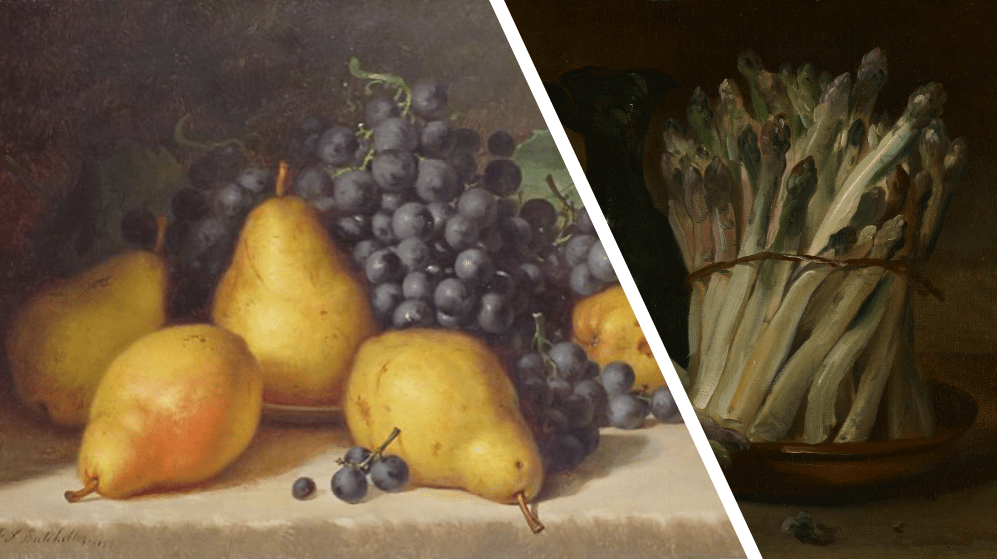
For those that aren’t aware, Augustine (father of Western Christian orthodoxy) has a really famous moment in his Confessions where he steals some pears.  He’s with a bunch of his rowdy teenage friends when they see this big, beautiful tree of pears.  They steal as many as they can, and then they throw them to the pigs.  The act is pure sin.  There’s nothing to be gained.  There’s nothing logical about it.  Augustine even has better pears at home!  The point isn’t to gain something; the point is to destroy something:

It was foul, and I loved it. I loved my own undoing. I loved my error–not that for which I erred but the error itself. A depraved soul, falling away from security in thee to destruction in itself, seeking nothing from the shameful deed but shame itself.

Augustine; Henry Chadwick. The Confessions p. 29

It’s a vivid illustration of man’s innate drive towards sinfulness.  Who among us hasn’t done something stupid in their youth?  Something that was destructive for the sake of being destructive?  For me, I think about the cafeteria at undergrad.  When you were done eating, the popular thing to do in my friend group was to grab an extra apple or banana on your way out and just throw it as far across campus as you could.  And why?  Because destroying was fun!  Cleaning staff be darned!  Let the fruit smash commence!  Augustine is saying, “let’s not let ourselves off the hook for the destruction that we wrought as teens.  We did it for a reason: humanity innately longs to sin.  Don’t let the fact that you were younger and more overt prevent you from seeing your fundamental nature in those stupid acts of destruction.”

Meanwhile, in HIS confessions, Rousseau ALSO tells the story of stealing produce!  This time, it’s asparagus.  His boss, Verrat, has a mother that’s been growing a little garden, and he’s decided that young Rousseau is the perfect man to steal asparagus from it and sell them on his behalf.  Rousseau steals asparagus for relatively benign reasons at first: “seeking only to please my employer,” he claims.  But what began as a little way to help his boss get some extra luxuries starts to warp him.  He starts skimming a little off the top.  After all, he’s the one that is taking on the risk, and nobody would believe him if he said that his boss put him up to it!  So to make things fair, he takes a little.  Then he starts stealing other little things that he finds: apples, tools, trinkets he finds laying around the house.  More than that, he feels utterly justified in doing all that he does:

A continual repetition of ill treatment rendered me callous; it seemed a kind of composition for my crimes, which authorized me to continue them, and, instead of looking back at the punishment, I looked forward to revenge. Being beat like a slave, I judged I had a right to all the vices of one.

Rousseau, Confessions, Bk 1, Gutenberg Edition

Note the change in culprit!  Augustine saw his crimes as proof of a deep-seated inclination to sin within his soul.  Rousseau looks outward to find the culprit.  Verrat convinced him to start stealing to feed his need for luxury.  The sin was reinforced by unjust risk, the beatings that he suffered, and the way he was treated after his crimes.  If Augustine’s pear-thieving was proof of an inward problem, Rousseau’s asparagus theft is a testament to the power that society has to warp an individual towards evil.

This brings us to one of Rousseau’s major ideas: society is the primary force responsible for corrupting the average human. If left alone, people are basically good!  They don’t know how to lie, deceive, compare themselves to someone else, or take advantage of people.  They’re unique, gifted, and ready to live in a way that suits them.  But when they’re introduced to society… well… they learn to lie:

As long as men remained satisfied with their rustic cabins… they lived free, healthy, honest and happy, as much as their nature would admit, and continued to enjoy with each other all the pleasures of an independent intercourse; but from the moment one man began to stand in need of another’s assistance; from the moment it appeared an advantage for one man to possess the quantity of provisions requisite for two, all equality vanished; property started up; labour became necessary; and boundless forests became smiling fields, which it was found necessary to water with human sweat, and in which slavery and misery were soon seen to sprout out and grow with the fruits of the earth.

Rousseau, Second Discourse, Gutenberg Edition

People’s lies help them get along with others.  They help them accumulate wealth and power.  They help them appear better than they are.   All of humanity ends up living a lie and drawing each new person they meet deeper into that lie.  The people who are best at lying benefit tremendously, regardless of who is actually moral:

While government and laws take care of the security and the well being of men in groups, the sciences, letters, and the arts, less despotic and perhaps more powerful, spread garlands of flowers over the iron chains which weigh men down, snuffing out in them the feeling of that original liberty for which they appear to have been born, and make them love their slavery by turning them into what are called civilized people. Need has raised thrones; the sciences and the arts have strengthened them. You earthly powers, cherish talents and protect those who nurture them. Civilized people, cultivate them. Happy slaves, to them you owe that refined and delicate taste you take pride in, that softness of character and that urbanity of habits which make dealings among you so sociable and easy, in a word, the appearance of all the virtues without the possession of any. 

Rousseau, First Discourse, Gutenberg Edition

Trueman suggests that philosophers like Rousseau set the stage for modern thinking about morality.  There’s a presiding sense in the West that the greatest thing humanity can do is stop oppressing one another and redesign our systems of governance to minimize societal injustice.  Political debates are increasingly built around terminology like social justice, systemic oppression, and intolerance.  Rousseau would be proud of our willingness to tackle society head-on! But what have Christians lost by adopting so much of his thinking? We’re taking on the thought processes of someone who directly contradicted one of our greatest thinkers! We have to stop and ask, what will we be left with when we strip away all the chains we’ve heaped on one another?  Will the final product be capable of glorifying God?  Or was Augustine right? Is there a force beyond societal injustice that causes us to stray? Is sin much more embedded in the human soul than we’d like to imagine?