What Do We Mean By ”Apocrypha?”

It’s so important to know what a word means before you start disagreeing with someone about it.  I remember a whole debate that I had with an old roommate about the ethics of punching someone that was “imminently” about to attack one of your friends or you.  I insisted that you should always try to de-escalate things first while he insisted that it was unethical to let someone get punched because you weren’t willing to step in.  We went back and forth and back and forth for about an hour, much to the annoyance of his girlfriend.  It wasn’t until we started roleplaying different scenarios (yes, it went that far) that we realized that the way that we were defining “imminent” was very different.  I assumed that the hostile party had just started to become erratic and hostile, showing their fast escalation towards an attack, while he assumed that they were already deeply hostile and were literally about to throw a punch.  When we recognized the difference, we realized we didn’t disagree at all on any point, much to the continued annoyance of his girlfriend, who took the opportunity to say, “You two are so stupid.  I’ve been saying this all along.”  We weren’t arguing about ethics; we were arguing about a definition.  Unclear terms are the real culprit behind a lot of disagreements.

One theological term that is infamously unclear is “apocrypha.”  The word is varyingly defined as…

•Those extra books the Catholics have (Tobit, Judith, Maccabees 1 and 2, etc.)

•Any ancient Christian-y book that didn’t make it into the Bible (Book of Jasher, Book of Adam and Eve, Book of Enoch, etc.)

•Helpful ancient books that wise Christians know about (The Epistles of Clement, Shepherd of Hermas, etc.)

•Harmful ancient books that are mostly heretical (Gospel of Thomas, Gospel of Judas, Acts of Paul and Thecla, etc.)

That boils down to two key factors that our word is trying to get at: canonicity and doctrine.  First, it might be an attempt to discuss the canonical status of a book.  Maybe someone is trying to say it’s only canonical for Roman Catholics (or “deuterocanonical” to Protestants).  That’s one option.  But it might also be saying that a book is flat out non-canonical.  Or maybe the key concern isn’t about canonicity, but about the doctrine presented in a particular book.  That doctrine could be sound without being a piece of Scripture, or it might be horrendously heretical.  Again, the term can mean either of these things.  It’s saying something about canonicity and/or doctrine… but what exactly?  The vagueness in the term isn’t a modern invention;  it’s baked into the term from the earliest days of the Church.

Factor One: Deuterocanonical vs. Purely Non-Canonical

A fair understanding of the first factor (canonicity) can be uncovered by just looking at the meaning of the word “apocrypha”.  It comes from the Greek word ἀπόκρυφα (apokryphos), which means “hidden” or “secret.”  The word was originally used by ancient Christians (or heretics) to refer to books that were wise, but had somehow been obscured because they represented a threat to authority.  It should be obvious how often this term was used by heretics to introduce “sacred” literature that violated church doctrine.  It’s not hard to find early Church Fathers railing against apocryphal books, meaning those things that were obviously non-canonical and harmful.  A good example can be found in that famous hunter of heresy , Irenaeus, when he’s against the Gnostics:

“[T]hey adduce an unspeakable number of apocryphal and spurious writings, which they themselves have forged, to bewilder the minds of foolish men, and of such as are ignorant of the Scriptures of truth.”

Irenaeus, Against Heresies, (1, 20, 1)

Cleary, he uses the word to warn Christians about harmful, non-Canonical books.  Another good example comes from that rhetorician of Carthage, Tertullian, in his Treatise on the Soul.  He notes that some philosophers arrived at partial truths about the world by using non-Christian sources such as Greek myths, but it doesn’t concern him because they don’t actually seem to hold those myths in particularly high esteem:

“[T]hese philosophers have also made their attacks upon those writings which are condemned by us under the title of apocryphal, certain as we are that nothing ought to be received which does not agree with the true system of prophecy, which has arisen in this present age; because we do not forget that there have been false prophets, and long previous to them fallen spirits, which have instructed the entire tone and aspect of the world with cunning knowledge”

Tertullian, A Treatise on the Soul, 2

Again, apocryphal here means any book that’s not a canonical part of Christian scripture.  Clearly that is indeed a valid, historic, Christian use of the term. 

At the same time, we can find Church Fathers that use the term to refer to just the opposite on this particular axis!  Some use it to refer to consent that would go on to be accepted in the Catholic canon and not the Jewish or Protestant canon.  For those that might be unfamiliar with this kind of so-called “apocryphal” content, the Catholic Bible contains a number of additions in the Old Testament that don’t appear in the Jewish or Protestant Bibles.  Why?  Early Christians often spoke Greek and consequently read Scripture from a Greek copy of the Old Testament called the Septuagint.  The Septuagint contained seven extra books (Tobit, Judith, 1 and 2 Maccabees, Wisdom, Sirach/Ecclesiasticus, and Baruch) and a few additional chapters in the books of Daniel and Esther.  Even though a broad segment of Greek speaking Jews that used the Septuagint for Scripture readings also considered this content legitimate, ultimately the authorities in Israel neither used it nor considered it canonical.  As time went on, Jews used the content less and less, returning to the Hebrew Scriptures, and Christians used it more and more.  Eventually, there was debate in the Church about it.  Why were Christians using versions of the Jewish Scriptures that the Jews didn’t actually think was canonical?  Why use the septuagint at all instead of something that would have circulated in the region that Jesus actually lived?  Should the church remove that extra content that had been used for generations?  Or did it still count as sacred Scripture?   In his Letter to Africanus, the ever-abstract and theological genius, Origen, argued for the legitimacy of the story of Susanna (a story from the additional chapters in Daniel):

But probably to this you will say, Why then is the History not in their Daniel, if, as you say, their wise men hand down by tradition such stories? The answer is, that they hid from the knowledge of the people as many of the passages which contained any scandal against the elders, rulers, and judges, as they could, some of which have been preserved in uncanonical writings (Apocrypha).

Origen, Letter to Africanus, 9

A word that was elsewhere used to condemn non-canonical writing is now used to point at the additional Septuagint literature as actually purer, uncorrupted, Scripture, hidden away from the tyranny of Israelite authorities.  You can see that from the earliest days of the faith and in the highest circles of authority, the word is used in multiple senses to talk about the canonicity of sacred writings.

Factor Two: Safe or Dangerous Doctrine

We’ve seen how the term historically was used in different circumstances to refer to different aspects of a document’s canonicity, but that’s not all it could do!  Apocryphal could also be a way to discuss expectations for the reliability of a document’s doctrine.  Obviously, Irenaeus and Tertullian used the term to refer to books that were actively heretical and not worth reading, and Origen used it to refer to books that should be considered canonical and are doctrinally pure, but we can also find people that use the term to refer to things that aren’t dangerous, per se, but don’t have any claim towards anything resembling canon.

The compiler of the Vulgate, Jerome, is a perfect illustration of this still further way of using the word “apocryphal.” In the fourth century, Jerome was debating the details of the emerging Christian canon, and he objected to the inclusion of both deuterocanonical content and certain other books that had arisen popularly in key Christian communities.  He listed the Old Testament books he thought ought to be canonical (identical to the modern Protestant and historic Jewish canon), and then makes this note:

Whatever falls outside these must be set apart among the Apocrypha.  Therefore, wisdom, which is commonly entitled Solomon’s, with the book of Jesus the son of Sirach, Judith, Tobias, and the Shepherd are not in the canon.

Jerome, Preface to the Books of Samuel and Kings

At first glance, this appears to be little more than a further exploration of canon.  Jerome is condemning the Catholic epistles to a non-canon status, just like Irenaeus and Tertullian did with dangerous books.  But Jerome doesn’t have that same attitude of suspicion and frustration when regarding these books.  To the contrary, he seems to like them.  He occasionally quotes them in his other writings.  Jerome has the utmost respect for some of these documents that he’s calling apocryphal; he just doesn’t think they’re canonical.  That’s a far cry from Tertullian and Irenaeus’s use of the term, which was essentially “horrible heresy carriers.”  He uses the term “apocryphal” to refer to books that have positive, doctrinally-sound additions to the Christian life.

To recap, we’ve established that even from the beginning of the church, the word “apocryphal” could refer to a writing that is either canonical or deuterocanonical/Catholic, or it could be a reference to the reliability of the doctrine within a non-canonical book. It’s a broad, flexible term! And it get’s thrown around pretty readily among church people that are exploring non-canonical writings enough that it causes issues from time to time.  When you’re talking with fellow Christians about apocrypha, just remember how much history this particular term has and be careful to define what you mean when you use it. It might just save you an argument.

Augustine’s Commentary on John 13:1-5

Augustine preached his way through the Gospel of John, which is such a treat. As a fellow pastor preaching his way through John, it’s awesome to be able to see the different ways that Augustine engaged with the same Scriptures that I’m working through. I don’t always agree with him, of course. At different points, patristic exegesis can be pretty weird by modern standards, but even when Augustine is weird, he’s never dull, and that’s worth something. Since it was kind of hard to read through Augustine’s Tractates on the Gospel of John as a reference document, I thought I’d break the specific verses I was looking at down into a commentary. The ideas are his, but the words are mine. Hopefully, it makes the gems of his wisdom a little more accessible.

Here are his thoughts on John 13:1-5. The Bible verses I mention are usually from the NIV, but sometimes Augustine’s insights require language from the translation that he’s working from. In those cases, I use the NIV for inspiration but tweak it to try to make it resemble what Augustine was obviously working from.

1It was just before the Passover Festival.  Jesus knew that the hour had come for him to leave this world and go to the Father. (Jn. 13:1 a)

Augustine dabbled in a lot of different languages, so in this first verse, he points out some of the subtle truths that get highlighted depending on which language you read it in. For example, in Greek, the word Pascha (Passover) sounds a lot like paschein, the word for suffering. And sure enough, this is a period where Christ is preparing to paschein for the whole world. This wasn’t lost on Ancient Greek Christians. They naturally associated this celebration of Passover with Christ’s suffering.

If, however, you read the passage in Hebrew, the word Pascha means (unsurprisingly to us today) “pass over,” referring to the angel of death passing over houses that had lamb’s blood above the door during the last of the Egyptian plagues before the exodus. The Hebrews were saved by the blood of a lamb, and here Jesus, the lamb of God, goes to the cross so that we can be saved from death by his blood.

Still further, in Augustine’s native Latin, the translation of “Passover” would be “transitus,” which would mean something like “passing through,” “crossing,” or “transit.” How appropriate! Jesus isn’t going to die. He will, however, pass through this world. The Vulgate even uses this same language to describe Jesus’s mission later in this verse: this is the “hora ut transeat ex hoc mundo,” or in English, “the hour for him to pass through the world.” Jesus is like Moses! Moses passed through the Red Sea to lead his people out of slavery in Egypt to the promised land. Jesus passed through the world to lead his people out of slavery to sin and death and into the Kingdom of God. As Paul wrote in 1 Corinthians 1:13: “For [Jesus] has rescued us from the dominion of darkness and brought us into the kingdom of the Son he loves.” Everyone will pass away from this world, but not everyone will pass through this world. Remember how Pharaoh’s soldiers sided against Moses and died in the middle of the waves because of God’s judgement? Those who follow Christ will pass through the world with him, but those who are against him will pass with the world into God’s judgement.

Having loved his own who were in the world, he loved them to the end. (Jn. 13:1 b)

What does it mean that Jesus “love them to the end?” What end? Did Jesus’s love end at the cross? No! Jesus loved us even after that. Jesus came back to life and loved us. Jesus ascended into Heaven and still loves us. There isn’t an end to Jesus’s life! So “loved them to the end” can’t refer to the end of his life. What might it refer to? In classical Christian terms, “the end” can refer to the telos, or reason that something was made. For example, the proper end of an acorn is to become an oak tree. The proper end of a heart is to pump blood. Teleologically, that’s their proper end. Romans 10:4 references this type of end when it calls Jesus the “end of the law.” Does it mean that Jesus ended the law? No. It means Jesus was the perfect culmination of the law. He was the proper end of the law. So if Jesus loved his disciples to the end, he wasn’t loving them with a partial love. This was a love that had achieved its proper end. This was a perfect love. This was the love that led him to the cross. As John 15:13 says, “Greater love has no one than this: to lay down one’s life for one’s friends.” Jesus loved his disciples with the greatest love.

The evening meal was in progress, and the devil had already prompted Judas, the son of Simon Iscariot, to betray Jesus. (Jn. 13:2)

At this point, the devil has already planted a spiritual suggestion in Judas’s heart: betray Jesus. This wasn’t a whisper in his ear so much as a spiritual influence that entered through his thoughts. Remember, not everything that’s spiritual is good! Paul knew all about the challenges that spiritual beings can bring.. He wrote in Ephesians 6:12, our struggle is against powers, principalities, and the spiritual forces of evil. Somehow, devils can mingle with our thoughts and encourage us to sin. But how do they do it? And how do we know which thoughts are from them and which are from us? And are there angels that introduce good spiritual thoughts to us? It seems reasonable to assume that there are, but since all of these things are happening beyond our ability to see them, there’s so much we can’t know. We may not know every detail, but we always know which of the thoughts in our mind we choose to act on. We can choose to be aided by God towards what is good, or go off on our own and choose what is wrong. Judas knew Jesus, but he didn’t accept him as his God. The instinct to betray Jesus didn’t come from the Devil. That belonged to Judas. The devil just placed that thought of betrayal in his heart and let him do the rest. He came to this meal to spy on the shepherd and sell the Savior. Judas may have planned to do evil, but God used his evil for good. Even Judas’s betrayal became a part of God’s receptive plan.

3 Jesus knew that the Father had put all things under his power, and that he had come from God and was returning to God; so he got up from the meal, took off his outer clothing, and wrapped a towel around his waist. After that, he poured water into a basin and began to wash his disciples’ feet, drying them with the towel that was wrapped around him. (Jn. 13:3-5)

Judas showed up to that meal assuming that his betrayal was the perfect secret, but Jesus knew. Jesus knew everything that Judas was going to do, but he wasn’t worried. He trusted his Father completely. Everything was in His hands, including Judas. In the ultimate act of humility, he knelt down to wash the feet of his disciples including the feet of his betrayer. It didn’t matter how much a person had indulged in evil. There was nobody that Jesus wasn’t willing to kneel down and serve.

And the particulars of that act tell us so much. He took off his outer garment and wrapped towel around his waist to serve us. It’s an image of the incarnation! Jesus laid aside the grandeur of Heaven (the outer garment) and took on humanity (the towel) so that he could serve us. As Philippians 2:6-7 says, “

[Jesus], being in very nature God,
     did not consider equality with God something to be used to
     his own advantage;
rather, he made himself nothing
     by taking the very nature of a servant,
     being made in human likeness.

Later, he’ll have his garments stripped from him at the cross and he’ll be wrapped in linen for burial. All of this humiliation was for our sake. Even here, as he goes to the cross, he stops to serve everyone including the lowest among us. As Luke wrote, “He came to seek and save the lost,” (Lk. 19:10).

We were lost at one point. We had that same pride that Judas had in our hearts, but God came to wash us with his grace. Don’t cling to that pride! Set it aside and serve others in love and humility until just like the one who saved you.

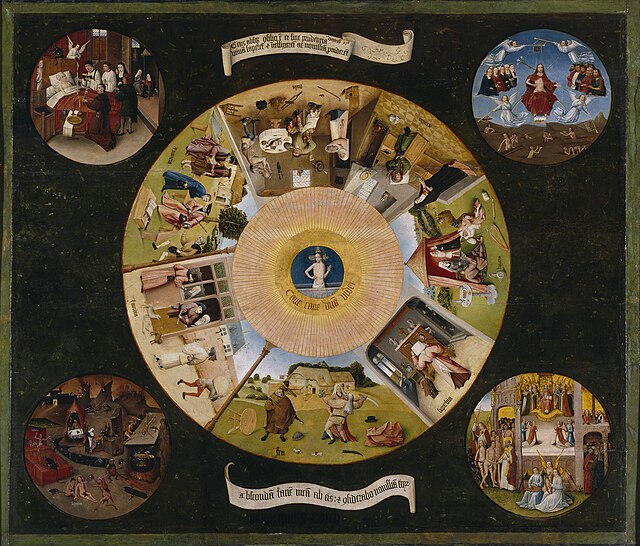
The Seven Deadly Sins: Their Origins and Why to Love the List

I just wrapped up a sermon series on the seven deadly sins, and I have to admit, I learned to appreciate that little list more than I expected.  I hadn’t seen it used all that much outside of tv shows (don’t tell me you’ve never seen a hero fight their way through a band of seven deadly sins themed goons), but it brings more to the table than schlocky action fodder.  It’s actually a really great reflective tool that can help draw our attention to the parts of our life that may not be as Christ-centric as we want them to be.

If your seven-deadlies knowledge falls somewhere near where mine was a few months back (zero), let me give you a brief overview.  The list of seven deadly sins is a tool that Christians have been using for well over a thousand years with its origin going all the way back into the fourth century.  The seven sins are pride, greed, lust, gluttony, envy, sloth, and wrath.  The theory here is that most of the sins that you’re engaged with on a daily basis have their roots in one of these seven big sins.  If you can focus on those seven things, your life will be much, much holier.  In short, it’s a contemplative tool for rooting out sin in your life.  You look at the list, you look at your life, and then you see where you have to make adjustments.  It’s been significantly more popular in Catholic circles than Protestant ones (we’ll get to why), but you can see why people use it.  It’s easy to apply.  It’s not hard to understand or wildly theoretical.  It’s pretty straightforward for devotional use or sermons or whatever else.

Not only was this a useful tool to add to my tool belt, but it was a delight learning about where it came from and how it was taught.  The people that developed this tool were big names in the ancient Christian world that all had a reputation for living holy lives.  Reading some of their works was a great opportunity to soak in some timeless wisdom.  But before I get to them, I want to talk about someone who comes up in a lot of articles about the seven deadly sins that wrongly gets credit for creating them: Tertullian.

The Red Herring: Tertullian’s List of Unforgivable Sins

Tertullian was a massive theological name in second century Christianity.  It’s not surprising that a lot of content can be traced to him.  That said, the list of the seven deadly sins isn’t from him.  He does have a list of seven sins, but relating them to the “seven deadly sins” as we know them today is such a wild stretch that I can’t imagine anyone who has actually read Tertullian’s work making that connection. His list of sins may happen to contain seven items, but the goal is wildly different.  He isn’t trying to tell you about some major sins so you can keep an eye open.  No, Tertullian is trying to tell you about sins that are literally unforgivable.

[T]here are some sins of daily committal, to which we all are liable… if there were no pardon for such sins as these, salvation would be unattainable to any. Of these, then, there will be pardon, through the successful Suppliant of the Father, Christ. But there are, too, the contraries of these; as the graver and destructive ones, such as are incapable of pardon — murder, idolatry, fraud, apostasy, blasphemy; (and), of course, too, adultery and fornication; and if there be any other violation of the temple of God. For these Christ will no more be the successful Pleader: these will not at all be incurred by one who has been born of God, who will cease to be the son of God if he do incur them. (On Modesty, Ch.19)

To consider this the origin of the seven deadly sins, we would have to ignore the fact that there’s not a single sin on the list that’s also on the list we know today AND ignore the fact that the function of the list is so wildly different from lists today AND we’d even have to ignore the fact that Tertullian’s list isn’t limited to seven items.  Notice that he ends his list with a catch-all for anything he missed: “and if there be any other violation of the temple of God.”  It’s not even really a list that’s intended to be limited to any given number of items.  It would be absurd to consider this a serious forerunner to the seven deadly sins, especially when you take a look at the next theologian with a claim to the title of originator:

Monkish Wisdom: Evagrius Ponticus and the Eight Evil Thoughts

Evagrius was a monk in fourth-century Egypt, which was the hotbed of Christian monasticism in its day.  He wrote a book called The Praktikos (The Practices) to help other monks live holy lives.  Sure enough, that book had a list of eight evil thoughts that was intended to be a list of big sins to root out in your life.  And when you think about it, doesn’t it make sense that a list like this began with monks?  The contemplative evaluation of your life combined with a fervent hope that hard work and effort can bring about virtue and holiness are exceedingly monkish.  It also helps explain why the list gets more traction in Catholic circles than in Protestant ones!  If you think that you need works and faith for salvation (as Catholics do), a list of major vices is obviously helpful.  If you think that faith alone brings about salvation (as Protestants do), the list’s focus on human action and its lack of references to Christ might be considered a little concerning.  Not that it’s unusable for Protestants, of course, but it certainly would be viewed as less helpful and maybe a little strange.

Evagrius’s “eight evil thoughts” (or the Ὀκτώ γενικώτατοι λογισμοὶ in his words, which actually translates to something like “eight general tempting thoughts,” but that’s much less catchy) is the first list that shows an obvious attempt to create something like what we know today, and it’s undeniable when you look at his writings:

There are eight principal kinds of tempting thoughts, that contain within themselves every tempting thought: first, that of gluttony; and with it, that of sexual immorality; third, that of love of money; fourth, that of sadness; fifth, that of anger; sixth that of acedia; seventh, that of vainglory; eighth, that of pride. We cannot control whether these tempting thoughts can agitate the soul or not; but whether they remain in us or not, and whether they move the passions or not – that we can control. (The Praktikos, 6)

You’ll notice that there’s still significant work to be done before we reach our final form.  At this point, we’re missing envy and sloth.  Instead, we have sadness, vainglory, and acedia (a Greek word that’s hard to translate that means something like “spiritual boredom” or “apathy”).  On the whole though, the list is really close.

Evagrius’s proceeding advice is pretty hit or miss.  Even in the selection above, you can see that he makes some connections that most of us today would just kind of scratch our heads at.  For example, why does he connect gluttony and sexual immorality?  To us, they’re totally different things.  To Evagrius and his immediate audience, it’s obvious that if you’re feeling lustful, you ate too much.  The weird parts are definitely there, but there’s some really relatable stuff too.  For example, his warnings about the challenges of acedia (boredom):

It makes the sun appear to slow down or stop , so the day seems to be fifty hours long.  Then it forces the monk to keep looking out the window and rush from his cell to observe the sun in order to see how much longer it is to the ninth [hour, i.e. 3 pm], and to look about in every direction in case any of the brothers are there. (Ibid. 12)

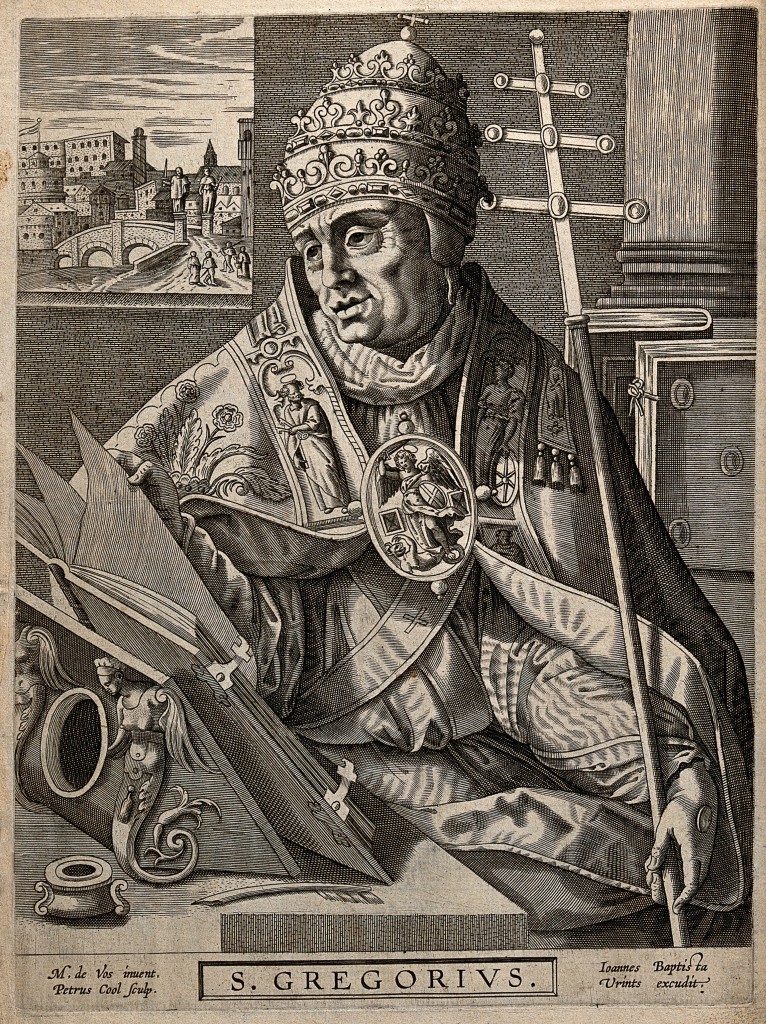
That is painfully relatable, and definitely helps me think about how much time I fritter away on the days that I’m not particularly diligent about my work.  Evagrius has created a great tool for monks, but it needs a pastoral touch to get it to a place where it’s applicable to the average person.  And luckily, it would make its way to the perfect person.  One of Evagrius’s students, John Cassian, compiled a lot of Egyptian monk wisdom into a wildly successful book called The Institutes and it helped lay the foundation for Western monasticism.  One of the monks that was formed by it’s wisdom happened to become pope, and that monk was named Gregory the Great.

A Pastoral Touch: Gregory the Great and the Seven Principal Sins

Yes, the guy who helped get the seven deadly sins to their (mostly) final form was a pope.  If you’re Protestant, don’t freak out.  John Calvin, one of the biggest Protestant names in history, insisted that Gregory the Great was the last good pope, and if a prominent reformer who was persecuted for Protestantism was cool with him, maybe we should be too.

Gregory’s work on the seven deadly sins appears in a wildly different context.  He wasn’t trying to make a list of sins for monks to think though.  Actually, Gregory ended up crafting his list while in a commentary on the book of Job.  Weirdly, he was exegeting Job 39:25, “At the blast of the trumpet it snorts, ‘Aha!’ It catches the scent of battle from afar, the shout of commanders and the battle cry,” which is actually God talking about how Job could never make an animal as amazing as a horse, which is a pretty far cry from something you’d expect to lead to a discussion on the seven deadly sins.  Medieval Christians thought that every Bible passage had several different layers of meaning, some of which could be pretty abstract.  In his section about the moral interpretation of the horse passage, Gregory argues that it’s actually about the life of a Christian and how they’re supposed to behave.  The line “The shout of commanders and the battle cry,” leads to discussion about spiritual warfare, and thus follows the seven deadly sins that we need to watch out for:

For when pride, the queen of sins, has fully possessed a conquered heart, she surrenders it immediately to seven principal sins, as if to some of her generals, to lay it waste. And an army in truth follows these generals, because, doubtless, there spring up from them importunate hosts of sins. Which we set forth the better, if we specially bring forward in enumeration, as we are able, the leaders themselves and their army. For pride is the root of all evil, of which it is said, as Scripture bears witness; Pride is the beginning of all sin. [Ecclus. 10, 1] But seven principal vices, as its first progeny, spring doubtless from this poisonous root, namely, vainglory, envy, anger, melancholy, avarice, gluttony, lust. For, because He grieved that we were held captive by these seven sins of pride, therefore our Redeemer came to the spiritual battle of our liberation, full of the spirit of sevenfold grace. (Morals on the Book of Job, Vol 3, Pt. 6, Book XXXI, 87)

At this point, I think we have what I’m comfortable calling the modern list of seven deadly sins.  Even here, there are a few noteworthy things that are a little different.  The name, obviously.  Just like the “eight evil thoughts” name got made up to describe what Evagrius was talking about because it was way cooler than the title that came up with, “seven deadly sins” got made up because the actual name that Gregory came up with, “the seven principal sins,” isn’t all that catchy.  That said, it’s actually a more accurate title.  These are the seven main sins you’re involved in, not the seven sins that will kill you.  When did “capital” become “deadly?”  Honestly, I can’t tell you.  It wasn’t Gregory’s doing, and most formal theological treatises call them the seven capital sins well through the middle ages and even into early modernity.  It looks like something that just kind of bubbled up in popular imagination over time.

A second difference that’s worth noting is that vainglory is still here!  A weird amount of sources say that Gregory removed vainglory and added pride, but I can’t find a shred of evidence that they’re right.  This list very much proves the opposite.  Pride is listed as “the queen” of the seven deadly sins, but not actually one of them itself.  Instead, pride is defined more closely as the willingness to step away from God, whereas the immoral act of exhibiting what we would call pridefulness in other circumstances is referred to as vainglory.  It’s actually a pretty clever solution.  Most modern explorations of the seven deadlies that I see simultaneously list pride as the root of all sins AND one of the seven, which is a little clunky.  It may as well be six deadly sins and their ringleader at that point.  Kudos to Gregory for solving the problem before it happened.  Pride is defying God; vainglory is glorifying yourself.

As weird as Gregory’s exegesis of Job may be, his section on the seven deadly sins is actually really applicable.  I used Gregory’s wisdom liberally in sermon preparation.  Sure, not everything he wrote is applicable today, but he clearly understands the trials of the human heart and that’s universal.  He’s also very clear about how each of these sins may be separate,but really, they all intertwined.  Lust leads to pride.  Pride leads to envy.  Envy leads to anger.  They’re all connected, and they’re all in our lives.  A mature Christian isn’t free of these problems; they should actively be involved in fighting them.  If we’re not fighting them, it’s not because they’re not there; it’s because we’re not paying attention.

It reminds me a little of a question I used to ask in confirmation classes.  These classes always have a mix of actually religious kids and kids that are just going through the motions.  After a lesson about sin, I would ask the kids to rate how close to perfect holiness they thought their daily lives really were.  From my perspective, it was an obvious opportunity for a little moment of repentance.  Of course you rank yourself low!  You’re a sinner!  You just saw what God’s standards are!  You’re not living up to them, right?  Surely, all the kids would admit that they weren’t really doing as well as they wanted to, and then we could pivot to talking about Jesus.  It didn’t really work out that way.  The less religious a kid was, the higher they would rank themselves on the holiness index.  Some kids unironically gave themselves a nine out of ten and said they were doing a pretty good job at keeping God’s law.  Try pivoting to Jesus’s sacrifice on the cross after a kid said they’re really actually pretty holy on their own.  It doesn’t work.  A person can be so blind that they can’t even see their situation clearly.  You have to be aware of sin if you want to fight it.  That’s one of the best things that this list brings us.  In Gregory’s strangely horse-themed words:

But the soldier of God, since he endeavors skillfully to pursue the contests with vices, smells the battle afar off; because while he considers, with anxious thought, what power the leading evils possess to persuade the mind, he detects, by the sagacity of his scent, the exhortation of the leaders. And because he beholds the confusion of subsequent iniquities by foreseeing them afar off, he finds out, as it were, by his scent the howling of the army. (Morals on the Book of Job, Vol 3, Pt. 6, Book XXXI, 91)

Ultimately, that awareness is what the list of seven deadly sins is intended to develop in us.  I know it felt convicting preaching my way through them.  It’s easy to see the sins of others, but it’s a little trickier to be aware of the sins in ourselves.  I hope that some of that conviction stays with me.

Keep: Deep Tradition

This is my final entry on my series on the things I inherited from Eastern Orthodoxy and my re-evaluation of them in light of my awakening to classical Protestantism.

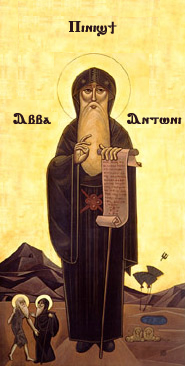
The time has come to bring this to a close. I could go on at length about the influences I want to keep and the sources I want to let go of from the Eastern Orthodox world. I could talk about the beauty of Anthony of Egypt’s biography! I could opine about the liturgy of John Chrysostom. I could grumble about their failure to stand firm against encroachment by corrupt state officials. I could critique their decentralized role of Scripture. I could do all of that and more. But at some point, you have to move on. As I said previously, I’m skeptical of Eastern Orthodox reads on Church History, I’m lovingly mixed on the impact of the Desert Fathers, and I’ve dropped Bulgakov completely. Time to write about something I definitely want to keep: the emphasis on traditional sources.

The Eastern Orthodox world is so good at treasuring their spiritual heritage. When they have a resource or a writer or a saint that’s especially worthy of remembering, they remember them! Their sermons reference John Chrysostom! Their books reference Gregory of Nazianzus! Their devotionals are often written by figures like John of Damascus! They stand on the shoulders of giants! Now, is every Eastern Orthodox Church like this? I couldn’t tell. you. I can only see the little enclaves they have in the West. But what I see here is amazing. What a precious, delightful gift to see people being nourished by the historic heroes of their faith..

Nikodemos of Athos is one Eastern Orthodox figure in this pattern who particularly stands out to me. He was this Greek monk in the 19th century that was renowned for his writing. And what did he write? He translated and compiled old Orthodox writings so that Greeks could see the beauty of their spiritual heritage. And it was timely to do so! As Greece became more secular and modern, people started lionizing old pagan philosophers as “the real Greek heroes.” Nikodemos was pointing back to the saints of the Byzantine era and telling people, “Don’t forget who you really are! This is your real heritage!”

We Protestants would benefit so much from this. In too many of our churches, there’s almost no substantive reference to any timeframe except the pastor’s personal life and the Bible. Two-thousand years of studying, praying, living, and dying are just cast aside. And what do we lose in that? We lose voices that could help guide us and teach us. We lose access to wisened saints who can tell us, “Hey, I’ve been there, and here’s what you can do.” We lose access to the record of questions that have been asked time and time again, reminding us that we’re not the only ones to ponder things. We lose so, so much.

Why don’t we engage with our spiritual heritage? There are probably a lot of things that could rightly be pointed to. We could look at the role of emotionality in Western Protestant churches after the Enlightenment. There was a cultural movement that come along and told the Church, “Science is the realm of facts and logic, religion is for feelings and stuff. Stay in your bubble and we’ll stay in ours.” Too many churches took them up on that deal. Heck, there are whole traditions where the Holy Spirit is more or less equated with strong emotionality! And those traditions cross-pollinate with other Christian groups and cause all sorts of headaches. If we divide our lives into facts and feelings, we can’t be surprised when our church gets “sorted”fixed” to fit cleanly into our boxes. And if we’re happy enough for church to just fill our hearts, other things will come along and fill our heads.

A second challenge that I think is uniquely worth mentioning for American Protestantism is our denominational history. Some of our biggest denominations (Methodist, Baptist, Pentecostal) were able to spread across the frontier areas of the United States so quickly and gain such a strong foothold partially because they had really low educational requirements. For some of those denominations, that’s a source of pride; God can use anybody that he calls if they’re sincere and want to serve him! Which is partially true, but also implies that Christianity is really pretty easy when it comes down to it. All you need to do is pray and read your Bible and you’re good to go, which is a bafflingly low bar. Nobody wants to hire a lawyer whose only qualifications are feeling God’s call on their life and reading a few pages from the constitution every morning. Nobody wants to receive surgery from a doctor who didn’t go to medical school but has a nice smile and feels convicted that the Holy Spirit moves his hands during surgery. “But Vincent, those aren’t the same things!” You’re right! They’re not. Neither of these can affect our eternity quite as much as a pastor can. Why should the people who do work on eternal souls be held to a lower standard than the people who handle any other serious task in our lives?

Yes, theology is hard. No, not everyone in a church needs a comprehensive knowledge of patristics to know Jesus. But do they need a total lack of theological knowledge? Do we need to avoid talking about who Augustine and Luther and Gregory the Great to make sure nobody feels too challenged? How many folksy analogies should a Protestant congregant have to wade through to hear something about one of the giants of the faith? Because the Eastern Orthodox Church is going wild passing on historic treasures to its congregations. It isn’t trying to be cool; it’s busy being important. It’s not trying to be accessible; it’s teaching people what they need to learn. It’s not trying to be relevant to pop culture; it’s busy trying to be relevant to God. And maybe some of that praise is a little over the top, but I see that they have something that we desperately need. They have a sense that the contributions of their saints are actual, life-changing teachings, not just strange burdens that clergy in training are obligated to stumble through before they can get ordained.

That’s one thing I don’t think I’ll ever lose. I’m really thankful that my time with Eastern Orthodoxy taught me that tradition is a blessing, not a burden. The saints that went before you WANT to help you understand the Bible! They WANT you to grow spiritually! They WANT to be a blessing! And they were to generations of people. Jesus Christ is the foundation, but these are the spiritual bricks that are in the wall beneath us. We need to know the saints from our tradition. We need to share the treasures of Spurgeon, Chrysostom, Machen, and so many others. We have a history. If we want to look forward, we need to be empowered by our past, not free of it.

The Desert Fathers and Works Righteousness? Say it ain’t so!

In my last post, I mentioned that there were some theological tools I picked up from my mentor that I’m not sure I want to keep. For the most part, they’re Eastern Orthodox. Since I didn’t have classical Protestant thinkers at my fingertips when I connected with so many of these resources, they were great for that period of my life, but now that I’ve had some time to get a little more classical Protestant thinkers under my belt, I think it’s time to say goodbye to some of the things from my past that I have more disagreements with than I fully understood at the time.

And this first one is a hard one: the Desert Fathers. SAY IT AIN’T SO! If you haven’t read The Sayings of the Desert Fathers before, let me just affirm that it is one of the most beautiful books I’ve ever read. Selections from this book were a part of my morning devotions for a long time. Here’s one of my favorites:

A brother came to see Abba Macarius the Egyptian, and said to him, ‘Abba, give me a word, that I may be saved.’ So the old man said, ‘Go to the cemetery and abuse the dead.’ The brother went there, abused them and threw stones at them; then he returned and told the old man about it. The latter said to him, ‘Didn’t they say anything to you?’ He replied, ‘No.’ The old man said, ‘Go back tomorrow and praise them.’ So the brother went away and praised them, calling them, ‘Apostles, saints and righteous men.’ He re- turned to the old man and said to him, ‘I have complimented them.’ And the old man said to him, ‘Did they not answer you?’ The brother said no. The old man said to him, ‘You know how you insulted them and they did not reply, and how you praised them and they did not speak; so you too if you wish to be saved must do the same and become a dead man. Like the dead, take no account of either the scorn of men or their praises, and you can be saved.’ (The Sayings of the Desert Fathers, trans. Benedict Ward, 132)

Isn’t that wonderful? Each of these sayings balance wittiness and wisdom, and they’re always focused on living Christianity, not just theorizing about it. I ran across this book for the first time while I was in seminary, studying abstract (and unorthodox) theories about how the Bible was written in my Bible class. I randomly plucked it off a shelf in the library, and when I opened it up? Boom. It felt like the Holy Spirit was right there next to me, encouraging me to live a Christian life, not just theorize about things that will never be edifying for real Christians.

As much as I love this collection of sayings, I’ve come to see its limitations. You can even see one of them in this piece. Did you catch what the man said when he asked for help? “Give me a word that I may be saved.” There’s only one word that can save you, dude, and that’s Jesus himself (Jn 1). And I know some would argue that I’m nitpicking here, since that little saying is just a standard part of the Desert Father’s story formula and there’s ways you can try to justify it, but on the whole, I think it’s pretty honest. A massive portion of the Desert Father’s stories are about how to develop a virtuous character, and they usually open with someone asking, “Father, give me a word that I might be saved.” A virtuous character is key to their understanding of salvation. And my logic here isn’t random or unfounded. The deadly edge of monasticism, as expressed by Luther so often and so clearly, is works righteousness. That’s incompatible with the Christian faith that you see in John 3:16 or Ephesians 2:8-9. There’s a big, glaring disagreement with most monastic literature and the Protestant battlecry of Sola Fide (by faith alone).

I may not have fully understood this when I picked up The Sayings, but it did rub off on me. I started reading more and more monastic literature, which pointed me towards Aristotle and his virtue-based ethics. His work is the philosophical underpinning of monastic thought. He argues that practicing good character traits consistently slowly molds you into a just person. I read up on that and thought it was pretty good! Just like the monks, really. So I decided to share my new leanings with my wife. I told her that Protestantism was probably a little wrong in parts. After all, it’s not just faith that makes you what you are! It’s what you do that molds you. It’s faith AND works that save you, when you think about it. Aristotle told me so.

While the monks would have approved of my thoughts, my wife certainly didn’t. She doesn’t often go all-out in arguments against me, but saying, “We might not be saved by faith alone,” was something she absolutely went all-out to defend. And I’m thankful that she did, because when your husband says, “I think Aristotle might be more right than the Bible,” you probably need to set him straight.

I’ve bounced back a lot since then. I’ve come to see that as much as I love the monks, they didn’t always focus on things in a way that reflects what the Bible clearly teaches. To use another Protestant phrase, I genuinely believe that Sola Scriptura (by Scripture alone) is true. Everything we need for salvation is in the Bible. Unfortunately, I can’t find anything that looks like what the Desert Fathers were doing. I think they have a logic to their actions that doesn’t reflect the heart of Scripture. Does that mean I think they’re all garbage? Absolutely not. But it does mean I think some of their emphases are a little off. If I want to read them, I have to be aware of the points where we diverge so I can get the best and leave out the worst.

So what to do with the Desert Fathers. Are they perfect? No, but here’s still a lot that I appreciate about them. I’ve just shifted my level of enthusiasm. Whereas historically, I would unapologetically have loved to do whole a sermon series that focuses on the Desert Fathers and their stories, now I’d rather keep Scripture at the center and maybe occasionally use them for a fun devotional or illustrative story. Am I throwing out these tools? Absolutely not. But they’ve gone from a core part of my toolbox that I used every day to some tools that stay up on their hooks until a special occasion comes out.

Still Orthodox, but Less Eastern

Every worker needs good tools to do good work.  A carpenter needs a quality hammer.  A janitor needs a durable mop.  A politician needs a tailored suit.  Regardless of the specific profession, everyone needs good tools.  Theologians are no different.  We need good tools.  We need finely-tuned doctrines, illustrative metaphors, and relatable stories to communicate the faith.  And just as in other fields, the name attached to these tools matters.  A carpenter might prefer Craftsman tools and a janitor might prefer Clorox disinfectant.  Why?  Because those are reliable names in their field.  The name shows that the tool is trustworthy.  We should also prefer tools associated with trustworthy names.  A metaphor that we find on some random website might seem clever, but will it sound half as good when you say it out loud?  Who knows?  It might end up confusing someone more than it helps them understand.  But if you’re working with time-tested materials from trusted names, such as John Calvin or Augustine of Hippo, you know any given metaphor has been used time and time and time again.  Someone didn’t come up with it over their lunch break!  It’s good stuff.

I say all of this because I’m doing a little cleansing of my theological toolkit right now. When I was in seminary at Duke Divinity School, Eastern Orthodoxy was a huge influence on me.  And why?  Well, I was an evangelical Christian at a mainline seminary.  While I was still a long way from being “fully cooked,” there were certain doctrines common among my classmates that I couldn’t accept.  For example, a fair few thought that Scripture often reflected the biases of the author, including ignorance, sexism, and racism, rejecting the doctrine of plenary inspiration of Scripture.  Others were excited by “new” and “innovative” ways of thinking about faith, rejecting historic orthodoxy.  Still others would begin their theologizing by talking about a specific solution to a modern issue facing the world and then ask how that solution could be found in Scripture, which it struck me as a very backwards sort of process.  And far be it from me to suggest that every professor or every student that thought that way, but it was enough that the “norm” was definitively uncomfortable for me.  Edward Rommen, an adjunct professor and Eastern Orthodox priest, was someone that felt the weight of tradition and orthodoxy in a way that was very different than the norm.  I considered him my mentor and snapped up independent studies and classes with him as often as I could.

There are many things I’m grateful I learned from him.  I learned to love tradition.  I learned to listen to the voices of the saints before me by diving into classical Christian resources (which led to the creation of this little blog).  I learned to see Church history as a way to reveal the faith we practice, rather than as a burden to be shoved under the rug.  All good stuff.  I did, however, pick up some tools that haven’t served me as well as I’d hoped.  Father Rommen was DEEPLY Eastern Orthodox, and while it seemed cool at the time, I wasn’t as critical of some of it as I’ve come to be.  For example, both he and most of his Eastern Orthodox contemporaries were very enthusiastic about the “seven ecumenical councils.”  They were said to be binding for Christians everywhere and things that were agreed upon by the whole church before the Great Schism between Eastern and Western Christianity.  That sounded impressive to me.  Who was I to question it?  It wasn’t until I dug into the historical record that I saw that these seven councils weren’t as representative of all Christians as I had thought.  The seventh council was literally about why icons were great and should be used in worship.  And do you see any icons in Western Churches?  No!  So why would one of these seven all-inclusive, inarguable councils approve something that nearly all Western Christians don’t like?  Because that particular council was attended by and disproportionately controlled by Eastern Christians.  Western ones were mostly peeved at the council’s decision and saw it as a document full of “the errors of the Greeks” (see Libri Carolini by Theodulf of Orléans for a response from a prominent Western Christian to the seventh ecumenical council).  So these seven authoritative ecumenical councils weren’t particularly ecumenical in all cases and weren’t as authoritative as it seemed at the time.

And far be it from me to bash away at Eastern Orthodoxy for having their own perspective.  That’s what it really boils down to, I think.  If you like icons and think they’re great, OF COURSE you’re going to be excited about that one council that happened while you were still in communion with the Western Church where the result was favorable to you.  Fair enough.  I’m not mad.  But I have to ask myself, was the result of that council really inarguable?  Certainly not.  They argued about it while it was happening!  And is the practice of prayer to icons clearly represented in Scripture?  Certainly not.  It seems laughable to imagine Mary, Joseph, or Jesus, first century Jews that weren’t even comfortable having people’s faces on coins because of graven image laws, busting out an icon of Elijah during prayer time.  The historical record just doesn’t line up for that practice unless you’re only looking at very specific, secondary Eastern Orthodox sources.  And if I disagree on the legitimacy of these councils, which carry so much weight in the Eastern Orthodox world, what else needs thought through?  Are some of my tools stamped with a name that I may not trust as much as I used to?  Because while throwing everything out isn’t the answer, keeping tools that I’m not comfortable using benefits no one.

This is not some great, emotionally-laden process, by the way.  All of this discovery has happened a good deal back for me.  Which is for the best!  Trying to throw out tools that you were just using the other day would be a perilous prospect indeed!  But I know there are little arguments that I have sitting around in my head that don’t hold anymore.  There are stories that I enjoy that I’m no longer committed to.  There are people that I’d gladly cite for one purpose that I don’t actually agree with on a fair amount of other things.  And there are resources that better reflect where I’m at spiritually that I could be using now.  I’m thankful for some of the tools in my theological toolkit because of Eastern Orthodoxy, but I’m also curious about which ones are no longer as effective as I once perceived them to be.

Six Major Theories About Why Jesus Healed with Mud made of Spit (John 9)

Why did Jesus heal the man in John 9 by making mud out of spit?!? I preached on John 9 recently and to make sure I had a good take, I looked up explanations from as many wise Christians as I could. People are all over the map on this one! There are so many explanations! I’ve sorted the theories into six major camps and added a quote from someone that I think is a great source for that explanation. Are there more theories out there? Absolutely, Feel free to do even more searching. I do, however, hope that this captures most of the breadth of the conversation. These ideas definitely aren’t mutually exclusive, so there are a lot of people that pick out several different reasons and agree with all of them.

(A lot of these quotes come from Christians throughout history, which means the primary sources can be tough to read. These are my paraphrases for ease of reading. Feel free to look up the original if something particularly. interests you.)

A Series of Symbols

The Lord came and what did He do? He unveiled a great mystery. He spat on the ground and He made clay out of His spit. Why? Because the Word was made flesh. Then, He anointed the eyes of the blind man. The man was anointed, but he still couldn’t see! Jesus sent him to the pool of Siloam. But notice that the evangelist pointed out the name of the pool: “sent.” And you know who was sent for us! If he hadn’t been sent, none of us would be free from sin! So he washed his eyes in that pool called sent — he was baptized in Christ!

-Augustine of Hippo, Tractate 44 on the Gospel of John

A Test of Faith

“The intention of Christ was, to restore sight to the blind man, but the way he went about it seemed absurd at first. By covering his eyes with mud, Jesus doubled his blindness! Who wouldn’t have thought that he was mocking that poor man or just doing some pointless nonsense? But Jesus intended to test the faith and obedience of the blind man so that he could be an example to everyone else. It wasn’t any ordinary test of faith! But the blind man relied on Jesus’s words alone. He was fully convinced that his sight would be restored to him. With that conviction, he hurried to follow Christ’s command. It speaks to his wonderful obedience that he simply obeyed Christ, even though there were so many excuses to do otherwise. When a devout mind, satisfied with the simple word of God, believes entirely in what seems incredible, that’s the true test of faith. Faith is followed by a readiness to obey, so that anyone who is convinced that God will be their faithful guide will naturally give their life over to God. Who could doubt that fear and suspicion crept into the man’s mind? He knew he might get mocked for what he was doing! But with hardly any effort, he broke through every barrier to faith and realized that it was safe to follow Christ.”

-John Calvin, Commentary on John

The Evangelistic Theory

“Maybe our Lord intended to draw even more attention to the miracle. A crowd of people would naturally gather to see something so odd, and the guide that helped the man get around the city would end up sharing the story as they went to the pool of Siloam.”

-John Wesley, Explanatory Notes Upon the New Testament

The Gospel Comparison

“The man’s eyes were opened after a little clay was put in them and he washed them out in the pool of Siloam. God really does bless humble things during our process of conversion. It is incredibly humbling for a preacher who thinks, ‘I preached an amazing sermon on Sunday,’ to find God didn’t use that sermon to convert anyone! It was the random remark he made in town the other day that God worked with. He didn’t think it was worth anything! He didn’t plan it out or perfect it! But God did. What he thought was his best didn’t mean all that much to God, but when he wasn’t even trying, God blessed him. A lot of people had their eyes opened by little moments that had an incredible impact. The whole process of salvation is accomplished in simple, humble, everyday things. It’s so easy to compare it to the clay and spit that Jesus used. I don’t know many people that had their souls saved by formal, lofty processes. A lot of people join the church, but I haven’t met any that were converted because of a profound theological debate. It’s not common to hear that someone was saved because the pastor was so eloquent. Don’t get me wrong! We all appreciate eloquence. There’s nothing wrong with it! But eloquence has no spiritual power. It can’t transform our minds, and God prefers to use humbler things in His conversion. When Paul set aside human wisdom and decided not to use eloquent speech, he let go of things that weren’t going to be useful for him anyway. When David took of Saul’s elaborate armor and took up a sling and stone, he killed a giant! And the giants of today aren’t going to be conquered any better by people trying to put on the armor of Saul. We need to stick to simple things. We need to stick to the plain gospel and preach it plainly. The clay and the spit weren’t an artistic combination. It didn’t’ suit anyone’s taste! Nobody felt culturally gratified by that mud! But by that and a wash in Siloam, eyes were opened. It pleases God to use the foolish things to save those who believe in Him.”

-Charles Spurgeon, The Healing of One Born Blind

The Healing Spit Theory

The spittle of a human being is the best antidote for the poison of serpents, though, our daily lives attest to its efficacy and utility, in many other areas. We spit to keep ourselves safe from epilepsy and to avoid bad luck after meeting someone with a bad right leg. We apologize to the gods for having ridiculous expectations by spitting into our laps. In the same way, whenever medicine is employed, it’s good to spit three times on the ground to help it to take hold.

-Pliny the Elder, Natural History Book XXVIII, vii

A Meditation on Means

The Lord revealed his power more effectively by choosing this method of healing than if he had opened the blind man’s eyes with just a word. He used things that seem more likely to blind a man than to let him see! Who would believe that someone was about to heal the ears of a deaf man if they started filling his ears with mud? Clearing his ears might make sense, but putting mud in them? No. If Jesus wanted to use rational means to open this mans’ eyes, a surgical knife would have made more sense than mud. But Jesus chose to use this means for his power… it is supremely easy for him to heal by any means he wants. He can use laying on of hands or touching or a word or even spit and clay. If the word of Christ is added, any means he chooses will be effective, even if it seems more harmful than helpful to us.

-Wolfgang Musculus, Commentarii in Ioannem as found in Reformation Commentary on Scripture.

Augustine’s Apologetics and Contra Faustum

Everyone has their favorites when it comes to theologians.

Augustine of Hippo is my guy.

I know, I know, he’s pretty mainstream as far as favorites go, but quality is quality, whether it’s loved by a million people or just one, and Augustine is quality. Is he smart? He was a genius.. Was he faithful? Absolutely. Did he bat 1000 when it came to hard questions and situations? Absolutely not. But that’s ok. Only Jesus did that, and expecting someone to nail it every time is pretty unfair. But even when Augustine is wrong, he’s wrong in an interesting way. He’s not going to leave you bored.

And he wasn’t just an idea guy; he was a people guy. There are some writers that are dry and dusty. Did they ever see the outside of their ivory tower? Probably not. And then there are the weird ones. I’m talking like Søren Kierkegaard weird. They’re brilliant and relatable when they write, but then you find out that they fumbled the love of their life by breaking up with them for no discernible reason and then they pined after them for the rest of their lives and wrote about it in several of their big works and you say, “Man, that guy had issues.” Did Augustine have issues? Yeah. But they were issues that are relatable. Anybody that’s read Confessions knows that even though Augustine was kicking over a thousand years ago, he had a life that is just like so many of our lives today.

At my church, I try to set aside a few Sundays every year to talk about big names in Christian history. I think it’s a fair critique of Protestants to say that too many of us imagine that there’s us and the Bible and that’s all there is, which is a shame because there’s thousands of years of people trying to live out the truth that’s contained in the Bible, and they’re really good examples to look up to. Augustine is one of the guys I set a day aside for every year in the hopes that someone learns about him and says, “Hey, I could be faithful like that!”

This past year, I wanted to highlight Augustine’s way of contending for the faith. He was a master at apologetics. People would come at him from every side, arguing about why orthodoxy was actually wrong and their weird heresy was secretly the real best religion and Augustine would just systematically destroy their arguments piece by piece by piece.

I was trying to pick out one of Augustine’s better arguments to highlight. I looked at Pelagius, the guy who famously said that God gave us the ability to know good from evil and a whole set of laws to help us choose good, so we don’t need extra help from God to do good! We just need to work hard and do it! It’s a bad take and skips over the damage that sin did to our will and our need for the Holy Spirit. It’s a great argument, but I prayed about it and just didn’t feel like it was the right choice. Then I looked at Augustine’s argument against Donatus Magnus, the leader of the Donatists. His clergy split off against the main Church because they endured during oppression when a lot of other Christian leaders had caved. They believed that anyone who betrayed the Church to Roman oppressors should be barred from leadership for life. Honestly, that’s one where Augustine was probably wrong about. I’m not gonna lie. The more you look into that one, the more you think to yourself, “I don’t know, it sounds like they’re the good guys and Augustine may be on the wrong side of this one…” I’m all for discussing someone’s mistakes, but it’s not exactly a great example of apologetics that can edify people. I kept looking and looking…

And then I found it. Augustine’s Contra Faustum (Against Faustus).

Why was this so exciting? Because Augustine writes about Faustus in Confessions. He talks about how he fell in with Faustus and his people (the Manichaeans) when he was trying to understand the point of life. He thought the Manichaeans were goofy, but they kept insisting that Faustus would explain everything when he got there. And then Faustus showed up! Augustine asked all his questions and Faustus responded, “I guess I never really thought about any of that. I don’t know.” Augustine didn’t hang out with the Manichaeans so much after that.

Augustine went on to become a Christian bishop, and lo and behold, years later he found out that the SAME FAUSTUS wrote a book on why Christianity is stupid and nobody should believe it. And because he’s a legend, Augustine literally reprinted Faustus’s book line by line with point-by-point disputations of every single idea that he had.

Contra Faustum isn’t one of Augustine’s more popular works, which makes sense. There aren’t a lot of Manichaeans around today to disagree with, and Augustine wrote over a hundred books, so not every one is going to become a legend. That said, there’s a lot to love here. In the sermon, I tried to pull out some of the arguments that were more relevant today. Does the Gospel have anything to do with Jesus being born of a virgin? Does the Old Testament conflict with the teachings of Jesus? Why don’t Christians keep the Old Testament law? I know I’ve heard each of these points brought up by people today to try to disprove orthodox Christianity, and these arguments aren’t new. Augustine took each one on hundreds of years ago, and most of his responses hold up really well. Here are my summaries/paraphrases of three chapters of Contra Faustum that I used for preaching. I hope they’re edifying for you!

The Empty Tomb and Charlton Heston

“Are you a master builder or a master butcher?”

I love watching The Ten Commandments around this time of the year. You know, the one with Charleton Heston in it?  They had that movie on TV every year during Easter weekend when I was growing up, so we’d munch down on some jellybeans and enjoy.  Not all of it, of course.  That would have been absurd.  The movie is well over three hours long (not counting the commercials) and I was a kid.  If I was lucky, I managed to get as far as the Nile turning to blood before I got distracted by something else.  Mind you, there were a few marathons of endurance when I managed to make it through the entire thing (usually, by recording it and playing it back over the next few days), but usually I only got bits and pieces every year.  Needless to say, the Passover story just feels right for me to think about whenever Easter comes around.  Which is pretty weird since I’m not Jewish.

I’m not the first Christian to associate leaving Egypt with Easter.  Cyril of Jerusalem, a bishop in the 4th century, thought in those same terms.  I’ve been reading through some of his stuff lately because I’m leading a confirmation class, and Cyril’s catechetical lectures are some of the most famous confirmation materials in history.  In them, he covers the basics of Christianity for people who were hoping to be baptized, so there’s a lot about the Church, the sacraments, and why we need Jesus so much.  And in 4th century Jerusalem, you got baptized on Easter, so every class led up to that big day.  Afterwards, there were a few more bonus classes where Cyril taught the newly-baptized Christians from the mouth of the very tomb where Jesus was buried.  Can you imagine being present for that?  Even reading about it all these years later is exciting!

The first sermon that Cyril gave from the mouth of the tomb, was about… the exodus from Egypt!  Well, and baptism.  And Jesus.  All of that rolled into one.  Here it is in some of his words:

Let’s turn from the old to the new, from the figure to the reality.  There, we have Moses sent by God to Egypt; here, Christ was sent by his Father into the world.  There, Moses came to lead oppressed people out of Egypt; here, Jesus came to rescue people oppressed in the world by sin.  There, the blood of a lamb warded off the destroyer; here, the blood of the Lamb without blemish, Jesus Christ, wards off every demon.  There, a tyrant pursued the Isarelites all the way to the sea; here, the author of evil followed you even to the streams of salvation.  The tyrant of old was drowned in the sea, and the one today vanishes in the waters of salvation.

-Cyril of Jerusalem, First Lecture on the Mysteries (trans. Gifford 1894, paraphrased by me)

To Cyril, the Bible wasn’t this chaotic mess of stories all jumbling around.  Everything was deeply connected, and it was all intended to help us.  So when we read the Passover story, we should take note of details.  We should notice who the people are and what they’re up against.  We should notice where their salvation is from and how they are saved!  We should take note of every little detail.  Why?  Because it’s not just about a group of people thousands of years ago.  It’s about you and me, it’s about God, and it’s about how he saved us.  He acted in the past in certain ways to prepare us for what was coming in Jesus: the fullness of salvation for all people.

I have no idea what you’ve got in store this Easter season.  Whether you’re sitting through the full three hour and forty-five minute epic that is The Ten Commandments, or something way less exciting, just remember that it’s not a bad time of the year to think about the exodus of the Israelites from Egypt.  That story, with all of its drama and excitement, isn’t so far from our situation.  Just as the Israelites were saved by the blood of a lamb all those years ago, we are saved by the blood of the perfect lamb today.

One Point Per Parable: Julicher is Overrated

I knew a pastor that used to preach that every parable had precisely one meaning. They never explained why that was the case. Of course, making declarations like that from the pulpit isn’t uncommon. Pastors have a terrible habit of just kind of declaring that their school of thought is self-evident and there’s no other possibilities out there. Or worse yet, they use the dreaded, credibility-grabbing phraise “scholars say…” Which scholars? Why do they say that? What are my other options? Don’t get me wrong, I get the instinct. Sermons aren’t intended to be a comprehensive history of religious thought. At the same time, I do wonder how often we cause problems by not fully explaining why we’re preaching what we are. In any case, I just assumed the “one point per parable” idea was a weird quirk of that pastor and ignored it. Until now. Lo and behold, I found the history of the idea. And it turns out the guy behind the theory was pretty influential! But not quite as influential as many claim.

Adolf Julicher was the guy who started telling people that there was “one point per parable.” He’s a 19th century German professor. I stumbled across the name while I was reading Kenneth Bailey’s Jesus through Middle Eastern Eyes (which is a phenomenal resource for anyone looking to learn about Middle Eastern culture and Christ, by the way). He cited Julicher’s work as the fundamental turn away from the allegorical approach which dominated thought in the medieval era. This would be a pretty major accomplishment. Allegorical interpretations are often pretty weird to modern eyes. For example, Bailey points to Augustine interpreting the parable of the Friend at Midnight (Luke 11:5-13). In that particular parable, Jesus tells everyone to imagine trying to knock on their neighbor’s door to borrow three loaves of bread at midnight. What would your neighbor say? Probably nothing nice. But if you keep pestering them, eventually they’ll get out of bed and give you some bread. He follows up with some of his classic thoughts on prayer: “Ask and it will be given to you; seek and you will find,” (Lk 11:9). Augustine reads this story and says that the person waking up in the story is actually intended to represent anyone who is seeking meaning in life. They’re up at midnight because they’re so world-weary and desperately seeking something more. The friend is Scripture, which we should always go to in times of need. And the bread? That’s the life-giving knowledge of the trinity. Needless to say, it’s a bit of a stretch. (If you want to know more about the best and the worst of the allegorical approach, see my posts on the best of it and the worst of it)

Adolf Julicher is presented as the anti-allegorist. He says Jesus told parables not to obscure the meaning of things, but to make them clear. Jesus wasn’t some kind of weirdo mystic; he was just a relatable storyteller trying to get simple points across. Consequently, there are no hidden meanings in parables. They have one meaning, and it should be obvious.

I’m sure some of you are thinking, “Hold up! But Jesus was specifically asked why he kept speaking in parables and he said:”

Because the knowledge of the secrets of the kingdom of heaven has been given to you, but not to them. Whoever has will be given more, and they will have an abundance. Whoever does not have, even what they have will be taken from them. This is why I speak to them in parables:

“Though seeing, they do not see;
though hearing, they do not hear or understand.”

Matt 13:11-13

Fair point. That passage definitely favors the allegorists more than Julicher. But that’s where Julicher’s modernist background comes across the strongest. The modernists were a group that thought the core of religion had been corrupted by centuries of mythology and tradition, and it had to be recovered by stripping away the weird parts of religious doctrine to get back to the pure ideas of Jesus. Julicher is right in those footsteps. He says that the apostles were all wrong about the parables. They quoted them out of context. They mythologized them way more than Jesus intended. They didn’t understandJesus at all. Rather than take him at face value and accept him as a sweet, simple rabbi that could help them grow, they mythologized him and made it incredibly complicated for the modern person to see the true simplicity that Jesus was getting at. What Julicher sees in Scripture is a sort of fanciful take on the true idea that was planted by the original Jesus:

The authenticity of the Gospel parables is not absolute. They did not emerge from the mouth of Jesus as we now read them. They are translated, displaced, and internally transformed. . . . Without careful examination, one can nowhere identify the voice of Jesus with voices of the Gospel authors.

Jülicher 1963: I.11. as cited at
https://parablesreception.blogspot.com/2015/08/adolf-julicher-1857-1938.html

As you can tell, Julicher’s comes with a lot of baggage. If we’re seriously claiming to rely on his work as a cornerstone of our own thought, we’ve got this whole, “Don’t trust the Bible, it’s full of misunderstandings,” overtone above everything else. We are forced to fumble through the mistakes of the authors when we pick up our Bibles, rather than to be informed about anything we didn’t come in with. We end up on this quest for a historical Jesus, which is ironically different from the story of Jesus that came down to us through history. Because that guy does miracles and was the son of God, and that’s just silly.

Is this really the cornerstone of modern parable interpretation? It seems like a lot of people out there think so. Not only did Bailey directly contrast him with the allegorical approach, citing him as the cure for the past’s goofiness, but a lot of professors in seminaries out there seem to hold up Julicher as the start of contemporary parable scholarship. And I think they’re wrong. If you’re a theological modernist, Julicher is absolutely core to that tradition, but there are a lot of Protestants out there who certainly aren’t intellectual descendants of Julicher and somehow avoid the highly allegorized approach. To know why, we need to look between these two eras to find a school of thought that was infinitely more influential and far less controversial.

What happened between the Middle Ages and the modern era? The Reformation! You know, that big period where people specifically started avoiding allegorical readings and focusing on what Jesus meant in his context when he said things. It was that era in which John Calvin and Martin Luther dominated. To be fair to Julicher, he seems to have suggested that these men were on the right track before their followers delved back into allegory, but I don’t think he’s right. To the contrary, I think that the fundamentals of the Protestant Reformation set out a path that’s normative for most Protestant preachers to this day. Let’s use Calvin as an example. Just glance through Calvin’s commentaries on any parable. He’s consistently logical (by modern Protestant standards). He pays attention to the cultural context and the implications of the words in Greek. He often gains several meanings from a parable, but they’re ideas that all seem theologically connected to the circumstances at hand and the major themes Jesus is speaking to. Calvin does all this without devolving into the fullness of allegorical wackiness. When he looks at the warning from Jesus that parables are deliberately unintelligible to some people, he doesn’t read that at a license to go wild speculating about the hidden meaning, nor does he dismiss it as a piece of obscurantism from some befuddled disciples. He goes in a different direction:

 These words were intended partly to show that all were not endued with true understanding to comprehend what he said, and partly to arouse his disciples to consider attentively that doctrine which is not readily and easily understood by all. Indeed, he makes a distinction among the hearers, by pronouncing some to have ears, and others to be deaf. If it is next inquired, how it comes to pass that the former have ears, Scripture testifies in other passages, that it is the Lord who pierces the ears, and that no man obtains or accomplishes this by his own industry.

Calvin’s Commentary on Matthew, ch. 13 v. 9

The challenge in understanding the parable is that no person is capable of understanding any part of God’s truth on their own. Only through God’s grace are we capable of understanding any of it. Anyone listening to the parables without the grace of God hears little more than nonsense. And just to make sure Arminians out there aren’t outraged by the choice of Calvin as normative, I gave Wesley a quick check and he says almost the same thing with the caveat that all people could listen to that grace, but some won’t because they’re so stuck in their worldly ways. Either way, the assumption that the parables are generally capable of being explored through logic and knowledge of Jesus’ cultural context and are ultimately legitimized through faith made possible by grace is pretty normative for most of the sermons on parables I’ve ever heard. And that methodology was around way before Julicher.

I hate to contribute to creating these big categorizations in history. It’s always unpleasant dividing thinkers between different eras. Whenever we categorize things, we inevitably simplify them to a degree that rarely does justice to the subject matter. Nevertheless, I was delighted to find Julicher and solve the mystery of where that pastor got the “one point per parable” theory, but I do think it’s necessary to keep a wider scope when considering his legacy. He’s not the first one to advocate intensely for less allegorized approaches to the parables, nor is he the most popular. He’s got his place in his tradition, for sure. But it’s not quite as massive as the average article seems to claim.

Apologies for the indirect citations for Julicher. Most of his key stuff remains in German, so it’s tough to get at. If you want to know more, check out this site, which has links to some great secondary sources in English and even one in German: https://virtualreligion.net/primer/julicher.html.