I’ve been preaching regularly for a while now, and I’m a big fan of expository preaching. When someone goes through the Bible chapter-by-chapter and verse-by-verse, not only do we get the opportunity to learn everything that God laid out for us in his word, but it creates a wonderful reference for the future for anyone else studying those passages.
I’m always looking for excellent expository preaching videos and commentaries so that I can add to my list of resources. I figured it was about time I put my resources out there for others to use as well. This site will now have a “Verse-by-Verse Studies” section that you can visit via the menu at the top of the page to see how I taught on different sections of the Bible, beginning with the Gospel of John. Each section will include a YouTube video, a verse-by-verse outline, and a transcript of the sermon in question. Right now, only John 1 is fully available, but I plan to keep expanding over time.
If you’re only interested in the traditional classic theology content that I put out here on the blog, don’t worry. This Bible content being added won’t be included in emails or appear in the main feed of the blog. It’s purely extra for those looking for more. I pray it can help others learn as others helped me learn.
The ancient world was shaped by kings; men whose words were law and whose birthrights were governance. Their will, for good or ill, shaped the world. Stories of such kings converting to Christianity have a special place in Christian legend, as it often resulted in an overwhelming conversion of a nation afterwards. This post details just one such legend.
I used to think that Ethiopia was the first Christian kingdom, mostly because I knew it managed to beat Rome to the punch. Imagine my surprise when I picked up Eusibius’s Church History and came across the story of a king that converted before that: King Abgar V of Edessa (aka the Abgar V of the Kingdom of Osreone or Abgar the Black).
It’s worth mentioning that just because something appears in Eusebius’s history doesn’t mean it’s above suspicion. Eusebius may be the Father of Church History, but a little fact checking is merited. So much of history is collecting stories. Some stories are compelling and have a lot of evidence supporting them, while others are a little more speculative. In the case of King Abgar V, we’re definitely in speculative territory. It’s also worth noting that even double checking Eusibius’s work is a challenge in this instance. Sources about the Kingdom of Osreone and goings on in its capital, Edessa, are rare before the third century. Osreone was a small border kingdom that was gobbled up by Rome in the third century, and pre-Roman records weren’t well preserved. A lot of primary sources aren’t available in English, and the secondary sources are often less than thorough. It was a genuine struggle finding reliable ancient sources on Abgar and Edessa, but I think I managed to find enough to help clarify what is (and isn’t) likely to be true.
In any case, Eusebius reports that King Abgar the V of Edessa holds the unique honor of being the first Christian king. Not only was he the first, but he was so interested in Jesus that he actually wrote a letter to him before he died on the cross! To verify this claim, Eusebius travelled to the royal records in Edessa and found copies of the letter that Abgar wrote to Jesus and the response that Jesus sent back. He even translated them and copied them for his readers! It’s hard to imagine that Eusebius was lying about the existence of these documents. When he shares the content of other documents in his major work Church History, it’s incredibly accurate. For example, in chapter three, he cites letters between a magistrate named Pliny the Younger to the Roman Emperor Trajan regarding what to do with Christian citizens. When compared to Pliny’s records (Epistles 10.96-97), Eusebius’s work is almost verbatim. Again, in chapter four, he accurately reproduces the full account of the Martyrdom of Polycarp. Even his consistent citation of imperial edicts is spot on with independent accounts. Whether or not we find ourselves compelled by the contents of the letters, it’s hard to deny that Eusebius found them and copied them accurately. Here are the letters between Abgar and Jesus, as translated and by Eusebius in the early 4th century:
From Abgar to Jesus:
Abgar, son of Archam, prince of the land, to Jesus, Saviour and Benefactor of men, who has appeared in the country of Jerusalem, greeting:—
I have heard of You, and of the cures wrought by Your hands, without remedies, without herbs: for, as it is said, You make the blind to see, the lame to walk, the lepers to be healed; You drive out unclean spirits, You cure unhappy beings afflicted with prolonged and inveterate diseases; You even raise the dead. As I have heard of all these wonders wrought by You, I have concluded from them either that You are God, come down from heaven to do such great things, or that You are the Son of God, working as You do these miracles. Therefore have I written to You, praying You to condescend to come to me and cure me of the complaints with which I am afflicted. I have heard also that the Jews murmur against You and wish to deliver You up to torments: I have a city small but pleasant, it would be sufficient for us both.
From Jesus to Abgar:
Blessed is he who believes in me without having seen me! For it is written of me: ‘Those who see me will not believe in me, and those who do not see me will believe and live.’ As to what you have written asking me to come to you, I must accomplish here all that for which I have been sent; and, when I shall have accomplished it all, I shall ascend to Him who sent me; and when I shall go away I will send one of my disciples, who will cure your diseases, and give life to you and to all those who are with you.
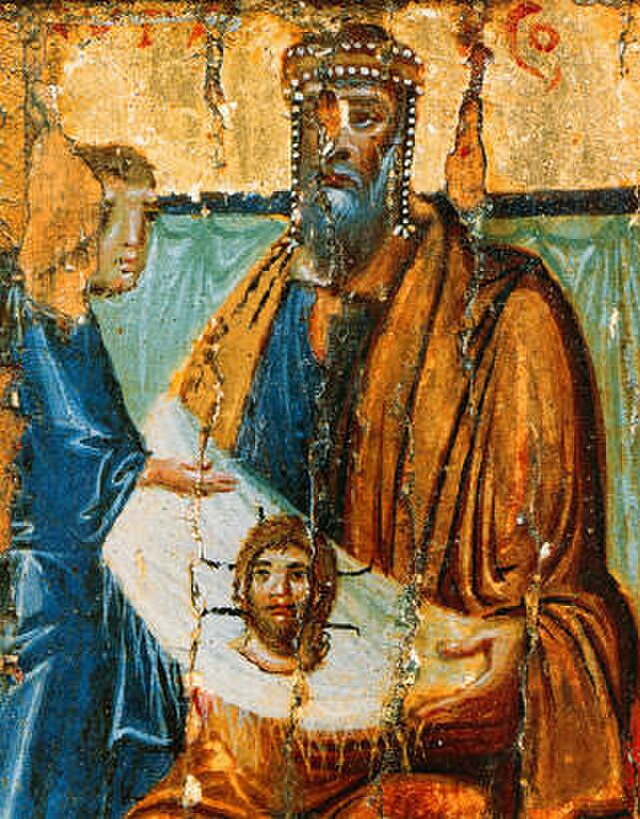
Anan, Abgar’s courier, brought him this letter, as well as the portrait of the Saviour, a picture which is still to be found at this day in the city of Edessa.
Let’s begin by pointing out just a few of the obvious reasons why these letters aren’t trustworthy:
Notice that Jesus referenced John 20:29 in the opening of this letter (“because you have seen Me, you have believed. Blessed are those who have not seen, and have yet believed”). He says this is what has been written about him. Unfortunately, this is something that couldn’t have been written about him at this point, given that Jesus said this to Thomas AFTER his resurrection, not before.
A document that was hand-written by Jesus would have been a MASSIVE deal to the ancient church. The New Testament Scriptures were chosen partially based on their apostolic credentials. A connection to one of the twelve apostles ensured that the document represented the best of Jesus’s teachings and was not only inspired by the Holy Spirit, but fully legitimate. Something that people really thought was written by Jesus? They’d have put that in the Bible in a heartbeat.
Finally, notice how strangely orthodox Abgar is. He describes Jesus as “God, come down from heaven to do great things, or… the Son of God.” Wow! He was so close! He almost recognized Jesus’s role in the Holy Trinity at a time when even the apostles were struggling with it. Funny how uncanny his instincts were given that he had never met Jesus and wasn’t Jewish.
There are other problems that I’ll leave you to catch on your own. The bottom line is that these aren’t particularly compelling documents.
On the other hand, it’s hard to deny that this legend is incredibly cool. You can’t get much better than a story about your king personally reaching out to Jesus and acknowledging his greatness and divinity. That’s top tier. Not only that, but he offers to let Jesus live with him in Edessa so he can get away from the coming violence in Israel? If that’s your king, he’s unbelievably rad.
While the document itself is more legend than reality, it’s hard to deny that, at minimum, it’s pointing towards some very true realities about the ancient world. Even the most critical historians admit that Abgar’s great, great grandson, King Abgar IX was definitely Christian and made the Kingdom of Osreone legally Christian in the early third century. That’s earlier than Ethiopia (330) and Rome (380), making it still the oldest Christian nation, even if we completely disregard the letters as a forgery. That alone ought to suggest that there may have been significant Christian history before that time. But is there any chance that any of this particular legend is true?
Eusebius records that the disciple who witnessed to Abgar V after Jesus ascended into Heaven was one of the 72 disciples mentioned in Luke 10: a disciple named “Thaddeus,” or Addai in the local Syriac. If we can show that Addai existed and has some form of historic record aside from just witnessing to Abgar V, that goes a long way towards indicating that there’s more to this than just a legend. Luckily for us, there is indeed a document that verifies the independent history of Bishop Addai: The Doctrine of Addai (Syriac, 4-5 c.). This brief document contains the history of the first three bishops in Edessa: Addai (the first bishop who was sent to the region by the apostle Thomas), Addai’s successor Aggai, and the third bishop in the region, Palut. Sure enough, Addai does things apart from witness to Abgar V in this document! Unfortunately, the things he does aren’t at all possible. For example, he converts Protonice, the wife of the Emperor Claudius, to Christianity by showing her incredible miracles. That would be really impressive… if Claudius ever had a wife named Protonice. Not only that, but Protonice goes to take a little tour of Jerusalem with Addai and finds the true cross in a story that sounds a lot like the story of Helena (Constantine’s mom), which was a story that would have existed by the time this document was written. A massive portion of Addai’s story in this document focuses on his relationship with the king and how he built up Christianity in the region until he died and basically everyone famous in Edessa went to his funeral and cried, regardless of their religion. This document makes the letters seem feasible in comparison.
The final straw is the details provided during the explanation of Palut’s (the third bishop’s) ordination. Apparently after the grand funeral of Addai, King Abgar V passed away and Aggai took over until he was martyred by increasing persecution in the region. Then we get to Palut! Since Aggai died before he could ordain Palut as a bishop, Palut was ordained by Serapion, Bishop of Antioch, who was ordained by Zephyrinus, Bishop of Rome. Here’s the problem… Serapion was the Bishop of Antioch between 191 and 211. Zephyrinus was the Bishop of Rome from 199-217. Zephyrinus wouldn’t have been able to ordain Serapion as a bishop, given that Serapion was ordained as a bishop first! Not only that, but both men are from around the 3rd century, when the king of Edessa would have been Abgar IX, who is the first recorded Christian king that a majority of historians consider the first Christian king of Edessa.
The difficulties to justify this particular legend are much too great to overlook, and this comes from someone who looked at as many other sources as I could to try to find a way to make the legend work. Regardless of which additional documents I included, these two documents are both foundational to the Abgar/Addai mythos, and anything that comes afterwards is a clumsy effort to try to massage the obvious errors in those documents.
I sadly have to admit that it seems almost certain that the claim that Abgar V of Edessa was the first Christian king isn’t true. The letters that it’s based on have clear historical errors and the legends that the disciple that converted to him have clear historical errors. That said, I do think there’s evidence that the legend points to a reality that we can count on. There was indeed a king named Abgar (IX, not V) that converted to Christianity due to the influence of a growing Christian community in Edessa, likely led by a very real bishop named Palut. Everything before that point is shrouded enough by legend that it’s not a reliable source to use. Was there someone named Addai? Maybe, but his resume would have been so radically different from the Addai of legend that it’s not even worth comparing the two.
All signs bring us back to somewhere in the early third century, where a king named Abgar (IX) saw a growing Christian population, probably led by a bishop named Palut, and was indeed converted through the influence of someone from the community. So, to be fair, the first Christian king WAS an Abgar of Edessa! The legends seem concerned with establishing an impressive lineage for the first Christian kingdom, which is a shame, because I’d say having the first Christian king is impressive enough without the exaggeration (though the exaggeration is still highly rad).
As we enter the new year, we inevitably look back on our actions in 2025 and ask ourselves, “Am I proud of that?” Some of us make resolutions to help address the areas we want to change, while others make less formal plans in the hope that some flexibility might make things a little easier to apply. This year, I’m a member of the latter group. Resolutions are hard and I have a tendency to break them within a month or two. Even so, I’m looking for ways to enter into this new year with resolve to be better than I was last year, and to that end, I’m back with an old friend, Isaiah the Solitary.
Isaiah the Solitary was a monk that lived in Gaza around 1500 years ago, and truth be told, I’m not even aware of how many works he wrote. I’m only familiar with one, and yet that one is as brief and strange as it needs to be to keep me coming back: On Guarding the Intellect: Twenty-Seven Texts. When he says “texts,” he really means paragraphs, which means this is the sort of thing you can gobble up in five or so minutes. That said, it’s not an easy read. Part of it comes from the language that he uses. He talks about developing “the intellect” and avoiding “the passions,” which vaguely sounds like he wants you to learn a lot and not get excited about it. But when we learn his vocabulary, we can see what he’s trying to get at. When Isaiah talks about “the intellect,” he’s talking about the highest part of our soul, responsible for our journey towards God. When he talks about “the passions,” he’s talking about the sins that distract us, ensnare us, and pull us away from God. So really, he’s spending twenty-seven paragraphs trying to help us learn how to pursue God and avoid sin, and that’s something that any of us could use.
Part of what makes Isaiah’s advice so compelling is that it comes from a place so vastly removed from our own. He wrote over a thousand years ago, over a thousand miles away, in a life circumstance that none of us can really relate to (again, he was a monk, and if you look at his name, you can see he wasn’t a particularly social one). There’s a real need to listen to Christians across time and space. We all enter the world with certain blind spots that we inherit from the culture we’re born in. There’s not a lot we can do on our own to see them; it would be like a fish critiquing water! We know what we know, and it’s hard to address what we don’t know. But when we read from people that wrote so long ago, they can see things that we don’t see and address realities we don’t regularly address.
For example, one of Isaiah’s key interests? Detachment. In his words, detachment is “death in relation to every person or thing,” (text 25). That sounds intense! But consider how often we are shaped by desires related to the world around us. We want certain people to admire us. We want to acquire certain goods. We want to be praised for our work and to avoid losing what we have. Why? Because too often, we think in terms of worldly success: we love to gain and hate to lose. If we’re busy carrying that burden, how can we serve God effectively? What if the things he asks of us involve loss? What if we get a swollen ego from praise and start to see ourselves as greater than Him? What if repeated failure (by the world’s standards) leads us to a level of depression that stops us from loving God well? That’s why Isaiah urges us towards detachment. The more we can remove ourselves from the love of the world’s things, the more we can keep ourselves away from the passions (sins in our heart) and grow towards God.
Isaiah never presents this as something that’s easy or normal. To the contrary, he talks about it like it’s a great battle that we’re called to. It’s all about “guarding our heart” against sin and “casting out” evils and “competing in the arena” of life. Militaristic language for faith doesn’t see broad use today, but it really does capture the seriousness of sin. Avoiding sin isn’t just a matter of politeness or decency; it’s a matter of life and death. If we want to turn towards God, it’s not an uncontested goal, and the stakes are high. While I imagine some might find that stressful, it’s a strangely comforting realization for me. Life may not be easy, but it’s also not frivolous.
To a comfortable people living in a consumer culture, Isaiah’s advice is strange and wonderful. It’s a wake up call, it’s encouragement, and it’s a reminder to let go of what we don’t need to be holding. We all have burdens weighing us down. The battle is letting go and looking to God. If we can do that, there’s a life in Him just waiting for us.
The story of Martin Luther at the Diet of Worms is the stuff of legend. Who could forget that grand moment in which he refused the emperor’s demands and cast his whole hope on the Gospel? You can just imagine his voice resounding as he spoke those legendary words:
Unless I am convinced by testimonies of the Holy Scriptures or someone can reasonably prove to me that I have erred (for I believe neither in the pope nor councils alone, since it has been established that they have often erred and contradicted themselves), I am bound by the Scriptures which I have cited at length, and my conscience has been taken captive by the Word of God. I am neither able nor willing to recant. Here I stand. I can do no other. God help me. Amen.
What happened after the drama died down—after the Pope declared him a heretic, the Emperor branded him an outlaw, and he was whisked away to Wartburg Castle by his protector, Frederick the Wise, for a year of hiding? What happened in the heart of someone so bold when he was brought low and forced into solitude? The letters he wrote during his time in exile give us the opportunity to see a side of him that we don’t often consider. Of course, in some letters, we see the Luther we know. We see the hero! He gives orders to his supporters in the Protestant movement, he encourages them to push forward and risk martyrdom if necessary, and he continually redirects them towards the love of Christ. It’s inspiring! But alongside all of that wild courage, we see the man beneath the cape, so to speak. We see Luther wrestling with frustration and depression. We see him rethinking his identity as a monk, a son, and a Christian. Best of all, we get to see him announce what he produced during his time in isolation, despite being burdened with all of that. It’s that vulnerable side of Luther that I want to explore, because I think that’s something we can all relate to. I don’t know that most of us have ever been the symbol of a Christian movement and responsible for rallying the troops, but we have had periods of loneliness, frustration, isolation and introspection. How did Luther handle a moment like that? And how can we be inspired to do the same?
The depths of Luther’s depression are especially clear in his communications with his friend and fellow Protestant leader, Philip Melancthon. Even as he encourages Philip onward with complete assurance of the righteousness of their cause in the eyes of God, he shares just how difficult it is for him to be sidelined and forced into inaction. He writes:
Instead of being ardent in spirit I am the prey of sinful appetites – laziness and love of sleep. For eight days I have neither prayed nor studied, through fleshly temptations. If I do not improve, I shall go to Erfurt and consult the physicians, for I can endure my malady no longer. (Letter to Philip Melancthon, May 12, 1521)
For a man that previously lived as a monk and spent hours every day praying the Liturgy of the Hours, that’s a vast departure from his norms. Here is a famous professor, renowned for his writings and his hours spent in prayer, and he can’t get out of bed. He refers to his pain elsewhere as “unbearable” and describes a prevailing numbness. He should be weeping! He should be worried about people that need the Gospel and are being opposed by the powers that be! But instead, he finds himself quoting Psalm 89:47: “For what futility you have created all humanity!” I can’t help but appreciate Luther’s use of the psalms here. In some spaces in the modern Christian world, there’s this relentless push to smile and be happy that makes those darker psalms almost incomprehensible, but Luther draws on those words to faithfully express the very real pain that he’s experiencing at Wartburg.
That pain does prove helpful in giving him a fuller picture of himself. It’s common to place the end of Luther’s time as a monk in 1524 or 1525 when he formally took off his monastic habit and married Katharina von Bora, but his writings very clearly show that what officially ended later was something that he had already come to terms with in a letter to his father during his stay at Wartburg. Historically, his dad wasn’t a big fan of his decision to become a monk, but he came to terms with it because he loved his son. He never apologized for his decision to become a monk, but the way he frames it isn’t the same anymore. In his earlier writings, it’s his way of giving his life over to God. And that’s still true… partially. God did call him into monasticism earlier, but he did it so that Luther could see “the slavery it brings” firsthand and help others flee its clutches:
Dear father, do you ask me to renounce monkish orders? But – God has been before you, and has brought me out Himself… and has placed me, as thou seest, not in the miserable, blasphemous service of monachism, but in the true divine worship, for no one can doubt that I serve God’s Word… Therefore I send you this book, from which you will see how miraculously Christ has redeemed me from my monkish vows, and endowed me with such freedom, that although I am the servant of all men, I am subject to Him alone. For He is my sole Bishop, Abbot, Prior, Lord, Father, Master! I know no other. I trust He has deprived you of your son, so that, through me, He may help the sons of many others and prevent you rejoicing alone. (Letter to Hans Luther, November 21, 1521.)
He included a copy of On Monastic Vows with the letter, which explicitly talks about the dangers of monasticism, the ways in which it directly opposes God’s word, and encourages monks and nuns to leave the orders. Until this point, Luther’s logic clearly points in this direction. It’s not a wild deviation from his course of thought, but his time in Wartburg was more than just a bleak experience of pain. It was an opportunity for him to ask, “How do I respond to this? Who am I, and who do I need to be?” He synthesized some of what he had only hinted at previously into a full, cohesive idea that he’d later live out.
But the greatest gem is yet to come. If you’re living out your own Wartburg moment, note that there were even greater treasures Luther forged in this season. It was during his time at Wartburg that Luther gave the world one of his greatest contributions to the Reformation. As he was emerging back into the public world in March of 1522, Luther wrote this to fellow reformer Georg Spalatin:
I have not only translated the Gospel of St. John in my Patmos, but the whole of the New Testament, and Philip and I are now busy correcting it, and, with God’s help, it will be a splendid work. Meantime we need your help, to find out proper words, therefore be ready to supply us with the common terms for some things we require, but not those used at Court, for this book is to be written in the simplest language that all may understand it[.] (Letter to Georg Spalatin, March 30, 1522)
In the middle of the depression, the frustration, and the self-examination, Luther had produced a full translation of the New Testament into German. Until this point, most Bibles were in Latin, making them accessible only to scholars and nobles. The Luther Bible in common German was one of the first accessible copies of the Bible to make its way into the everyman’s hands.
In the silence of isolation, the agony of self-examination, and the frustration of every circumstance, good things can happen. Trust God in all circumstances, and in Luther’s words to Melancthon, “I am praying for you. Pray for me, and let’s share this burden,” (Letter to Melancthon, May 12, 1521).
It’s so important to know what a word means before you start disagreeing with someone about it. I remember a whole debate that I had with an old roommate about the ethics of punching someone that was “imminently” about to attack one of your friends or you. I insisted that you should always try to de-escalate things first while he insisted that it was unethical to let someone get punched because you weren’t willing to step in. We went back and forth and back and forth for about an hour, much to the annoyance of his girlfriend. It wasn’t until we started roleplaying different scenarios (yes, it went that far) that we realized that the way that we were defining “imminent” was very different. I assumed that the hostile party had just started to become erratic and hostile, showing their fast escalation towards an attack, while he assumed that they were already deeply hostile and were literally about to throw a punch. When we recognized the difference, we realized we didn’t disagree at all on any point, much to the continued annoyance of his girlfriend, who took the opportunity to say, “You two are so stupid. I’ve been saying this all along.” We weren’t arguing about ethics; we were arguing about a definition. Unclear terms are the real culprit behind a lot of disagreements.
One theological term that is infamously unclear is “apocrypha.” The word is varyingly defined as…
•Those extra books the Catholics have (Tobit, Judith, Maccabees 1 and 2, etc.)
•Any ancient Christian-y book that didn’t make it into the Bible (Book of Jasher, Book of Adam and Eve, Book of Enoch, etc.)
•Helpful ancient books that wise Christians know about (The Epistles of Clement, Shepherd of Hermas, etc.)
•Harmful ancient books that are mostly heretical (Gospel of Thomas, Gospel of Judas, Acts of Paul and Thecla, etc.)
That boils down to two key factors that our word is trying to get at: canonicity and doctrine. First, it might be an attempt to discuss the canonical status of a book. Maybe someone is trying to say it’s only canonical for Roman Catholics (or “deuterocanonical” to Protestants). That’s one option. But it might also be saying that a book is flat out non-canonical. Or maybe the key concern isn’t about canonicity, but about the doctrine presented in a particular book. That doctrine could be sound without being a piece of Scripture, or it might be horrendously heretical. Again, the term can mean either of these things. It’s saying something about canonicity and/or doctrine… but what exactly? The vagueness in the term isn’t a modern invention; it’s baked into the term from the earliest days of the Church.
Factor One: Deuterocanonical vs. Purely Non-Canonical
A fair understanding of the first factor (canonicity) can be uncovered by just looking at the meaning of the word “apocrypha”. It comes from the Greek word ἀπόκρυφα (apokryphos), which means “hidden” or “secret.” The word was originally used by ancient Christians (or heretics) to refer to books that were wise, but had somehow been obscured because they represented a threat to authority. It should be obvious how often this term was used by heretics to introduce “sacred” literature that violated church doctrine. It’s not hard to find early Church Fathers railing against apocryphal books, meaning those things that were obviously non-canonical and harmful. A good example can be found in that famous hunter of heresy , Irenaeus, when he’s against the Gnostics:
“[T]hey adduce an unspeakable number of apocryphal and spurious writings, which they themselves have forged, to bewilder the minds of foolish men, and of such as are ignorant of the Scriptures of truth.”
Irenaeus, Against Heresies, (1, 20, 1)
Cleary, he uses the word to warn Christians about harmful, non-Canonical books. Another good example comes from that rhetorician of Carthage, Tertullian, in his Treatise on the Soul. He notes that some philosophers arrived at partial truths about the world by using non-Christian sources such as Greek myths, but it doesn’t concern him because they don’t actually seem to hold those myths in particularly high esteem:
“[T]hese philosophers have also made their attacks upon those writings which are condemned by us under the title of apocryphal, certain as we are that nothing ought to be received which does not agree with the true system of prophecy, which has arisen in this present age; because we do not forget that there have been false prophets, and long previous to them fallen spirits, which have instructed the entire tone and aspect of the world with cunning knowledge”
Tertullian, A Treatise on the Soul, 2
Again, apocryphal here means any book that’s not a canonical part of Christian scripture. Clearly that is indeed a valid, historic, Christian use of the term.
At the same time, we can find Church Fathers that use the term to refer to just the opposite on this particular axis! Some use it to refer to consent that would go on to be accepted in the Catholic canon and not the Jewish or Protestant canon. For those that might be unfamiliar with this kind of so-called “apocryphal” content, the Catholic Bible contains a number of additions in the Old Testament that don’t appear in the Jewish or Protestant Bibles. Why? Early Christians often spoke Greek and consequently read Scripture from a Greek copy of the Old Testament called the Septuagint. The Septuagint contained seven extra books (Tobit, Judith, 1 and 2 Maccabees, Wisdom, Sirach/Ecclesiasticus, and Baruch) and a few additional chapters in the books of Daniel and Esther. Even though a broad segment of Greek speaking Jews that used the Septuagint for Scripture readings also considered this content legitimate, ultimately the authorities in Israel neither used it nor considered it canonical. As time went on, Jews used the content less and less, returning to the Hebrew Scriptures, and Christians used it more and more. Eventually, there was debate in the Church about it. Why were Christians using versions of the Jewish Scriptures that the Jews didn’t actually think was canonical? Why use the septuagint at all instead of something that would have circulated in the region that Jesus actually lived? Should the church remove that extra content that had been used for generations? Or did it still count as sacred Scripture? In his Letter to Africanus, the ever-abstract and theological genius, Origen, argued for the legitimacy of the story of Susanna (a story from the additional chapters in Daniel):
But probably to this you will say, Why then is the History not in their Daniel, if, as you say, their wise men hand down by tradition such stories? The answer is, that they hid from the knowledge of the people as many of the passages which contained any scandal against the elders, rulers, and judges, as they could, some of which have been preserved in uncanonical writings (Apocrypha).
Origen, Letter to Africanus, 9
A word that was elsewhere used to condemn non-canonical writing is now used to point at the additional Septuagint literature as actually purer, uncorrupted, Scripture, hidden away from the tyranny of Israelite authorities. You can see that from the earliest days of the faith and in the highest circles of authority, the word is used in multiple senses to talk about the canonicity of sacred writings.
Factor Two: Safe or Dangerous Doctrine
We’ve seen how the term historically was used in different circumstances to refer to different aspects of a document’s canonicity, but that’s not all it could do! Apocryphal could also be a way to discuss expectations for the reliability of a document’s doctrine. Obviously, Irenaeus and Tertullian used the term to refer to books that were actively heretical and not worth reading, and Origen used it to refer to books that should be considered canonical and are doctrinally pure, but we can also find people that use the term to refer to things that aren’t dangerous, per se, but don’t have any claim towards anything resembling canon.
The compiler of the Vulgate, Jerome, is a perfect illustration of this still further way of using the word “apocryphal.” In the fourth century, Jerome was debating the details of the emerging Christian canon, and he objected to the inclusion of both deuterocanonical content and certain other books that had arisen popularly in key Christian communities. He listed the Old Testament books he thought ought to be canonical (identical to the modern Protestant and historic Jewish canon), and then makes this note:
Whatever falls outside these must be set apart among the Apocrypha. Therefore, wisdom, which is commonly entitled Solomon’s, with the book of Jesus the son of Sirach, Judith, Tobias, and the Shepherd are not in the canon.
Jerome, Preface to the Books of Samuel and Kings
At first glance, this appears to be little more than a further exploration of canon. Jerome is condemning the Catholic epistles to a non-canon status, just like Irenaeus and Tertullian did with dangerous books. But Jerome doesn’t have that same attitude of suspicion and frustration when regarding these books. To the contrary, he seems to like them. He occasionally quotes them in his other writings. Jerome has the utmost respect for some of these documents that he’s calling apocryphal; he just doesn’t think they’re canonical. That’s a far cry from Tertullian and Irenaeus’s use of the term, which was essentially “horrible heresy carriers.” He uses the term “apocryphal” to refer to books that have positive, doctrinally-sound additions to the Christian life.
To recap, we’ve established that even from the beginning of the church, the word “apocryphal” could refer to a writing that is either canonical or deuterocanonical/Catholic, or it could be a reference to the reliability of the doctrine within a non-canonical book. It’s a broad, flexible term! And it get’s thrown around pretty readily among church people that are exploring non-canonical writings enough that it causes issues from time to time. When you’re talking with fellow Christians about apocrypha, just remember how much history this particular term has and be careful to define what you mean when you use it. It might just save you an argument.
Augustine preached his way through the Gospel of John, which is such a treat. As a fellow pastor preaching his way through John, it’s awesome to be able to see the different ways that Augustine engaged with the same Scriptures that I’m working through. I don’t always agree with him, of course. At different points, patristic exegesis can be pretty weird by modern standards, but even when Augustine is weird, he’s never dull, and that’s worth something. Since it was kind of hard to read through Augustine’s Tractates on the Gospel of John as a reference document, I thought I’d break the specific verses I was looking at down into a commentary. The ideas are his, but the words are mine. Hopefully, it makes the gems of his wisdom a little more accessible.
Here are his thoughts on John 13:1-5. The Bible verses I mention are usually from the NIV, but sometimes Augustine’s insights require language from the translation that he’s working from. In those cases, I use the NIV for inspiration but tweak it to try to make it resemble what Augustine was obviously working from.
1It was just before the Passover Festival. Jesus knew that the hour had come for him to leave this world and go to the Father. (Jn. 13:1 a)
Augustine dabbled in a lot of different languages, so in this first verse, he points out some of the subtle truths that get highlighted depending on which language you read it in. For example, in Greek, the word Pascha (Passover) sounds a lot like paschein, the word for suffering. And sure enough, this is a period where Christ is preparing to paschein for the whole world. This wasn’t lost on Ancient Greek Christians. They naturally associated this celebration of Passover with Christ’s suffering.
If, however, you read the passage in Hebrew, the word Pascha means (unsurprisingly to us today) “pass over,” referring to the angel of death passing over houses that had lamb’s blood above the door during the last of the Egyptian plagues before the exodus. The Hebrews were saved by the blood of a lamb, and here Jesus, the lamb of God, goes to the cross so that we can be saved from death by his blood.
Still further, in Augustine’s native Latin, the translation of “Passover” would be “transitus,” which would mean something like “passing through,” “crossing,” or “transit.” How appropriate! Jesus isn’t going to die. He will, however, pass through this world. The Vulgate even uses this same language to describe Jesus’s mission later in this verse: this is the “hora ut transeat ex hoc mundo,” or in English, “the hour for him to pass through the world.” Jesus is like Moses! Moses passed through the Red Sea to lead his people out of slavery in Egypt to the promised land. Jesus passed through the world to lead his people out of slavery to sin and death and into the Kingdom of God. As Paul wrote in 1 Corinthians 1:13: “For [Jesus] has rescued us from the dominion of darkness and brought us into the kingdom of the Son he loves.” Everyone will pass away from this world, but not everyone will pass through this world. Remember how Pharaoh’s soldiers sided against Moses and died in the middle of the waves because of God’s judgement? Those who follow Christ will pass through the world with him, but those who are against him will pass with the world into God’s judgement.
Having loved his own who were in the world, he loved them to the end. (Jn. 13:1 b)
What does it mean that Jesus “love them to the end?” What end? Did Jesus’s love end at the cross? No! Jesus loved us even after that. Jesus came back to life and loved us. Jesus ascended into Heaven and still loves us. There isn’t an end to Jesus’s life! So “loved them to the end” can’t refer to the end of his life. What might it refer to? In classical Christian terms, “the end” can refer to the telos, or reason that something was made. For example, the proper end of an acorn is to become an oak tree. The proper end of a heart is to pump blood. Teleologically, that’s their proper end. Romans 10:4 references this type of end when it calls Jesus the “end of the law.” Does it mean that Jesus ended the law? No. It means Jesus was the perfect culmination of the law. He was the proper end of the law. So if Jesus loved his disciples to the end, he wasn’t loving them with a partial love. This was a love that had achieved its proper end. This was a perfect love. This was the love that led him to the cross. As John 15:13 says, “Greater love has no one than this: to lay down one’s life for one’s friends.” Jesus loved his disciples with the greatest love.
2 The evening meal was in progress, and the devil had already prompted Judas, the son of Simon Iscariot, to betray Jesus. (Jn. 13:2)
At this point, the devil has already planted a spiritual suggestion in Judas’s heart: betray Jesus. This wasn’t a whisper in his ear so much as a spiritual influence that entered through his thoughts. Remember, not everything that’s spiritual is good! Paul knew all about the challenges that spiritual beings can bring.. He wrote in Ephesians 6:12, our struggle is against powers, principalities, and the spiritual forces of evil. Somehow, devils can mingle with our thoughts and encourage us to sin. But how do they do it? And how do we know which thoughts are from them and which are from us? And are there angels that introduce good spiritual thoughts to us? It seems reasonable to assume that there are, but since all of these things are happening beyond our ability to see them, there’s so much we can’t know. We may not know every detail, but we always know which of the thoughts in our mind we choose to act on. We can choose to be aided by God towards what is good, or go off on our own and choose what is wrong. Judas knew Jesus, but he didn’t accept him as his God. The instinct to betray Jesus didn’t come from the Devil. That belonged to Judas. The devil just placed that thought of betrayal in his heart and let him do the rest. He came to this meal to spy on the shepherd and sell the Savior. Judas may have planned to do evil, but God used his evil for good. Even Judas’s betrayal became a part of God’s receptive plan.
3 Jesus knew that the Father had put all things under his power, and that he had come from God and was returning to God;4 so he got up from the meal, took off his outer clothing, and wrapped a towel around his waist.5 After that, he poured water into a basin and began to wash his disciples’ feet, drying them with the towel that was wrapped around him. (Jn. 13:3-5)
Judas showed up to that meal assuming that his betrayal was the perfect secret, but Jesus knew. Jesus knew everything that Judas was going to do, but he wasn’t worried. He trusted his Father completely. Everything was in His hands, including Judas. In the ultimate act of humility, he knelt down to wash the feet of his disciples including the feet of his betrayer. It didn’t matter how much a person had indulged in evil. There was nobody that Jesus wasn’t willing to kneel down and serve.
And the particulars of that act tell us so much. He took off his outer garment and wrapped towel around his waist to serve us. It’s an image of the incarnation! Jesus laid aside the grandeur of Heaven (the outer garment) and took on humanity (the towel) so that he could serve us. As Philippians 2:6-7 says, “
[Jesus], being in very nature God, did not consider equality with God something to be used to his own advantage; rather, he made himself nothing by taking the very nature of a servant, being made in human likeness.
Later, he’ll have his garments stripped from him at the cross and he’ll be wrapped in linen for burial. All of this humiliation was for our sake. Even here, as he goes to the cross, he stops to serve everyone including the lowest among us. As Luke wrote, “He came to seek and save the lost,” (Lk. 19:10).
We were lost at one point. We had that same pride that Judas had in our hearts, but God came to wash us with his grace. Don’t cling to that pride! Set it aside and serve others in love and humility until just like the one who saved you.
I’m sure many of you have had this experience: you’re visiting a church that’s a little different than what you’re used to and the time for the Lord’s Prayer comes. Things are going pretty well until… boom! They ask God to forgive them their “debts” instead of “trespasses (or “trespasses” instead of “debts”—you get the idea). What gives? Why are there two different words that churches might use in that part of the Lord’s Prayer?
The most common answer I’ve heard was that it’s because the Lord’s Prayer appears in the Bible twice: once in Matthew 6:9-13 and once in Luke 11:2-4. What a delightful, satisfying little answer… until I actually looked those scriptures up and realized that NEITHER of them says “trespasses” anywhere. Matthew’s version says “debts” both times, even if you take it back to the original Greek! The root word for debt and debtors, opheilō, is what you’ll see in both instances. Forgive us our debts (opheilēmata) as we forgive our debtors (opheiletais). Luke’s version is definitely a little different, but not because it says trespasses. Jesus asks God to forgive us our sins (hamartias in Greek) as we forgive those who are indebted to us (opheilonti). So what gives? If the Bible uses “debts” three of the four instances, how on Earth did we end up with trespasses?
I tried to look for the oldest version of the Bible I could find that used some form of “trespasses” instead of “debts,” and I’m pretty confident that the furthest back you can get is the 1526 Tyndale Bible, one of the earliest and most influential Bibles in the English language. He was translating from Erasmus’s 1522 edition of the New Testament, which had both Greek and Latin text to work from. The Greek (which he was primarily working with) has the same words that we already looked at (debt, debtors, people indebted to us), and even if we glance at the Latin, the words are pretty debt-centric (“remittimus omni debenti“— release us from our debts, in Matthew 6:12, for instance). But when we look at Tyndale’s translation, you can see trespasses and trespassers for the first time! Why did he do that? Who knows? Nobody else was doing it. Maybe he was inspired by what Jesus said just after the Lord’s Prayer in Matthew 6:14-15, in which Jesus warns people that God will forgive their trespasses (paraptōmata) as they forgive the trespasses of others, but we can’t know for certain.
But how did Tyndale’s translation get so popular? Because it was used in the 1549 Book of Common Prayer, which is the official book of liturgy for the Church of England. At the time, his translation was one of the most readily available editions that came from the Greek. Over time, other English translations didn’t follow Tyndale’s direction on those verses, but the Book of Common Prayer kept it that way. In every service across the Church of England, that’s what people said, and as with all repeated pieces of liturgy, that’s how it stuck. As time went on, the influence of the Book of Common Prayer was felt in other denominations. Churches that make use of formal liturgy are more likely to say “trespasses” (Anglican, Methodist, Catholic, Lutheran, Eastern Orthodox), while churches that don’t use that same kind of formal liturgy are more likely to say “debts” (Presbyterian, Reformed, Baptist).
Which is probably the better translation? Debts. Obviously debts. It’s not even a question. That said, I doubt it would be a major grievance in Jesus’s eyes if you said trespasses instead. That’s how he described sins and forgiveness immediately after saying the Lord’s Prayer, so I can’t imagine him disapproving too much.
For those that want to go further, if you want to look at the Greek for yourself, the interlinear translation on Bible Hub is a great tool. They’ve also got Tyndale’s translation available. If you’re really wild, Erasmus’s 1522 Bible translation is over at archive.org.
One of my personal pet peeves is when pastors bust out the weird words for Hell. “You can see here that they’re talking about Gehenna, which is different than Hades and certainly much different than Hell.” Huh? Hades and Gehenna aren’t English words. You’re just leaving words in their original language and insisting that it’s somehow different and deeper for not having been translated. Can you imagine if any other theological subject took the same approach? Imagine talking about the Gospel and someone said, “well, let’s be sure to speak about the evangelion, which is different from the gospel or the devar YHWH.” Or imagine if we were talking about prophets and someone insisted that we needed to start talking about prophētēs and navi’im if we REALLY want to be serious about all of this. Not all of these conversations are wrong-headed. There absolutely is a place for learning more about cultural attachments to different words and the art of translation, but when a single theological subject (Hell) is the only one that people ever want to debate, I start to wonder if it’s out of a misled curiosity or a deep-seated need for the text to say something other than it does. Ironically, when I looked at the players involved in those translation decisions, both intellectual wanderlust and deep discomfort with Hell seem to be present in the Hades/Sheol/Gehenna conversation.
On one side, you have evangelical pastors that seem to see conversations about Hades and Sheol as the work of serious scholarship unburdened by the assumptions of previous tradition. The logic goes something like this: do you really want to know what the biblical author was trying to tell you? Then you need to get back to the source of the book itself! What did these words mean in the original Jewish setting? The authors didn’t even know the word “Hell,” and if you read passages about Sheol while thinking about a burning pit full of devils, you’re going to totally misunderstand what they were getting at. If you want to be accurate, you have to accept that there are no clean, accurate translations of these concepts into English. We need to leave these words in their original language and let people learn what Jews thought about the afterlife in those timeframes if we want people to understand what those passages mean.
To some extent, I respect the thought process. It’s sincere and genuinely focused on the Bible. It is, however, a little misled. It tosses out the contributions of historic Christians in the effort of uncovering something “more accurate,” but what’s uncovered is almost always much, much less so. After all, it implies that there is a reasonably simple, non-scholarly way for people to comprehend what Jewish religious thought was about the afterlife over thousands of years, and that’s totally unreasonable. Just look at the three-year stretch that Jesus spent in public ministry! Throughout the New Testament, we see the Saducees and the Pharisees. Were they on the same page about the afterlife? No! For a Sadducee, any talk about the afterlife would have been absurd. They believed there was no afterlife at all. The Pharisees, on the other hand, there was a bodily resurrection at the end of time after which some would go on to everlasting life and others would go on to eternal torment. That’s a pretty big difference in the way they thought about the afterlife! Do you think they agreed on the meaning of the word Sheol? And remember, we’re only looking at two groups that were active in the three years that Jesus was involved in public ministry. The Old Testament covers THOUSANDS of years of history. If we’re convinced that words like Sheol and Gehenna are so wildly unlike our modern words that we need to leave them untranslated, we also need to accept that we can’t offer up one explanation about what the afterlife REALLY was to Jews for thousands of years and claim that this is a penetrating work of scholarship that finally explains the concept. If Jewish religious scholars couldn’t agree during the life of Jesus, they certainly weren’t all miraculously on the same page before that. No, we would need a study that’s far deeper and wider than we’re really interested in to seriously embark down this road. In describing what Jews “really thought” about Sheol, you’re inevitably picking one interpretation and blanket applying it for a broad swath of history.
Beyond introducing a level of complexity that is both not scholarly enough to be taken seriously and too scholarly for the most people to understand, there’s a bigger, simpler concern that ought to disqualify the use of these terms in an evangelical setting: is Sheol a real place? It’s usually described as a a spooky, neutral realm of the dead, so is that an actual possible landing place for people that die? What about Hades? And is Hades a different place than Sheol? After all, it is similar, although the Greeks had some moral distinctions to their Hades. You could make it to Elysium or sink to the depths of Tartarus. Oh, but those aren’t explicitly mentioned in the New Testament, so do they count? Or was the New Testament Hades different from the Greek Hades? And how does Gehenna fit into all of this? And how does ANY of it fit in with Christian orthodoxy? The simple truth is that it doesn’t fit into Christian orthodoxy. These places, if imagined as anything other than Hell or Heaven, don’t fit within a cohesive Christian framework. Our Christian forebears recognized this. Bibles didn’t leave those words in their Greek and Hebrew forms until the 19th and 20th centuries and none of those words appears in any historic doctrinal standards (unlike Heaven and Hell, which are pretty standard fare). Leaving the words untranslated doesn’t just risk confusing people! It also risks adding non-existent places to Christian’s understanding of the cosmos. The hundreds of years of resources where our ancestors in the faith translated those words as “Hell” actually help us to understand how they contribute to a consistent worldview. In ditching them for a “more accurate understanding,” we’ve ditched a tremendous aid.
But let’s jump to the other side of the theological spectrum. What about more liberal theologians? Why are they in favor of Hades and Gehenna instead of Hell? This one doesn’t take a lot of explaining. Universalism in both it’s soft and hard forms, are much more common in mainline churches and expectations for doctrine tends to be more pluralistic. In the tradition of Schliermacher, the Bible is often seen as a compilation of ideas about God that are bound by a very different time and culture, rather than a singular authoritative voice illuminating any objective truth. Removing instances of the word Hell from the Bible is generally seen as a good thing, since eternal suffering is supposedly incompatible with the idea of a good God. To use terms about Hades and Gehenna instead helps establish the foreignness and pluralistic nature of the Bible. It becomes more of a cultural curiosity, rather than something serious that needs to be addressed.
My belief is simple enough: people deserve to have Bibles where EVERY word is translated into their language, not just the convenient ones. For over well over a thousand years, Hades, Gehenna, and Sheol were normatively translated to “Hell.” The Vulgate used the Latin word for Hell. The Wycliffe Bible used Hell. The King James used Hell. Hell is the best English rendering of those Greek and Hebrew words, and using them creates a theological consistency that’s necessary to have any honest understanding of the faith. At times, I see people blame the shortcomings of Latin and English for a translation as “shallow” as Hell. The Latin word for Hell, Infernum, is pretty close culturally to our understanding of Hell, so maybe that’s where things fell apart! They claim, “we just don’t have the same vocabulary available to us as the Greeks and the Hebrews did! The Latins mistranslated those word, and English kept those wrong connotations, but now we’re getting back to a purer understanding.” The argument sounds good on paper, until you realize that Latin and Greek were both spoken in the New Testament era and there were no ancient Greeks disgusted by the Latins use of their filthy word Infernumfor being too far from their pure Hades. If similar translations were good enough for the Greeks, how they it be too poor for us? A mountain has been made out of a molehill. These words can be reasonably translated! We just don’t like the translation, either because it bores us or because it scares us.
By no means do I say any of this to imply that serious cultural and word studies ought to be off limits. Of course Christians should learn more and continually try to understand what the Scriptures say. But we ought to ask ourselves, why is Hell the single word subject to this intense modern scrutiny? Nobody is scrambling to know the cultural nuances behind ancient and modern understandings of Heaven or implying that a purer understanding of purgatory is just beyond our grasp if we stopped using English. Why are the words for Hell mysteriously the exact words we can’t translate? Why are some of the explanations for those words popularly offered up by detractors actively incorrect (no, Gehenna was not a garbage dump outside of town and not a shred of archaeological or historical evidence has ever implied that it was)? Why has an uptick in interest in universalism coincided with our unwillingness to use “Hell”? Why are the untranslated words mysteriously absent from all historical doctrinal standards? We could go on and on with pointed questions, but the point is that we’re being horribly inconsistent when we use Sheol, Hades, and Gehenna, and our inconsistency isn’t random. It’s the product of very particular thought processes, all of which are skeptical of historic Christian tradition. The evangelicals want to abandon tradition to get back to a “true sense” of the text, and the liberals want to abandon it because they just don’t like it, but they’re both missing out. The things we were handed down from our Christian forebears may not always be perfect, but in this particular instance, they’ve given us clear direction on how to reasonably translate words into our language, and their translations offer doctrinal clarity that you simply can’t find without it. Next time you come across a Sheol, Gehenna, or Hades, be a little spicy and just say “Hell.” The choice isn’t just defensible; it’s better.
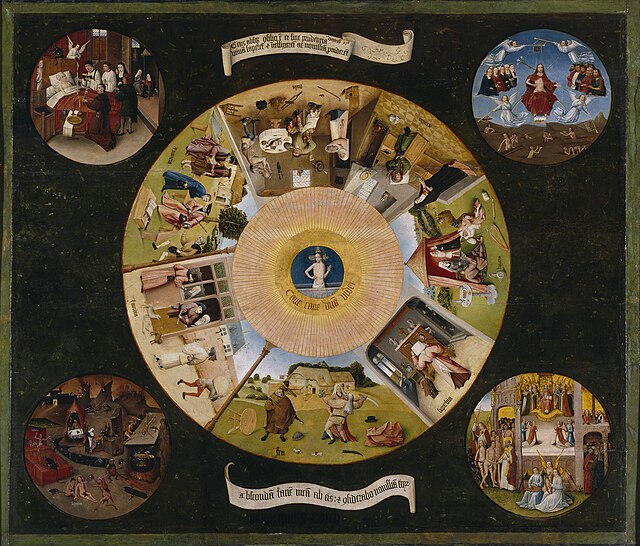
I just wrapped up a sermon series on the seven deadly sins, and I have to admit, I learned to appreciate that little list more than I expected. I hadn’t seen it used all that much outside of tv shows (don’t tell me you’ve never seen a hero fight their way through a band of seven deadly sins themed goons), but it brings more to the table than schlocky action fodder. It’s actually a really great reflective tool that can help draw our attention to the parts of our life that may not be as Christ-centric as we want them to be.
If your seven-deadlies knowledge falls somewhere near where mine was a few months back (zero), let me give you a brief overview. The list of seven deadly sins is a tool that Christians have been using for well over a thousand years with its origin going all the way back into the fourth century. The seven sins are pride, greed, lust, gluttony, envy, sloth, and wrath. The theory here is that most of the sins that you’re engaged with on a daily basis have their roots in one of these seven big sins. If you can focus on those seven things, your life will be much, much holier. In short, it’s a contemplative tool for rooting out sin in your life. You look at the list, you look at your life, and then you see where you have to make adjustments. It’s been significantly more popular in Catholic circles than Protestant ones (we’ll get to why), but you can see why people use it. It’s easy to apply. It’s not hard to understand or wildly theoretical. It’s pretty straightforward for devotional use or sermons or whatever else.
Not only was this a useful tool to add to my tool belt, but it was a delight learning about where it came from and how it was taught. The people that developed this tool were big names in the ancient Christian world that all had a reputation for living holy lives. Reading some of their works was a great opportunity to soak in some timeless wisdom. But before I get to them, I want to talk about someone who comes up in a lot of articles about the seven deadly sins that wrongly gets credit for creating them: Tertullian.
The Red Herring: Tertullian’s List of Unforgivable Sins
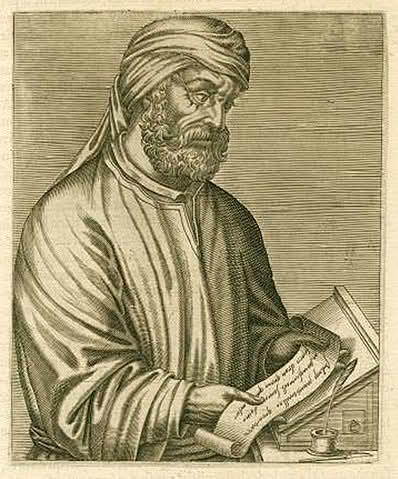
Tertullian was a massive theological name in second century Christianity. It’s not surprising that a lot of content can be traced to him. That said, the list of the seven deadly sins isn’t from him. He does have a list of seven sins, but relating them to the “seven deadly sins” as we know them today is such a wild stretch that I can’t imagine anyone who has actually read Tertullian’s work making that connection. His list of sins may happen to contain seven items, but the goal is wildly different. He isn’t trying to tell you about some major sins so you can keep an eye open. No, Tertullian is trying to tell you about sins that are literally unforgivable.
[T]here are some sins of daily committal, to which we all are liable… if there were no pardon for such sins as these, salvation would be unattainable to any. Of these, then, there will be pardon, through the successful Suppliant of the Father, Christ. But there are, too, the contraries of these; as the graver and destructive ones, such as are incapable of pardon — murder, idolatry, fraud, apostasy, blasphemy; (and), of course, too, adultery and fornication; and if there be any other violation of the temple of God. For these Christ will no more be the successful Pleader: these will not at all be incurred by one who has been born of God, who will cease to be the son of God if he do incur them. (On Modesty, Ch.19)
To consider this the origin of the seven deadly sins, we would have to ignore the fact that there’s not a single sin on the list that’s also on the list we know today AND ignore the fact that the function of the list is so wildly different from lists today AND we’d even have to ignore the fact that Tertullian’s list isn’t limited to seven items. Notice that he ends his list with a catch-all for anything he missed: “and if there be any other violation of the temple of God.” It’s not even really a list that’s intended to be limited to any given number of items. It would be absurd to consider this a serious forerunner to the seven deadly sins, especially when you take a look at the next theologian with a claim to the title of originator:
Monkish Wisdom: Evagrius Ponticus and the Eight Evil Thoughts
Evagrius was a monk in fourth-century Egypt, which was the hotbed of Christian monasticism in its day. He wrote a book called The Praktikos (The Practices) to help other monks live holy lives. Sure enough, that book had a list of eight evil thoughts that was intended to be a list of big sins to root out in your life. And when you think about it, doesn’t it make sense that a list like this began with monks? The contemplative evaluation of your life combined with a fervent hope that hard work and effort can bring about virtue and holiness are exceedingly monkish. It also helps explain why the list gets more traction in Catholic circles than in Protestant ones! If you think that you need works and faith for salvation (as Catholics do), a list of major vices is obviously helpful. If you think that faith alone brings about salvation (as Protestants do), the list’s focus on human action and its lack of references to Christ might be considered a little concerning. Not that it’s unusable for Protestants, of course, but it certainly would be viewed as less helpful and maybe a little strange.
Evagrius’s “eight evil thoughts” (or the Ὀκτώ γενικώτατοι λογισμοὶ in his words, which actually translates to something like “eight general tempting thoughts,” but that’s much less catchy) is the first list that shows an obvious attempt to create something like what we know today, and it’s undeniable when you look at his writings:
There are eight principal kinds of tempting thoughts, that contain within themselves every tempting thought: first, that of gluttony; and with it, that of sexual immorality; third, that of love of money; fourth, that of sadness; fifth, that of anger; sixth that of acedia; seventh, that of vainglory; eighth, that of pride. We cannot control whether these tempting thoughts can agitate the soul or not; but whether they remain in us or not, and whether they move the passions or not – that we can control. (The Praktikos, 6)
You’ll notice that there’s still significant work to be done before we reach our final form. At this point, we’re missing envy and sloth. Instead, we have sadness, vainglory, and acedia (a Greek word that’s hard to translate that means something like “spiritual boredom” or “apathy”). On the whole though, the list is really close.
Evagrius’s proceeding advice is pretty hit or miss. Even in the selection above, you can see that he makes some connections that most of us today would just kind of scratch our heads at. For example, why does he connect gluttony and sexual immorality? To us, they’re totally different things. To Evagrius and his immediate audience, it’s obvious that if you’re feeling lustful, you ate too much. The weird parts are definitely there, but there’s some really relatable stuff too. For example, his warnings about the challenges of acedia (boredom):
It makes the sun appear to slow down or stop , so the day seems to be fifty hours long. Then it forces the monk to keep looking out the window and rush from his cell to observe the sun in order to see how much longer it is to the ninth [hour, i.e. 3 pm], and to look about in every direction in case any of the brothers are there. (Ibid. 12)
That is painfully relatable, and definitely helps me think about how much time I fritter away on the days that I’m not particularly diligent about my work. Evagrius has created a great tool for monks, but it needs a pastoral touch to get it to a place where it’s applicable to the average person. And luckily, it would make its way to the perfect person. One of Evagrius’s students, John Cassian, compiled a lot of Egyptian monk wisdom into a wildly successful book called The Institutes and it helped lay the foundation for Western monasticism. One of the monks that was formed by it’s wisdom happened to become pope, and that monk was named Gregory the Great.
A Pastoral Touch: Gregory the Great and the Seven Principal Sins
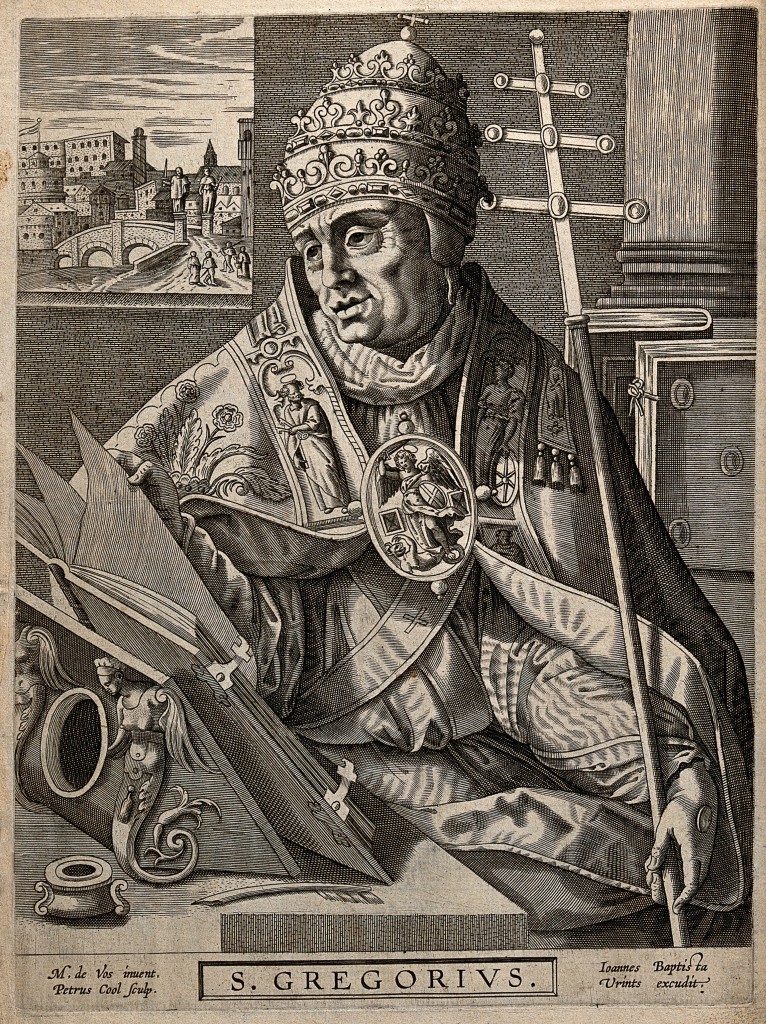
Yes, the guy who helped get the seven deadly sins to their (mostly) final form was a pope. If you’re Protestant, don’t freak out. John Calvin, one of the biggest Protestant names in history, insisted that Gregory the Great was the last good pope, and if a prominent reformer who was persecuted for Protestantism was cool with him, maybe we should be too.
Gregory’s work on the seven deadly sins appears in a wildly different context. He wasn’t trying to make a list of sins for monks to think though. Actually, Gregory ended up crafting his list while in a commentary on the book of Job. Weirdly, he was exegeting Job 39:25, “At the blast of the trumpet it snorts, ‘Aha!’ It catches the scent of battle from afar, the shout of commanders and the battle cry,” which is actually God talking about how Job could never make an animal as amazing as a horse, which is a pretty far cry from something you’d expect to lead to a discussion on the seven deadly sins. Medieval Christians thought that every Bible passage had several different layers of meaning, some of which could be pretty abstract. In his section about the moral interpretation of the horse passage, Gregory argues that it’s actually about the life of a Christian and how they’re supposed to behave. The line “The shout of commanders and the battle cry,” leads to discussion about spiritual warfare, and thus follows the seven deadly sins that we need to watch out for:
For when pride, the queen of sins, has fully possessed a conquered heart, she surrenders it immediately to seven principal sins, as if to some of her generals, to lay it waste. And an army in truth follows these generals, because, doubtless, there spring up from them importunate hosts of sins. Which we set forth the better, if we specially bring forward in enumeration, as we are able, the leaders themselves and their army. For pride is the root of all evil, of which it is said, as Scripture bears witness; Pride is the beginning of all sin. [Ecclus. 10, 1] But seven principal vices, as its first progeny, spring doubtless from this poisonous root, namely, vainglory, envy, anger, melancholy, avarice, gluttony, lust. For, because He grieved that we were held captive by these seven sins of pride, therefore our Redeemer came to the spiritual battle of our liberation, full of the spirit of sevenfold grace. (Morals on the Book of Job, Vol 3, Pt. 6, Book XXXI, 87)
At this point, I think we have what I’m comfortable calling the modern list of seven deadly sins. Even here, there are a few noteworthy things that are a little different. The name, obviously. Just like the “eight evil thoughts” name got made up to describe what Evagrius was talking about because it was way cooler than the title that came up with, “seven deadly sins” got made up because the actual name that Gregory came up with, “the seven principal sins,” isn’t all that catchy. That said, it’s actually a more accurate title. These are the seven main sins you’re involved in, not the seven sins that will kill you. When did “capital” become “deadly?” Honestly, I can’t tell you. It wasn’t Gregory’s doing, and most formal theological treatises call them the seven capital sins well through the middle ages and even into early modernity. It looks like something that just kind of bubbled up in popular imagination over time.
A second difference that’s worth noting is that vainglory is still here! A weird amount of sources say that Gregory removed vainglory and added pride, but I can’t find a shred of evidence that they’re right. This list very much proves the opposite. Pride is listed as “the queen” of the seven deadly sins, but not actually one of them itself. Instead, pride is defined more closely as the willingness to step away from God, whereas the immoral act of exhibiting what we would call pridefulness in other circumstances is referred to as vainglory. It’s actually a pretty clever solution. Most modern explorations of the seven deadlies that I see simultaneously list pride as the root of all sins AND one of the seven, which is a little clunky. It may as well be six deadly sins and their ringleader at that point. Kudos to Gregory for solving the problem before it happened. Pride is defying God; vainglory is glorifying yourself.
As weird as Gregory’s exegesis of Job may be, his section on the seven deadly sins is actually really applicable. I used Gregory’s wisdom liberally in sermon preparation. Sure, not everything he wrote is applicable today, but he clearly understands the trials of the human heart and that’s universal. He’s also very clear about how each of these sins may be separate,but really, they all intertwined. Lust leads to pride. Pride leads to envy. Envy leads to anger. They’re all connected, and they’re all in our lives. A mature Christian isn’t free of these problems; they should actively be involved in fighting them. If we’re not fighting them, it’s not because they’re not there; it’s because we’re not paying attention.
It reminds me a little of a question I used to ask in confirmation classes. These classes always have a mix of actually religious kids and kids that are just going through the motions. After a lesson about sin, I would ask the kids to rate how close to perfect holiness they thought their daily lives really were. From my perspective, it was an obvious opportunity for a little moment of repentance. Of course you rank yourself low! You’re a sinner! You just saw what God’s standards are! You’re not living up to them, right? Surely, all the kids would admit that they weren’t really doing as well as they wanted to, and then we could pivot to talking about Jesus. It didn’t really work out that way. The less religious a kid was, the higher they would rank themselves on the holiness index. Some kids unironically gave themselves a nine out of ten and said they were doing a pretty good job at keeping God’s law. Try pivoting to Jesus’s sacrifice on the cross after a kid said they’re really actually pretty holy on their own. It doesn’t work. A person can be so blind that they can’t even see their situation clearly. You have to be aware of sin if you want to fight it. That’s one of the best things that this list brings us. In Gregory’s strangely horse-themed words:
But the soldier of God, since he endeavors skillfully to pursue the contests with vices, smells the battle afar off; because while he considers, with anxious thought, what power the leading evils possess to persuade the mind, he detects, by the sagacity of his scent, the exhortation of the leaders. And because he beholds the confusion of subsequent iniquities by foreseeing them afar off, he finds out, as it were, by his scent the howling of the army. (Morals on the Book of Job, Vol 3, Pt. 6, Book XXXI, 91)
Ultimately, that awareness is what the list of seven deadly sins is intended to develop in us. I know it felt convicting preaching my way through them. It’s easy to see the sins of others, but it’s a little trickier to be aware of the sins in ourselves. I hope that some of that conviction stays with me.
I’m back! I took some time away after the birth of my second son, and it was incredibly rewarding. I’m blessed not only to have him in my life, but to have had some time to spend with him and his brother and my wife in that transitional period as our family grew. I learned something unexpected during my leave, and I wanted to share it: studying the Bible in a different language is really rewarding.
I wouldn’t have expected this revelation for myself. I don’t know Greek at all and I only have the smallest shreds of Hebrew under my belt. At one point, the prospect of learning Hebrew was really exciting to me. I worked my way through about half of a Hebrew textbook and went to seminary with a real fire for biblical languages, but once I got there, I thought about my high school experience with Spanish. How much Spanish do I remember today? A pitiful amount. And frankly, I never really invested the time to get good at it. Who could have imagined that a high school boy might not be deeply passionate about learning a second language for the sole purpose of polishing his university applications, right? Looking back on my failings with Spanish, I told myself that I must be bad at languages and that I should use the time I would have learned Hebrew in seminary on classes that would better benefit the congregations I would someday serve. After all, I could use an interlinear copy of the Bible and a Hebrew dictionary and get by just fine for the purpose of preaching, and most interesting translational choices are hammered in commentaries anyway. Thus my dream of being a master Hebrew speaker died a quiet death.
But while I was feeding a screaming baby at 2:00 am, I got bored. I wanted to be productive and I realized that the environment wasn’t particularly conducive to reading anything that required an unbroken train of thought. And what’s easy to do in small, flashcard-sized chunks? Memorize vocabulary words. And so I decided to pick up some Latin. I don’t know a lot of Protestants that know Latin, so it would definitely help me bring something unique to the table, and I read enough Augustine that I figured it’d be neat to read his stuff firsthand, instead of through translators. I made it about halfway through a beginner’s Latin textbook before my leave was up, so I can now talk about advanced theological topics like who is in the bedroom and if the dog is barking.
While working through that textbook, I also started studying my weekly Scriptures using the Vulgate (old Latin Bible), and I was shocked to see how deeply it affected my studying. When you don’t really know what any of the words in a given passage mean, you have to scrutinize each word. That level of study changes your relationship with the passage. For example, at one point, I was reading through James 1, and I reached verse 16: “Do not be deceived, my beloved brothers,” (ESV). If I was reading in English, I don’t think I would have spent much time not his passage. It’s a warning to pay attention to what James is about to write. Cool. Got it. But when you’re going word to word, dictionary open in another tab, and you see that James just called his readers “mei dilectissimi” or “my dearest ones” (something that, strangely enough, was in the first half of the latin textbook), there’s an impact and a warmth to it that I wouldn’t have felt otherwise. When you’re reading in English it’s easy to end up scanning through a passage for big ideas, controversial pieces, or emotional turning points and end up spending my energy on those. When you’re working in an unfamiliar language, you can’t take any word for granted. Each one is a battle, and each one carries a weight that it wouldn’t otherwise.
There’s also something supremely humbling about tuning in to youtube videos to help you learn the week’s lessons and hearing some teacher that recorded their lectures say, “Salvete, eighth graders!” Yes, my learning partners are mostly thirteen years old. Kids are smarter than we give them credit for.
No idea if my iter longum ad discit Latinum (“long journey to learn latin” probably misconjugated idk I’m new) will go anywhere. Time will tell. But in the meantime, it’s a fun little exercise to make me pay attention to things I wouldn’t otherwise.




 Classic Theology